


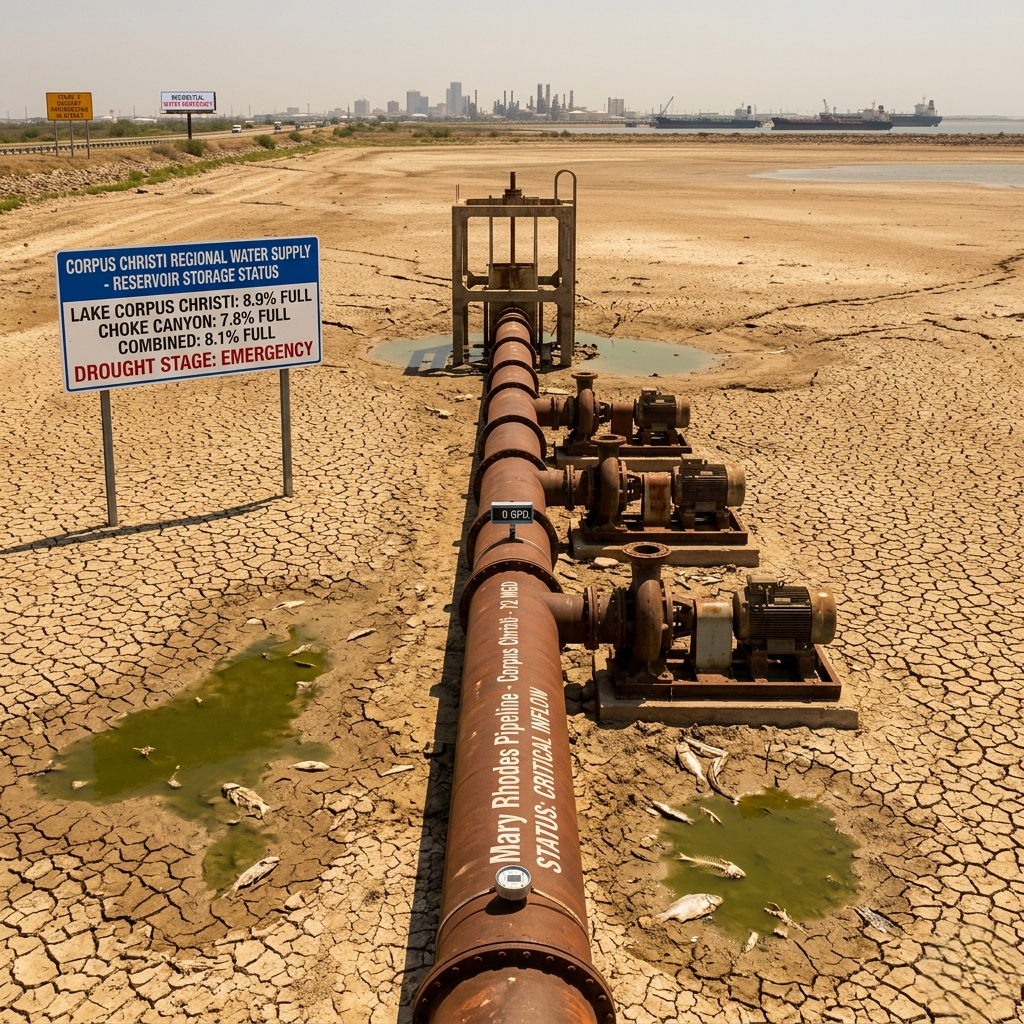
A serious water crisis is unfolding in Texas, and it’s getting worse fast.
The city of Corpus Christi is now facing dangerously low water levels after years of drought. As a result, officials are warning that time is running out.
For many residents, this could soon affect daily life in ways they never expected.
What’s Causing the Water Crisis?
The main issue is simple: not enough rain for a long time.
Lake Corpus Christi, the city’s primary water source, has dropped to just 9% capacity. That’s an extremely low level for a major city supply.
Because rainfall has been below normal for nearly five years, water reserves have slowly dried up.
Why the Situation Is Now Critical
Things have reached a breaking point.
Local officials say that if rain doesn’t arrive soon, strict water restrictions could begin within 180 days.
This could mean:
- Limits on household water use
- Restrictions on outdoor watering
- Reduced supply for businesses
As a result, daily routines could become much more difficult for hundreds of thousands of people.
The Hidden Problem: Industrial Water Use
While drought plays a major role, there’s another issue making things worse.
A large portion of the water supply is being used by industrial facilities.
Key facts:
- Oil refineries and chemical plants use over half the water
- Many contracts were made years ago
- Some projects tied to those contracts are still incomplete
Because of this, the city is now struggling to balance economic growth with basic needs.
Real-World Impact on Residents
This crisis is not just about numbers; it affects real lives.
People may soon face the following:
- Limited access to clean water
- Higher water costs
- Changes in daily habits like cooking and cleaning
For families, even simple tasks could become challenging.
What Solutions Are Being Considered?
City leaders are exploring several options. However, none offer instant relief.
Possible solutions include:
- Desalination plants
Turning seawater into fresh water - Groundwater expansion
Accessing underground water reserves - Water conservation policies
Encouraging reduced usage across the city
Although promising, these solutions take time to build and implement.
A Tough Balance: Economy vs Basic Needs
One of the biggest challenges is finding the right balance.
On one hand, industries bring jobs and economic growth. On the other, water is essential for survival.
Because of this, leaders must make difficult decisions about who gets priority.
A Warning Sign for the World
This situation is not just about one city.
It reflects a much larger global issue: how cities manage water in a changing climate.
As weather patterns become more unpredictable, similar crises could happen elsewhere.
A Simple Way to Understand the Crisis
Think of the city’s water supply like a bank account.
- Water coming in = deposits
- Water being used = withdrawals
Right now, withdrawals are far greater than deposits, and the balance is almost gone.
FAQs
Why is Corpus Christi facing a water shortage?
Mainly due to years of drought and low rainfall, combined with high water usage.
How low is the water supply?
Lake Corpus Christi is currently at about 9% of its capacity.
Who uses most of the water?
Industrial facilities like refineries and chemical plants consume more than half.
Will residents face restrictions?
Yes, strict water limits may be enforced within 180 days if conditions don’t improve.
Are there long-term solutions?
Yes, including desalination and groundwater use, but they will take time to develop.
Final Thoughts
The crisis in Corpus Christi is a clear warning about the future of water management. With Lake Corpus Christi nearly depleted, urgent action is needed.
However, this is also an opportunity.
If the right steps are taken now, the city can build a more sustainable water system for the future.
👉 Water is one of our most valuable resources. Using it wisely today can protect tomorrow.
