


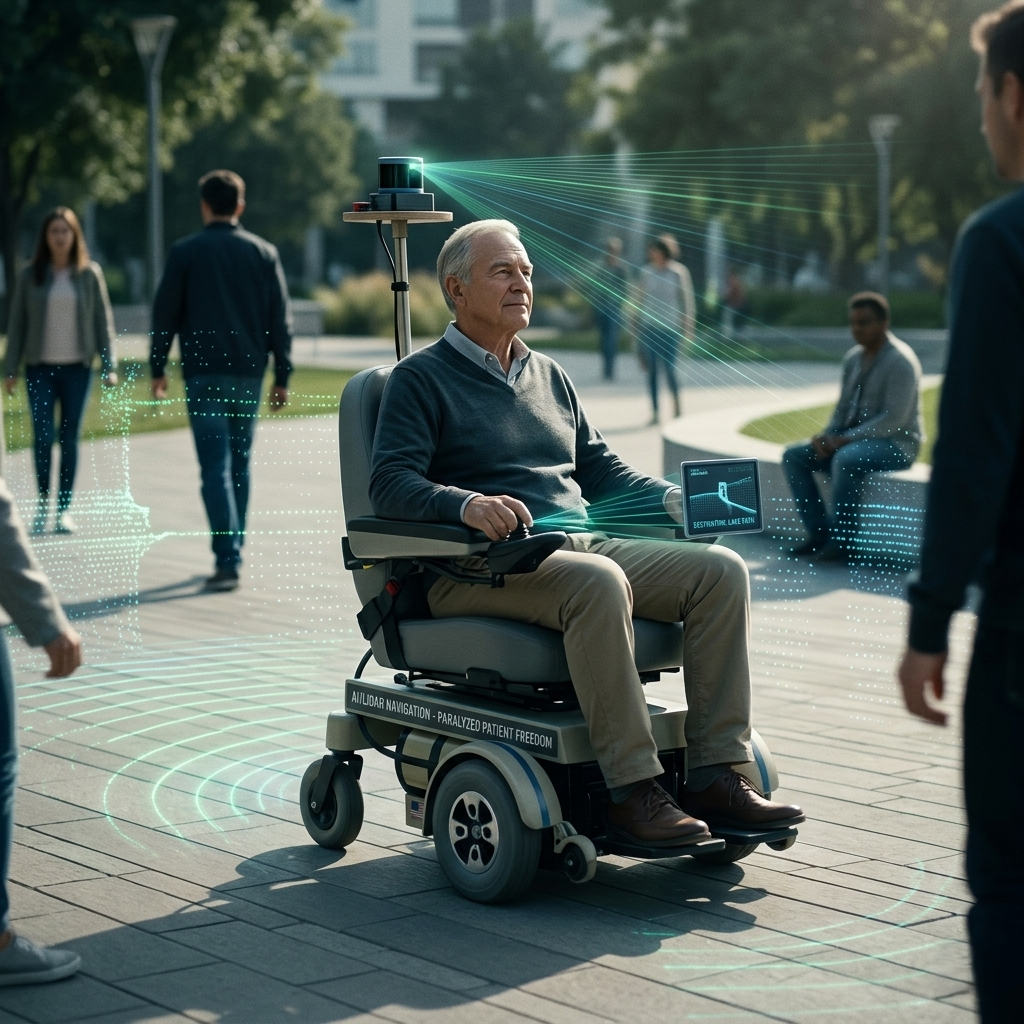
A new generation of smart wheelchairs is changing the lives of people with mobility disabilities.
In some advanced medical centers, patients who are paralyzed or severely limited in movement can now navigate buildings using voice commands.
Instead of manually controlling the chair, users can simply say commands like “go straight” or “take me to the kitchen.” The wheelchair then finds the safest route on its own.
This technology is helping many people regain a level of independence that was once very difficult to achieve.
How the Smart Wheelchair Works
These advanced wheelchairs use a navigation system similar to the technology used in self-driving vehicles.
The key technology behind the system is LiDAR.
LiDAR sends out laser pulses to measure the distance between the wheelchair and nearby objects. By analyzing these reflections, the system builds a real-time map of the environment.
This allows the wheelchair to
- Detect walls and furniture
- Avoid people walking nearby
- Choose the safest path to the destination
The chair constantly updates its surroundings while moving, making navigation smoother and safer.
Similar Technology Used in Self-Driving Cars
The navigation method used in these wheelchairs is similar to systems used in autonomous vehicles.
For example, companies like Tesla use advanced sensors and AI software to help cars understand their surroundings.
Although the scale is different, the basic concept is the same: sensors collect environmental data, and software decides how to move safely.
Voice Commands Make Control Easier
One of the most powerful features of these wheelchairs is voice-based control.
Instead of needing strong hand movement to steer the chair, users can simply give spoken instructions.
This is especially useful for people with:
- Severe paralysis
- Neurological disorders
- Limited arm movement
The wheelchair’s onboard computer processes the command and starts navigating automatically.
A Major Boost to Personal Freedom
For many people with disabilities, mobility challenges can limit independence.
Smart wheelchairs with autonomous navigation can significantly improve daily life by allowing users to move around without constant assistance.
Potential benefits include the following:
- Greater personal independence
- Easier movement inside homes or clinics
- Reduced reliance on caregivers
- Improved confidence and quality of life
Some reports suggest that these technologies can dramatically increase independence for users.
The Future of Assistive Mobility Technology
Researchers and engineers are continuing to improve smart mobility devices.
Future versions of autonomous wheelchairs may include:
- AI-based obstacle prediction
- Outdoor navigation support
- Integration with smart home systems
- Brain–computer interface controls
As technology advances, mobility devices may become even more intuitive and accessible.
FAQs
What is a LiDAR-guided wheelchair?
It is a smart wheelchair that uses LiDAR sensors to detect obstacles and navigate environments automatically.
How does the wheelchair avoid obstacles?
The LiDAR system scans the surroundings and creates a real-time map so the chair can move safely around objects and people.
Can users control the wheelchair by voice?
Yes. Many of these systems allow users to give simple voice commands to guide the wheelchair to a destination.
Is this technology widely available?
Some advanced clinics and research centers are already testing these systems, but wider adoption may take time.
Why is this technology important?
Autonomous wheelchairs can increase independence and mobility for people with severe disabilities.
Final Thoughts
Smart wheelchairs using LiDAR-guided autonomous navigation represent an exciting step forward in assistive technology.
By combining sensors, artificial intelligence, and voice control, these devices allow people with severe mobility challenges to move more freely and independently.
Although the technology is still developing, it highlights how innovation can make the world more accessible.
For many people with disabilities, tools like these are not just gadgets—they are gateways to greater freedom and opportunity.
