


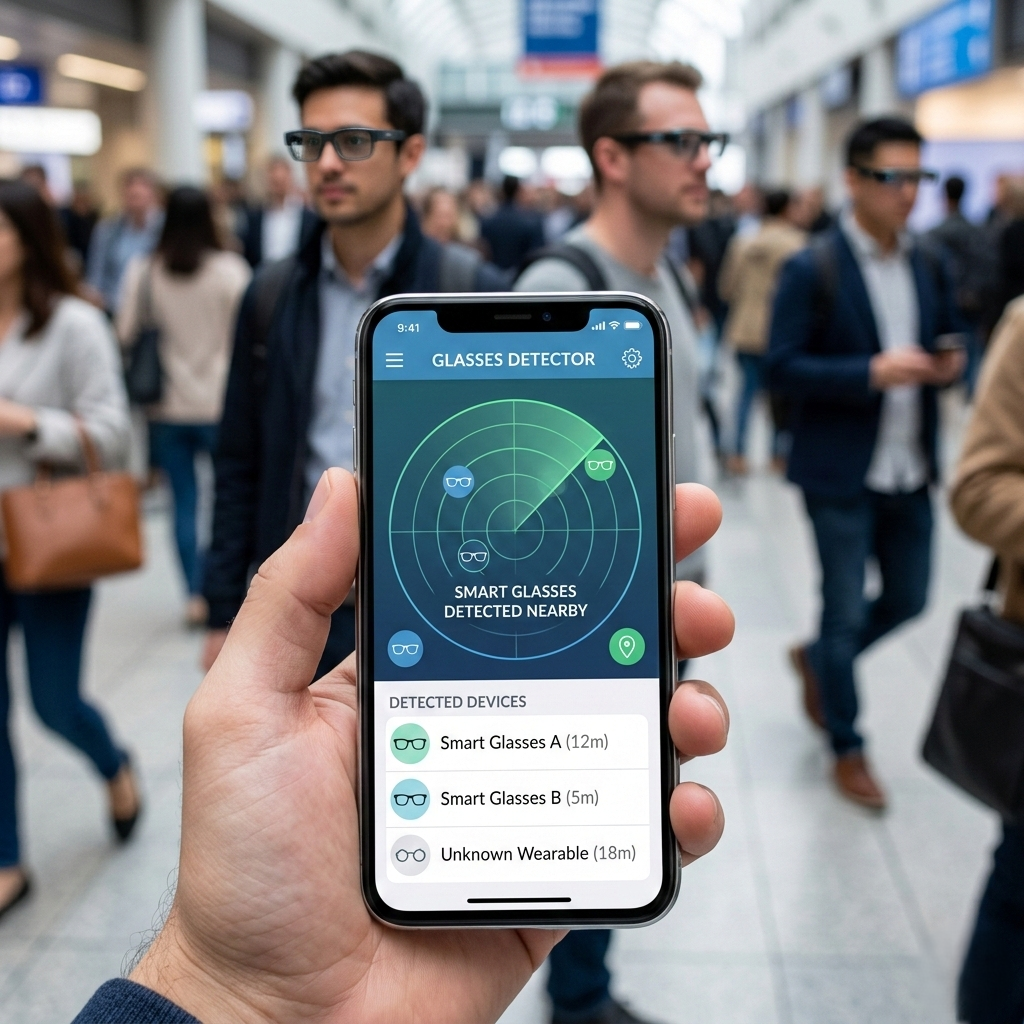
Wearable technology is growing fast. However, not everyone feels comfortable with devices that can record photos or videos quietly.
Because of this concern, developers have started building apps that can detect nearby smart glasses.
These tools scan wireless signals and notify users if a compatible wearable device might be close by.
As smart glasses become more common, conversations about privacy are becoming louder.
Why Smart Glasses Are Sparking Privacy Concerns
Smart glasses combine cameras, sensors, and wireless connectivity in a small wearable device.
Products like Ray-Ban Meta Smart Glasses from Meta Platforms allow users to take photos, record videos, and share content directly from their glasses.
While this technology offers convenience, it also raises questions.
For example:
- Can people nearby know when recording is happening?
- Should there be visible indicators on wearable cameras?
- How much privacy exists in public spaces?
Because of these concerns, detection apps aim to improve awareness.
How These Detection Apps Work
Most smart glasses connect to smartphones using Bluetooth.
This connection allows devices to sync:
- Photos
- Videos
- Settings
- Notifications
Detection apps scan nearby wireless signals. When they recognize patterns associated with certain wearable devices, the app sends an alert.
In simple terms, the system acts like a radar for wireless connections.
However, the apps do not confirm whether a camera is recording.
What These Apps Can and Cannot Do
It’s important to understand the limits of this technology.
What the apps can do
- Scan nearby Bluetooth signals
- Identify patterns linked to specific devices
- Alert users about possible wearable tech nearby
What the apps cannot do
- See through walls
- Access another person’s device
- Confirm if recording is happening
Because of this, alerts should be treated as awareness tools rather than proof of surveillance.
Why Detection Isn’t Always Accurate
Developers openly acknowledge that results may sometimes be incorrect.
That’s because many electronic devices use Bluetooth signals.
For example, alerts might appear for the following:
- Wireless headphones
- Fitness trackers
- VR headsets
- Smart watches
Since these devices share similar signal patterns, apps may occasionally trigger false alerts.
Even so, the tools still help users become more aware of nearby wireless devices.
The Bigger Conversation About Privacy
Technology often evolves faster than social rules.
As wearable cameras become more common, society must decide how to balance innovation with personal privacy.
Some key questions include:
- Should wearable cameras require clear recording indicators?
- Should public places create new privacy guidelines?
- How transparent should tech companies be about device capabilities?
These discussions are becoming increasingly important as wearable technology spreads.
Real-World Example: Everyday Public Spaces
Imagine sitting in a café or working in a shared office.
Someone nearby could be wearing smart glasses capable of recording video. Without clear indicators, it might be difficult to know.
Detection apps aim to provide an extra layer of awareness in situations like this.
Although they cannot guarantee accuracy, they help users stay informed about nearby wireless devices.
FAQs
What are smart glass detection apps?
These apps scan Bluetooth signals in the area and alert users if devices that resemble smart glasses are detected.
Do these apps confirm if someone is recording?
No. They only detect wireless signals associated with certain devices.
Why can false alerts happen?
Many electronic devices use Bluetooth signals, which can sometimes trigger incorrect notifications.
Why are these tools becoming popular?
As wearable cameras grow more common, people want better awareness about potential recording devices in public spaces.
Final Thoughts
Smart glasses represent an exciting step forward in wearable technology. They combine cameras, connectivity, and convenience in a compact device.
However, with new technology often come new privacy concerns.
Detection apps offer one possible solution by helping users identify nearby wireless devices that could be linked to wearable cameras.
While these tools are not perfect, they highlight an important conversation about transparency, responsibility, and privacy in the age of wearable tech.
