


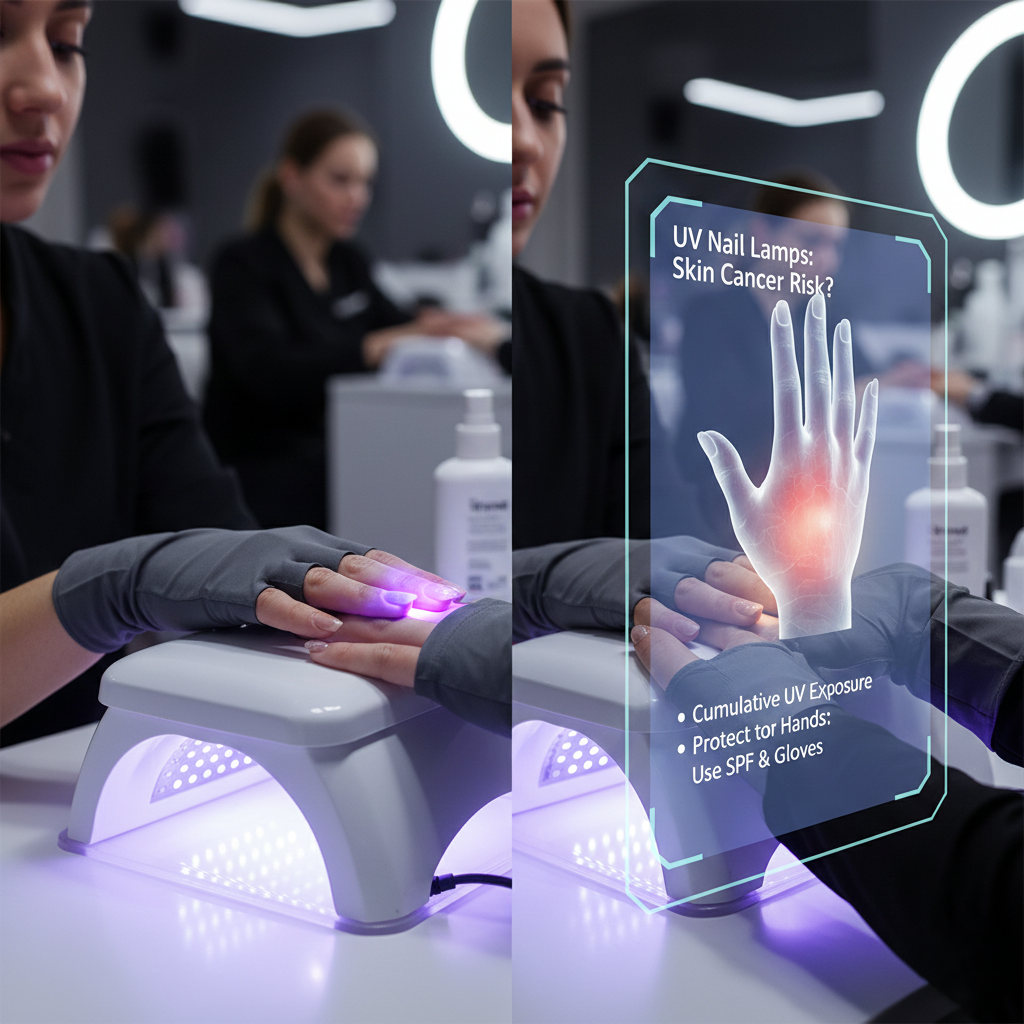
Introduction: A Beauty Routine Few Question
Acrylic and gel nails are a staple of modern beauty.
They look polished, last longer, and feel harmless.
But beneath the shine lies a risk most people never consider.
Repeated exposure to UV or LED nail lamps may affect skin health over time.
A real-world skin cancer case has pushed this concern into the spotlight.
How UV Nail Lamps Work
Gel and acrylic nails require curing to harden the polish.
This is done using UV or LED lamps.
What Happens During Curing
- Hands are placed under UV or LED light
- The light triggers chemical reactions in the polish
- The same skin areas are exposed repeatedly
While exposure time is short, it is cumulative.
Why Repeated UV Exposure Matters
UV radiation is a known risk factor for skin cancer.
The danger increases with repeated exposure to the same skin areas.
What Experts Are Concerned About
- Long-term exposure focused on hands
- Lack of sunscreen use during nail treatments
- False sense of safety due to short sessions
Over months or years, this exposure can add up.
The Case That Raised Awareness
A 35-year-old woman was diagnosed with skin cancer on her hands.
Doctors linked the condition to frequent UV nail lamp exposure.
While this is a single case, it highlights a possible pattern.
Medical experts stress the need for caution, not panic.
UV vs LED Nail Lamps: Is One Safer?
LED lamps cure polish faster and emit lower UV levels.
However, they still produce ultraviolet radiation.
Key Differences
- LED lamps require less exposure time
- UV lamps emit broader UV wavelengths
- Both involve repeated hand exposure
Neither option is completely risk-free.
Simple Ways to Reduce Risk
You don’t need to stop getting your nails done.
Small preventive steps can significantly reduce exposure.
Safety Tips for Nail Treatments
- Apply broad-spectrum sunscreen to hands beforehand
- Wear UV-protective fingerless gloves
- Limit the frequency of gel manicures
- Choose salons that use modern LED lamps
Awareness is the most powerful protection.
Why This Risk Is Often Overlooked
Beauty routines are rarely associated with health risks.
Short exposure times make the danger feel insignificant.
But cumulative exposure is what matters.
Just like sun exposure, small doses can add up over time.
What Dermatologists Say
Most dermatologists do not recommend panic.
Instead, they advise informed and cautious use.
The goal is risk reduction, not avoidance.
Simple changes can make a meaningful difference.
Conclusion: Awareness Makes Beauty Safer
UV nail lamps are not inherently dangerous.
But they are not completely harmless either.
Understanding the risks allows smarter choices.
Protecting your skin doesn’t mean giving up self-care.
Sometimes, the biggest health risks hide in everyday habits awareness brings them to light.
Frequently Asked Questions (FAQs)
Can UV nail lamps cause skin cancer?
There is no definitive proof, but repeated UV exposure may increase risk.
Are LED nail lamps safer?
They emit less UV, but exposure still occurs.
Should I stop getting gel nails?
Not necessarily. Protective measures can reduce risk.
Is sunscreen effective for nail treatments?
Yes. Broad-spectrum sunscreen helps block UV radiation.
