


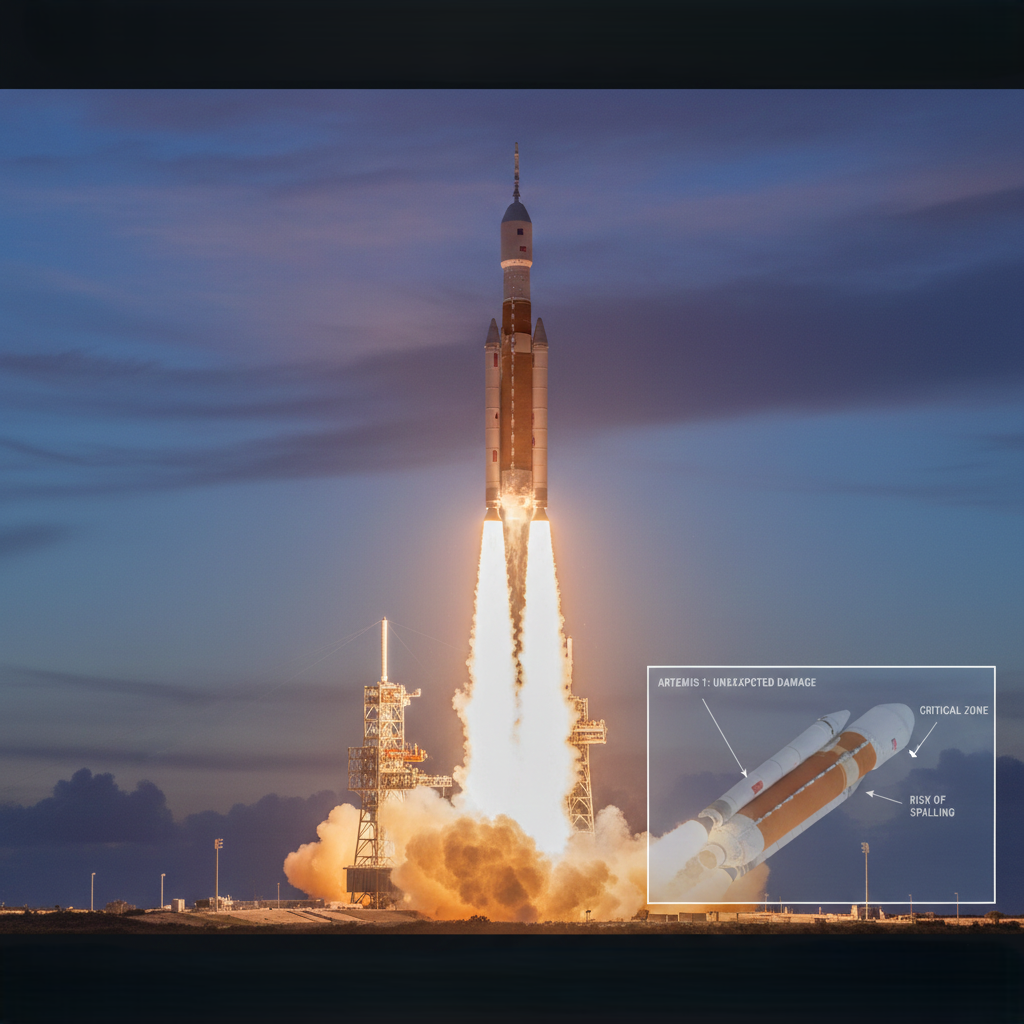
NASA is preparing for a historic moment. Artemis 2 is set to launch on February 5, carrying astronauts beyond low Earth orbit for the first time in over 50 years.
But behind the excitement, serious concerns are growing about whether the spacecraft is truly ready to carry humans safely.
Why Artemis 2 Matters So Much
This mission marks a major step toward returning humans to the Moon.
A First in Half a Century
Artemis 2 will:
- Carry four astronauts
- Travel beyond low Earth orbit
- Test systems needed for future lunar missions
The stakes are high, both scientifically and politically.
The Heat Shield Problem From Artemis 1
Concerns began after the uncrewed Artemis 1 mission.
What Went Wrong During Reentry
Engineers noticed damage to Orion’s heat shield after it returned to Earth.
They found:
- Cracking in the protective Avcoat material
- Pieces flaking off during reentry
- A problem known as spalling
This damage was unexpected and concerning.
What Caused the Heat Shield Damage?
Investigators traced the issue to trapped gases inside the heat shield.
How Spalling Happens
During reentry:
- Extreme heat builds rapidly
- Gases inside the shield expand
- Pressure causes sections to break away
At speeds near 25,000 miles per hour, even small failures matter.
NASA’s Decision Raises Eyebrows
Despite the findings, NASA plans to fly Artemis 2 with the same heat shield design.
Why NASA Is Moving Forward
Instead of rebuilding the capsule, NASA chose to:
- Adjust the reentry path
- Reduce heat stress
- Limit gas buildup inside the shield
The agency says the risk remains within acceptable limits.
Experts Are Not All Convinced
Some former astronauts and safety specialists are uneasy.
Critics Point to Deeper Issues
Critics argue that:
- The real problem is how modern Avcoat blocks are made
- Manufacturing methods may differ from past designs
- Trajectory changes don’t fix the root cause
They worry similar damage could be dangerous with a human crew onboard.
Why the Heat Shield Is So Critical
During reentry, Orion faces brutal conditions.
The Only Barrier Between Life and Death
The heat shield must withstand:
- Temperatures near 5,000°F
- Extreme friction and pressure
- Intense mechanical stress
For astronauts, it is their single line of defense.
A Delicate Balance Between Speed and Safety
NASA faces growing pressure to meet timelines.
The Core Debate
This mission highlights a tough question:
- Should schedules move forward despite unresolved risks?
- Or should safety concerns delay progress?
History shows that spaceflight leaves little room for error.
FAQs About Artemis 2 Safety
Is Artemis 2 considered dangerous?
NASA says risks are controlled, but some experts remain concerned.
Why didn’t NASA redesign the heat shield?
Redesigning would delay the mission by years.
Has Avcoat been used before?
Yes, but critics say modern manufacturing methods may differ.
Final Thoughts: Progress Always Comes With Risk
Artemis 2 represents humanity’s push back toward the Moon. But it also reminds us that space exploration is never routine.
As Orion plunges into Earth’s atmosphere, its heat shield must perform perfectly.
