


Baking soda, scientifically known as sodium bicarbonate, has been a household staple for generations.
It’s widely used for cooking, cleaning, and limited first-aid purposes. Over time, its versatility has also fueled bold claims about health benefits.
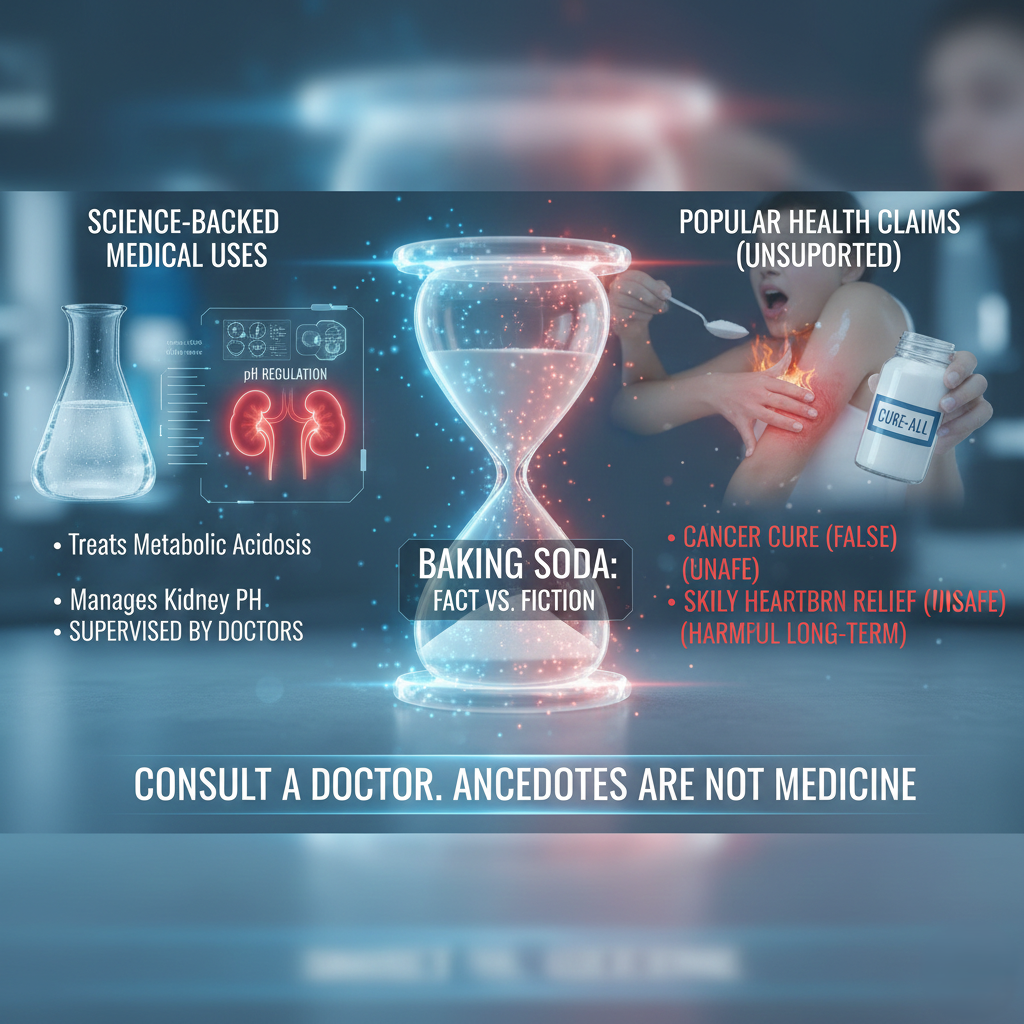
Researchers caution, however, that while baking soda does have legitimate medical uses, it is not a cure-all and should never replace evidence-based treatment.
When Baking Soda Is Used in Medicine
Strictly Controlled Medical Applications
In clinical settings, sodium bicarbonate is used only in specific, carefully monitored situations.
These include:
- Treating certain types of metabolic acidosis
- Managing pH imbalances in kidney-related conditions
Importantly, these treatments are handled by healthcare professionals.
Improper use can lead to serious side effects, including electrolyte imbalances, fluid retention, and increased blood pressure.
Baking Soda and Heartburn Relief
Temporary Relief, Not a Long-Term Solution
Some people use baking soda for occasional heartburn relief because it neutralizes stomach acid.
Scientists emphasize that:
- The effect is short-lived
- Frequent use disrupts normal stomach chemistry
- Overuse may cause excessive alkalinity in the body
As a regular digestive treatment, baking soda is considered unsafe.
Effects on Skin and Personal Care
Why Dermatologists Urge Caution
Baking soda is sometimes applied to the skin for odor control or exfoliation.
Dermatologists point out a key issue:
- Healthy skin is naturally slightly acidic
- Baking soda is alkaline
Repeated use can damage the skin’s protective barrier, leading to dryness, irritation, or increased sensitivity.
For ongoing skin concerns, clinically tested products are safer and more effective.
Why Health Claims Spread So Easily
Popular Doesn’t Mean Proven
Interest in inexpensive “natural remedies” often amplifies claims about baking soda’s healing power.
Experts stress an important distinction:
A remedy being common does not make it medically effective.
Anecdotal popularity should never outweigh scientific evidence.
Who Should Avoid Using Baking Soda Medically
Higher-Risk Groups
Healthcare professionals advise extra caution or avoidance for:
- People with high blood pressure
- Individuals with kidney disease
- Pregnant individuals
In these cases, electrolyte balance is especially critical, and unsupervised use can be dangerous.
What Science Actually Says
Useful, But Within Limits
Baking soda remains a valuable household product with a small number of validated medical roles.
However, it should be understood within proper scientific limits, not promoted as a universal health solution.
Consulting a medical professional is always recommended before using baking soda for health-related purposes.
Frequently Asked Questions (FAQs)
Is baking soda safe to take daily?
No. Daily ingestion can disrupt acid-base balance and lead to serious side effects.
Can baking soda cure acid reflux?
It may provide short-term relief, but it does not treat the underlying cause and is unsafe long-term.
Is baking soda safe for skin care?
Occasional use may be tolerated, but repeated use can damage the skin barrier.
Final Thoughts
Baking soda’s reputation as a health remedy is largely overstated.
While it has real medical applications, those uses are limited, controlled, and supervised by professionals.
Understanding the difference between evidence-based medicine and popular belief helps people make safer, smarter health choices.
