


Clean energy may soon take a big step forward.
Bill Gates is backing a startup called Type One Energy, which plans to build an advanced nuclear fusion reactor in Tennessee.
The goal sounds bold—recreate the same process that powers the Sun.
If successful, this could change the future of global energy.
What Is Nuclear Fusion?
Nuclear fusion happens when hydrogen atoms combine under extreme heat—nearly 100 million degrees Celsius.
When they fuse together, they release massive amounts of energy.
This is the same reaction that powers the Sun.
Unlike fossil fuels, fusion:
- Produces no carbon emissions
- Does not release greenhouse gases
- Creates far less radioactive waste than traditional nuclear fission
It’s often described as the “holy grail” of clean energy.
Where Will the Reactor Be Built?
The planned facility will be located near the former Bull Run Fossil Plant site in Tennessee.
This location was previously used for coal power generation.
Turning a former fossil fuel site into a clean energy hub sends a powerful message about the energy transition.
What Makes This Reactor Different?
Type One Energy plans to test a special design called a stellarator.
A stellarator is a type of fusion reactor that uses complex magnetic fields to control superheated plasma.
Plasma is so hot that it cannot touch the reactor walls.
So engineers use carefully shaped magnetic fields to:
- Keep the plasma stable
- Prevent contact with materials
- Maintain safe containment
This magnetic control system is one of the biggest engineering challenges in fusion energy.
Why Fusion Is So Difficult
Fusion has been studied for decades.
The main challenges include:
- Reaching extremely high temperatures
- Controlling unstable plasma
- Building materials that survive intense conditions
- Producing more energy than the reactor consumes
Many experimental reactors have proven the science works.
The next step is making it commercially practical.
That’s the hard part.
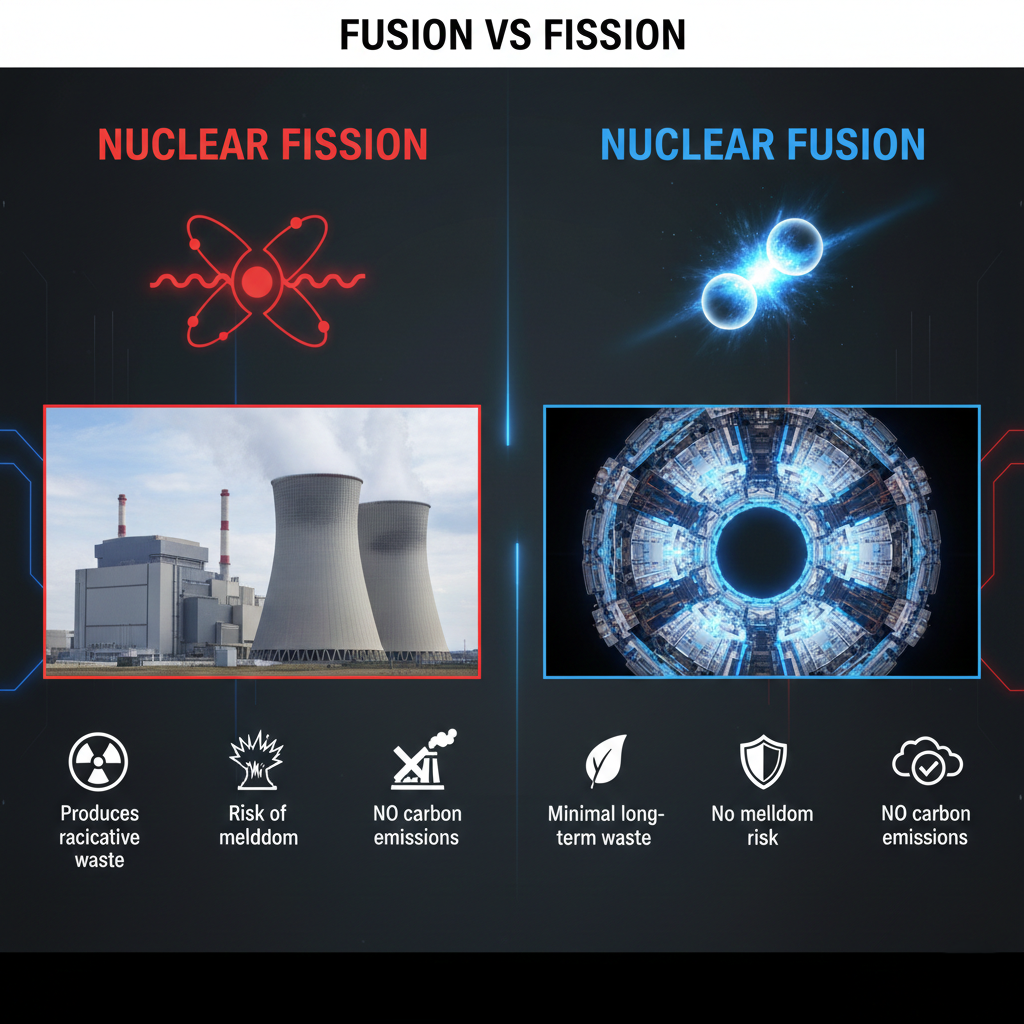
Fusion vs Traditional Nuclear Power
It’s important to understand the difference.
Nuclear Fission (Current Nuclear Plants)
- Splits atoms
- Produces radioactive waste
- Risk of meltdown if systems fail
Nuclear Fusion
- Combines atoms
- No carbon emissions
- Minimal long-term radioactive waste
- No meltdown risk like fission
Fusion is generally considered safer and cleaner.
But it’s also much more complex to build.
Why Bill Gates Is Investing
Bill Gates has long supported clean energy innovation.
Through climate-focused investments, he has backed technologies aimed at reducing global carbon emissions.
Fusion fits that mission perfectly.
If commercial fusion becomes viable, it could:
- Provide nearly unlimited clean energy
- Reduce dependence on fossil fuels
- Support global climate goals
Private investment shows growing confidence in fusion’s future.
What This Means for the Future of Energy
Governments and companies around the world are racing to develop fusion power.
Projects like this signal that fusion is moving from theory toward real-world deployment.
While practical fusion power is still under development, momentum is building.
If Type One Energy’s stellarator design works, it could:
- Open the door to large-scale clean energy plants
- Reduce carbon emissions worldwide
- Transform former fossil fuel sites into clean power hubs
It’s a long road ahead.
But serious funding and advanced engineering bring fusion closer to reality.
FAQs
What is Type One Energy?
Type One Energy is a clean energy startup working to develop advanced nuclear fusion reactors.
What is a stellarator?
A stellarator is a fusion reactor design that uses complex magnetic fields to control and stabilize superheated plasma.
Is fusion energy available now?
Not commercially. Fusion is still under development, but several projects are working toward practical power generation.
How is fusion different from nuclear fission?
Fusion combines atoms and produces far less radioactive waste, while fission splits atoms and creates more waste.
Why is fusion considered clean energy?
Fusion does not produce carbon emissions and has lower long-term environmental risks compared to fossil fuels.
Final Thoughts
Fusion energy has been called the future for decades.
Now, with major investors like Bill Gates backing companies such as Type One Energy, that future feels closer.
Building a stellarator reactor in Tennessee is ambitious.
But ambition is exactly what clean energy innovation requires.
If fusion succeeds, it could provide carbon-free power for generations.
And that would truly reshape how the world produces energy.
