


Introduction
Hair loss affects millions of people worldwide. However, most treatments feel slow, inconsistent, or come with unwanted side effects.
Now, things are changing.
Researchers have developed a new light therapy hat that could completely transform how we treat hair loss. Even more impressive, early results show up to 92% reduction in hair follicle aging markers.
So, how does this technology work, and why is it getting so much attention?
What Is This New Light Therapy Hat?
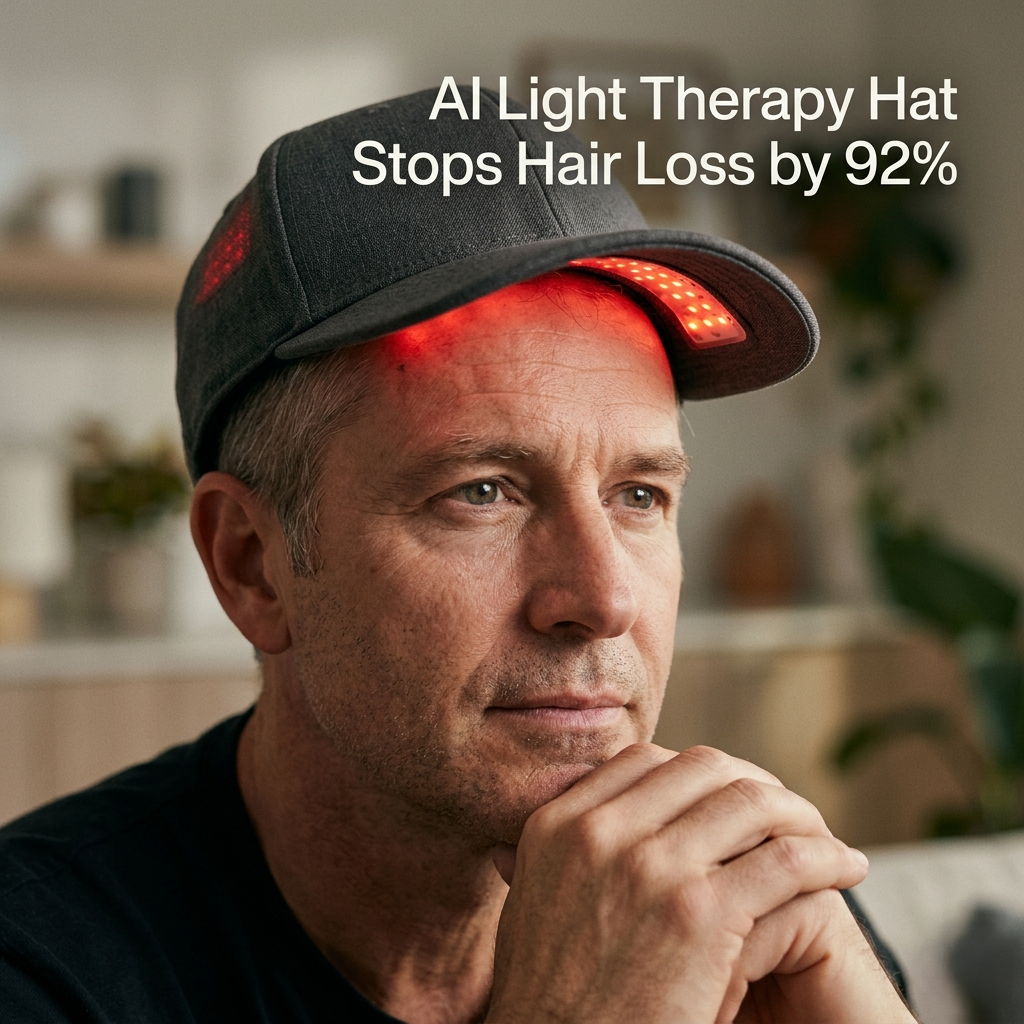
Scientists at the Korea Advanced Institute of Science and Technology (KAIST) created a flexible, wearable cap designed for daily use.
Unlike older devices, this one uses the following:
- Ultra-thin OLED (Organic Light-Emitting Diodes)
- Soft, flexible materials
- Even light distribution across the scalp
As a result, it feels more like a regular hat than a medical device.
How OLED Light Therapy Works for Hair Loss
Traditional treatments often focus on slowing hair loss. However, this new approach targets the problem at a deeper level.
It works by:
- Delivering near-infrared light directly to the scalp
- Stimulating hair follicle cells
- Reducing aging signals inside cells
- Encouraging natural hair regeneration
Most importantly, it targets dermal papilla cells, which control hair growth.
Because of this, the treatment focuses on the root cause, not just symptoms.
92% Reduction: What Does It Really Mean?
In laboratory tests, the device showed a 92% reduction in age-related biomarkers in human hair cells.
This matters because the following:
- Aging cells slow down hair growth
- Weak follicles lead to thinning hair
- Damaged cells stop producing new strands
By reducing these markers, the technology helps restore healthier hair cycles.
👉 Compared to traditional red light therapy, the results were significantly stronger.
Why This Is Better Than Current Hair Loss Treatments
Many people rely on medications like minoxidil or finasteride. While they can work, they are not perfect.
Common problems with existing treatments:
- Inconsistent results
- Long-term commitment
- Possible side effects like hormonal changes
- Skin irritation or discomfort
In contrast, the OLED therapy hat offers the following:
- Non-invasive treatment
- Drug-free solution
- No known hormonal side effects
- Easy daily use
Therefore, it provides a safer and more comfortable alternative.
Real-World Advantage: Wearable and Stylish
One of the biggest issues with older devices is convenience.
Bulky laser helmets can be
- Heavy
- Noticeable
- Uncomfortable for daily wear
However, this new device changes that.
Key design benefits:
- Lightweight and flexible
- Looks like a normal cap
- Can be worn in public
- Designed for everyday use
Because of this, users are more likely to stay consistent with treatment.
What Happens Next? (Human Trials & Future Plans)
Although lab results are promising, human trials are the next important step.
Researchers are now working on:
- A washable version of the cap
- Improved durability
- Real-world testing on patients
- Long-term safety evaluation
If successful, this could become a mainstream solution for androgenetic alopecia.
Comparison: OLED Therapy vs Traditional Options
| Feature | OLED Light Hat | Medications | Laser Helmets |
|---|---|---|---|
| Invasiveness | Non-invasive | Drug-based | Non-invasive |
| Side Effects | Minimal | Possible | Minimal |
| Convenience | High | Medium | Low |
| Target Level | Cellular | Hormonal | Surface-level |
| Comfort | High | High | Low |
Clearly, OLED therapy offers a strong balance of comfort, safety, and effectiveness.
FAQs
1. Is light therapy effective for hair loss?
Yes, light therapy can stimulate hair follicles and improve growth. This new OLED-based method shows even stronger results than older technologies.
2. Is the 92% reduction proven in humans?
Not yet. The results come from lab studies. Human clinical trials are the next step.
3. Is this better than minoxidil or finasteride?
It may be safer since it avoids side effects. However, more testing is needed before direct comparisons are confirmed.
4. Can I buy this light therapy hat now?
No, it is still under development. Researchers are working toward commercial availability.
5. Who can benefit from this technology?
People with hereditary hair loss (androgenetic alopecia) may benefit the most if trials succeed.
Final Thoughts
This breakthrough in light therapy could change how we treat hair loss. Instead of relying on drugs, it focuses on natural regeneration at the cellular level.
While more testing is needed, the early results are very promising.
If human trials confirm these findings, we may soon have a safe, wearable, and highly effective solution for hair loss.
