


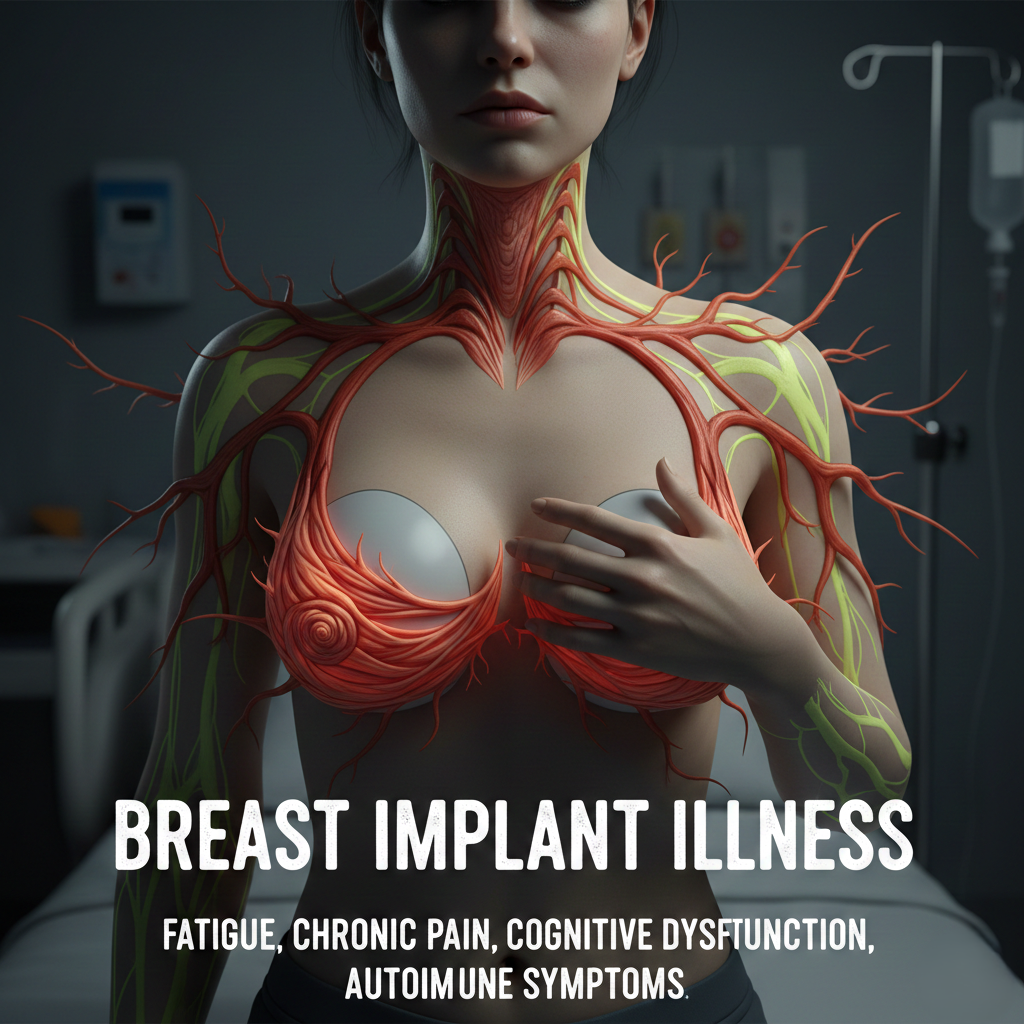
When people think about plastic surgery, they usually imagine swelling, scars, or pain.
But what if some effects go deeper than the surface?
In recent years, more women have reported symptoms that don’t seem physical at first. Many describe brain fog, memory lapses, confusion, and long-term fatigue after getting silicone breast implants.
These symptoms are often grouped under a term called breast implant illness (BII).
For years, doctors debated whether BII was real. Now, growing research suggests these concerns deserve serious attention.
What Is Breast Implant Illness (BII)?
Breast implant illness is not officially classified as a single medical disease.
Instead, it describes a collection of symptoms reported by some women with breast implants.
Commonly reported symptoms include:
- Brain fog
- Memory problems
- Trouble concentrating
- Chronic fatigue
- Joint pain
- Muscle aches
- Anxiety or mood changes
Not every woman with implants experiences these issues. However, enough cases have been documented to raise medical interest.
What Does Research Say?
A 2020 study published in Annals of Plastic Surgery followed 750 women with breast implants.
Researchers documented ongoing symptoms, especially:
- Memory difficulties
- Poor concentration
- Mental fatigue
One important finding stood out.
Many participants reported major improvement after implant removal. Some women even experienced complete relief within weeks.
This pattern suggests a possible connection worth exploring further.
Research Source: Annals of Plastic Surgery, 85(S1): S82–S86, July 2020. DOI: 10.1097/SAP.0000000000002446
How Could Breast Implants Affect the Brain?
Scientists are still studying the exact cause. However, one leading theory involves chronic inflammation.
The Immune System Connection
Silicone implants may trigger an immune response in some individuals.
This reaction can be similar to autoimmune conditions, where the immune system stays active for long periods.
When inflammation becomes chronic, it may:
- Affect brain signaling
- Interfere with neurotransmitters
- Impact focus and memory
- Cause mental exhaustion
The brain is very sensitive to inflammation. Even mild, ongoing immune activity may lead to symptoms like forgetfulness and confusion.
Why Not Everyone Is Affected
It’s important to stay balanced.
Millions of women have breast implants without reporting serious cognitive issues.
Possible reasons for different reactions include:
- Genetic differences
- Pre-existing autoimmune tendencies
- Overall immune health
- Environmental factors
This suggests BII may affect only certain individuals, rather than being universal.
Real-World Experiences
Online support groups for breast implant illness now include thousands of members.
Many women share similar stories:
- Gradual onset of brain fog
- Years of unexplained fatigue
- Multiple doctor visits without answers
- Noticeable improvement after implant removal
While personal stories don’t replace clinical trials, consistent patterns across many cases encourage deeper research.
The Ongoing Medical Debate
For years, some professionals dismissed breast implant illness due to limited data.
Today, the conversation is changing.
Medical organizations now acknowledge that
- Patient-reported symptoms matter
- More large-scale studies are needed
- Informed consent should include possible systemic effects
Open discussion helps patients make better decisions about cosmetic procedures.
When Should Someone Seek Medical Advice?
If someone with breast implants experiences
- Persistent brain fog
- Memory changes
- Chronic fatigue
- Joint pain without clear cause
They should speak with a qualified healthcare professional.
These symptoms can have many causes. A proper evaluation is always necessary before drawing conclusions.
Frequently Asked Questions (FAQs)
1. Is breast implant illness officially recognized?
BII is not classified as a specific disease, but medical professionals acknowledge that some patients report consistent symptom patterns.
2. Can removing implants reverse brain fog?
Some women report improvement after removal. However, results vary from person to person.
3. Do all silicone implants cause inflammation?
No. Many individuals experience no systemic problems at all.
4. How long does it take to notice symptoms?
Symptoms may appear gradually over months or even years.
5. Should women avoid breast implants completely?
That decision should be personal and based on informed medical advice.
Final Thoughts
Plastic surgery isn’t just about physical changes. In rare cases, it may affect overall health in unexpected ways.
Research into breast implant illness and brain fog is still evolving. While not everyone experiences problems, growing evidence suggests that some women may develop immune-related symptoms.
The key takeaway is awareness.
If unexplained symptoms appear, don’t ignore them. Open conversations with healthcare providers can lead to better understanding and smarter choices.
Staying informed helps you protect both your body and your mind.
