


Most of us think cancer spreads by accidental cells floating in the bloodstream until they land somewhere.
New research shows it’s not random. Tumors are smarter than we realized.
Cancer cells actively probe their environment, using physical cues to decide where to invade next.
How Cancer Cells Sense Their Environment
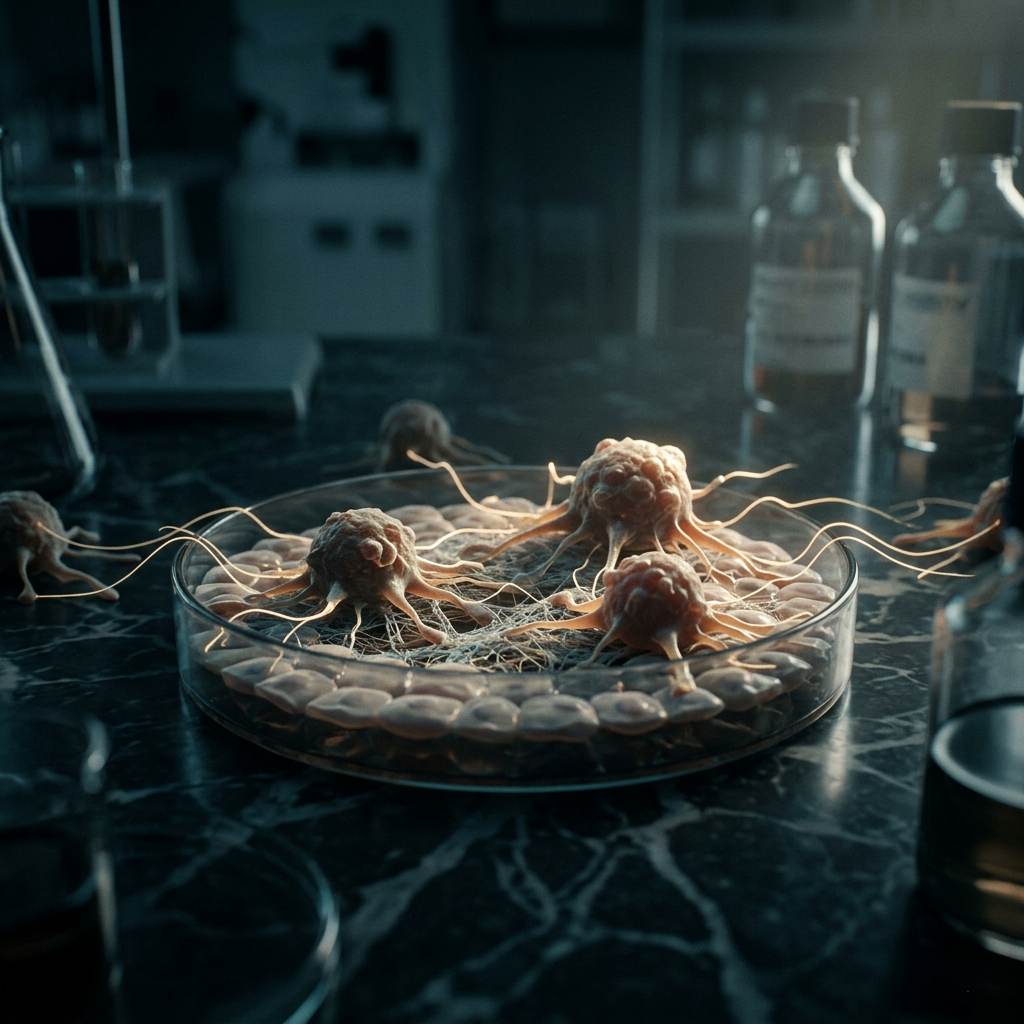
Cancer cells reach out through collagen fibers, almost like fingers feeling in the dark.
- A single cell can detect tissue stiffness about 10 microns ahead.
- When cells cluster, they combine forces to sense ten times farther.
- This helps them map the surrounding tissue, like a biological sonar.
Essentially, cancer cells “feel” their way toward weaker tissue spots to invade.
What This Means for Metastasis
Metastasis, the process that kills 90% of cancer patients, is not random.
Tumors use mechanical intelligence to:
- Detect weak tissue areas
- Choose optimal paths for spreading
- Actively invade the body
This understanding changes the way scientists view cancer. Instead of just floating randomly, tumors are making guided decisions.
Could We Stop Cancer by Blinding Its Sense?
If researchers can block this sensing mechanism, tumors might be trapped in place.
Why It Matters
- A cancer that can’t feel forward may not spread
- Could reduce metastasis, the deadliest stage of cancer
- Opens new strategies beyond traditional chemical therapies
In other words, fighting cancer might not just be about drugs—physics could play a role too.
Real-World Implications
This discovery points to new ways to treat cancer:
- Target the mechanical sensing of cancer cells
- Develop therapies that make tissue less “inviting.”
- Combine traditional chemotherapy with approaches that interfere with tumor movement
It’s a fresh perspective that could save lives.
FAQs
How far can a single cancer cell sense?
About 10 microns, roughly the width of a single human cell.
Does clustering help cancer spread faster?
Yes. Clustered cells combine forces and can sense ten times farther than a single cell.
Is metastasis random?
No. Tumors actively choose paths to invade based on tissue stiffness and environment.
Can this lead to new treatments?
Potentially. Blocking cancer’s sensing could stop it from spreading, offering new strategies beyond traditional drugs.
Final Thoughts
Cancer isn’t just chemical; it’s also physical. Its ability to sense tissue guides metastasis and determines where it spreads.
👉 Understanding this “mechanical intelligence” opens new doors for therapies that could trap tumors in place and save lives.
