


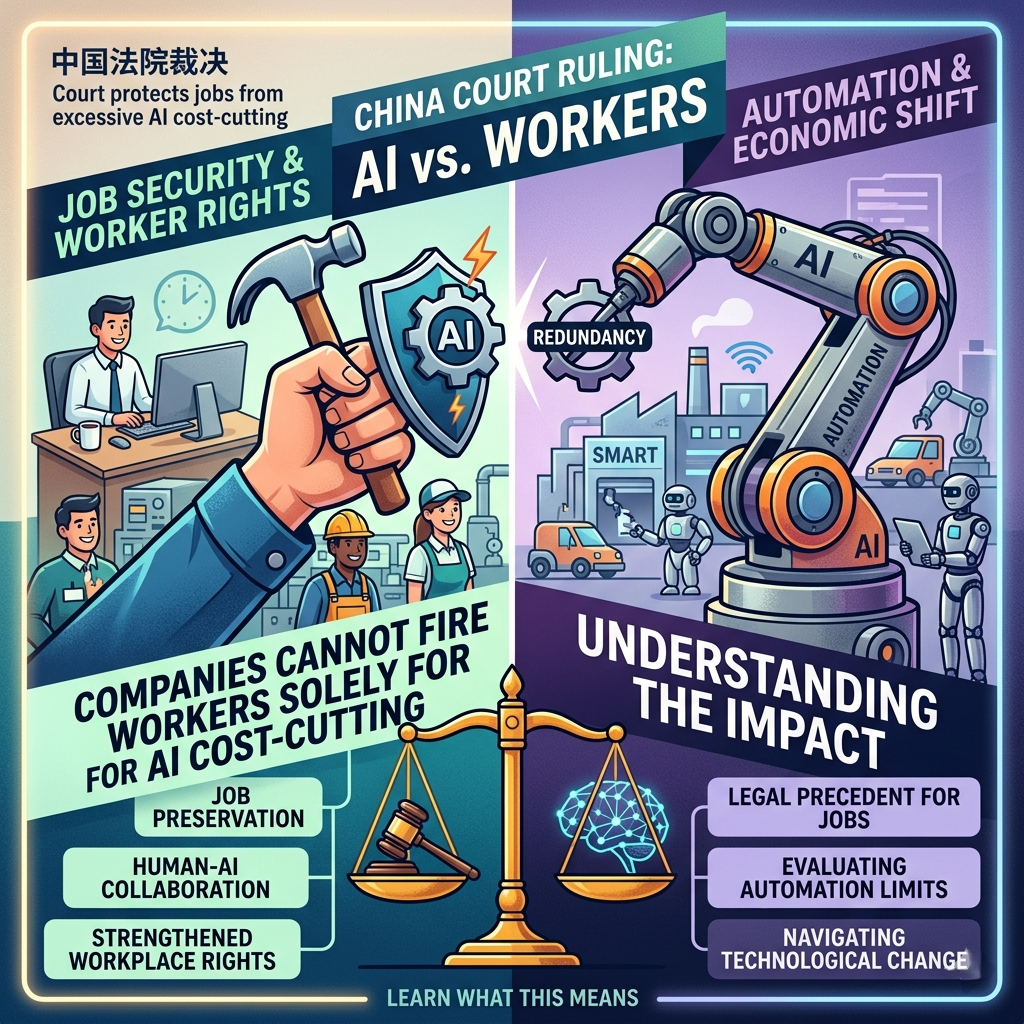
Introduction: A Turning Point for AI and Jobs
Artificial intelligence is changing how companies work. However, a recent court decision in Hangzhou shows there are limits to how far automation can go.
In this case, the court made it clear: saving money with AI isn’t a valid reason to fire employees. As a result, this ruling could reshape how businesses adopt AI worldwide.
What Happened in the Hangzhou Case?
A senior tech employee faced a major career setback when his company partially replaced his role with AI tools.
Instead of keeping him in his position, the company offered:
- A lower-level job
- Around a 40% salary cut
Naturally, the employee refused. Soon after, the company fired him.
However, he didn’t accept this outcome. Instead, he challenged the decision in court and won at every level.
Court Decision: Why the Employee Won
The Hangzhou court ruled strongly in favor of the worker. As a result, the company had to pay over 260,000 yuan in compensation.
Key points from the ruling:
- Companies can use AI, but not unfairly
- Cost-cutting alone is not a valid reason to fire workers
- Employees must be treated fairly during workplace changes
In simple terms, the court said businesses cannot replace people just because machines are cheaper.
Why This Ruling Matters for the Future of Work
This decision is not a national law. However, it sets a powerful example for future cases.
Here’s why it’s important:
- Protects workers from sudden job loss
- Forces companies to act responsibly
- Balances innovation with human rights
As AI adoption grows, similar disputes will likely increase. Therefore, this ruling could influence courts in other regions too.
What Companies Should Do Instead of Firing Workers
Rather than replacing employees directly with AI, the court emphasized a more balanced approach.
Recommended actions for businesses:
- Retrain employees for new roles
- Transfer workers within the company
- Communicate openly before making decisions
In other words, companies must treat workers as long-term assets not disposable costs.
Real-World Example: AI vs Human Workforce
Many companies already use AI to improve efficiency. For example:
- Customer service bots handle basic queries
- AI tools assist developers with coding
- Automation speeds up data processing
However, smart companies don’t remove workers completely. Instead, they combine human skills with AI tools.
As a result, productivity improves without harming employees.
Can Companies Still Lay Off Workers?
Yes, but there are limits.
The court clarified that companies can still:
- Restructure their business
- Lay off workers for valid economic reasons
However, they cannot use “AI is cheaper” as a shortcut.
So, while layoffs remain possible, they must follow proper legal and ethical standards.
How This Affects Global AI Adoption
This ruling could influence global discussions about AI and labor laws.
Potential impacts include:
- Stricter labor protections in tech industries
- Increased focus on ethical AI use
- More investment in employee training
As countries watch closely, similar legal standards may emerge worldwide.
FAQs
Can companies fire employees because of AI?
Not purely for cost savings. Courts may reject such decisions if they unfairly harm workers.
Is this ruling a law across China?
No, it’s not a national law. However, it sets a strong legal precedent.
What should companies do when adopting AI?
They should retrain employees, offer new roles, and communicate clearly before making changes.
Does AI still threaten jobs?
Yes, but this ruling shows that legal systems can help protect workers.
Final Thoughts: A Balance Between AI and Human Value
AI will continue to transform industries. However, this case proves that human workers still matter.
Instead of choosing between AI and people, companies must find a balance. By doing so, they can grow responsibly while protecting their workforce.
