


Introduction
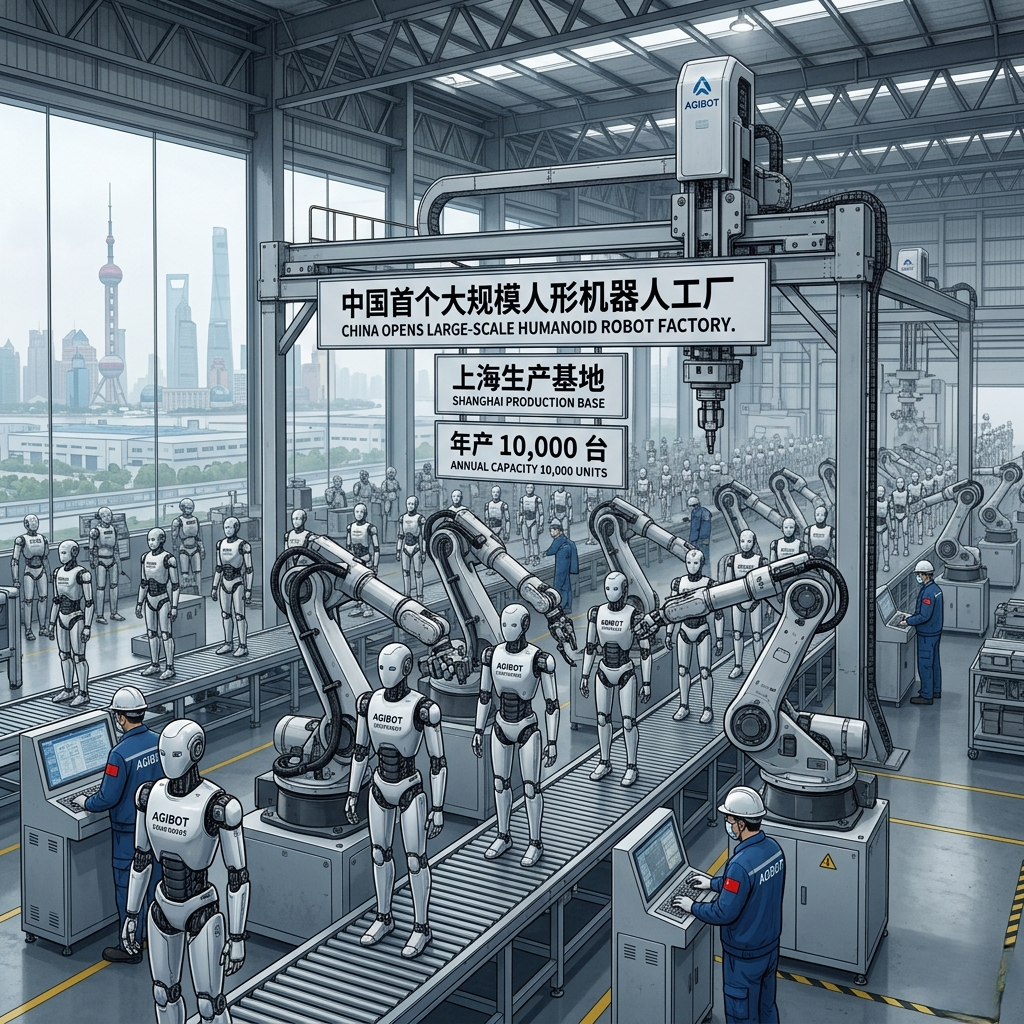
Humanoid robots are moving from research labs into mass production. China has now opened its first large-scale humanoid robot factory in Guangdong Province, marking a major shift in the robotics industry.
This new factory shows that humanoid robots are no longer experimental machines. Instead, they are becoming commercial products that can be produced in large numbers.
The Companies Behind the Robot Factory
The factory was built by Leju Robotics and Dongfang Precision Science and Technology.
The facility can produce up to 10,000 humanoid robots per year, which is a major step toward mass production.
This level of production suggests the robotics industry may soon scale in the same way smartphones and electric vehicles did in the past.
How the Robot Factory Works
The factory uses a fully digital manufacturing system designed for speed, flexibility, and quality control.
Production features include:
- One robot produced every 30 minutes
- 24 assembly stages
- 77 quality checks during production
- Automated vehicles’ moving parts
- Smart control systems managing production
Because of this automated process, the factory can maintain both speed and reliability.
Flexible Production System
One of the most important features of this factory is flexibility. The production line can switch between different robot models without stopping the assembly line.
This is important because:
- Companies may produce multiple robot models
- Customers may need customized robots
- Production can adapt quickly to demand
- Manufacturing becomes more efficient
This flexible manufacturing approach is similar to modern electric vehicle factories.
Quality Testing Before Robots Leave the Factory
Before leaving the production line, every robot goes through 41 different tests to ensure it can work in real-world environments.
These tests check:
- Movement and balance
- Sensors and cameras
- Battery performance
- Motors and joints
- AI system responses
- Safety systems
This testing process ensures the robots are ready for real-world work environments like factories, hotels, and logistics centers.
Other Chinese Robotics Companies Are Scaling Production
The humanoid robot industry in China is growing quickly, with several companies expanding production.
AGIBOT
AGIBOT has already built its 10,000th humanoid robot, showing rapid growth in robot manufacturing.
UBTECH Robotics
UBTECH plans to produce 5,000 robots per year, with a target price of under $20,000 per robot, which could make robots affordable for many businesses.
Unitree Robotics
Unitree is raising $580 million to expand production capacity to 75,000 robots, which would be one of the largest robot production scales in the world.
Why Mass Production of Humanoid Robots Is Important
Mass production changes everything for new technologies. When production increases:
- Costs decrease
- Technology improves faster
- More businesses adopt the technology
- New industries appear
- Automation becomes more common
This is exactly what happened with:
- Smartphones
- Computers
- Electric vehicles
- Solar panels
Humanoid robots may follow the same path over the next decade.
Where Humanoid Robots Will Be Used
Mass-produced humanoid robots will likely work in many industries.
Possible industries include:
- Warehouses and logistics
- Factories and manufacturing
- Retail stores
- Hotels and hospitality
- Hospitals
- Airports
- Restaurants
- Offices
- Elder care and assistance
Most experts believe robots will work alongside humans, not completely replace them.
The Future of the Humanoid Robot Industry
With factories now producing thousands of robots per year, the humanoid robot industry is entering the mass production phase.
This means:
- Robot prices will likely fall
- More companies will adopt robots
- Robots will appear in workplaces first
- Eventually robots may appear in homes
- The robotics industry may grow rapidly
Some experts believe the humanoid robot market could become as large as the smartphone industry in the future.
FAQs
Where is the new robot factory located?
The factory is located in Guangdong Province, China.
How many robots can the factory produce?
The factory can produce up to 10,000 humanoid robots per year.
How long does it take to build one robot?
A new robot is produced approximately every 30 minutes.
Which companies are building humanoid robots in China?
Major companies include Leju Robotics, AGIBOT, UBTECH Robotics, and Unitree Robotics.
Conclusion
China’s first large-scale humanoid robot factory marks a major turning point for the robotics industry. Instead of small experimental production, companies are now moving toward mass manufacturing.
With multiple companies scaling production and reducing costs, humanoid robots may soon become common in workplaces around the world. The shift from prototypes to mass production suggests the robotics industry is entering a new phase of rapid growth.
The future may not just include robots; it may include millions of them working alongside humans.
