


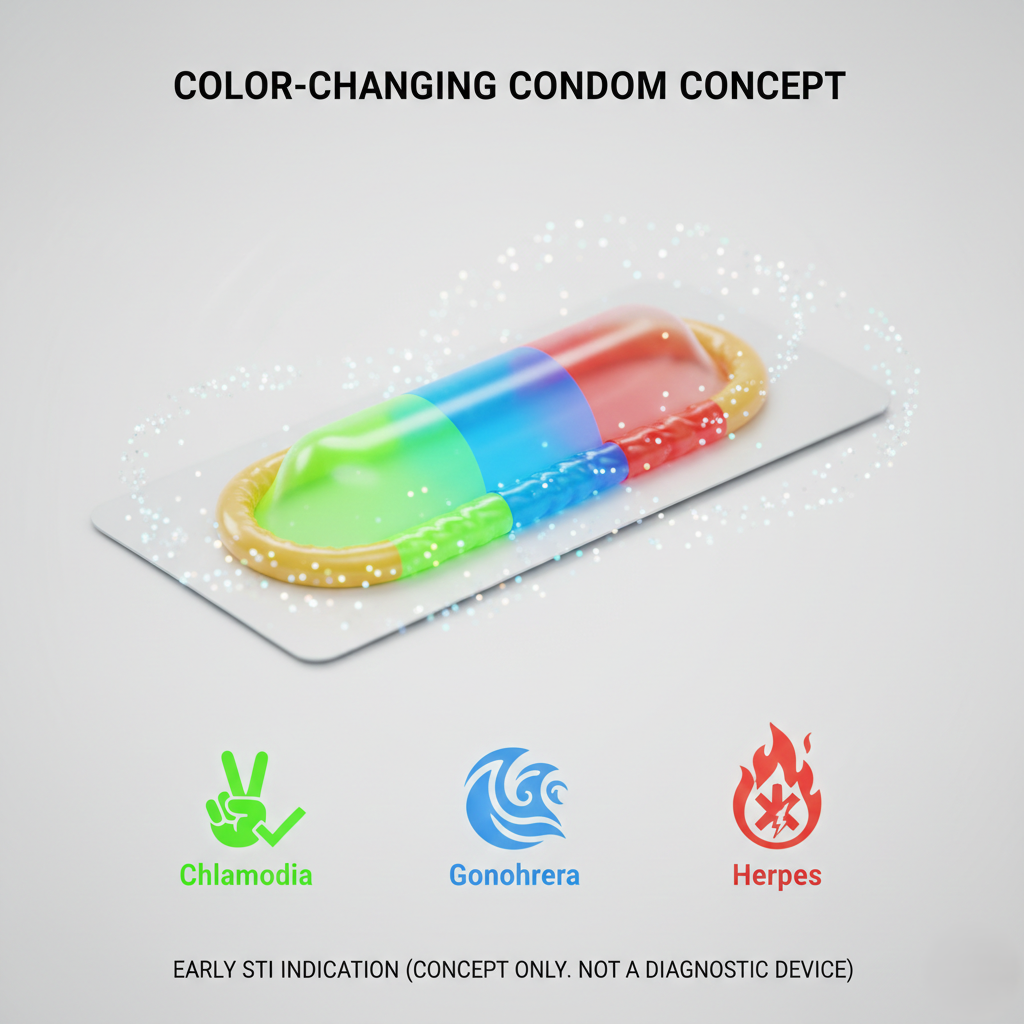
Imagine if a condom could change color to warn you about a possible infection.
That’s the idea a group of teenagers from the United Kingdom presented during a school science competition.
Their concept quickly gained global attention—not because it’s available in stores, but because it tackles a serious health issue in a bold way.
The Idea Behind the Color-Changing Condom
The students proposed a condom made from special material.
This material would react to biological markers linked to certain sexually transmitted infections (STIs).
If those markers were present, the condom would change color.
In theory, that visual change could alert users to a possible infection risk.
It’s important to note: this is still only a concept, not a real medical product.
Why the Idea Sparked So Much Attention
Sexually transmitted infections remain a major global health concern.
Many people avoid testing due to
- Embarrassment
- Cost
- Fear of results
- Limited access to clinics
Because of these barriers, new ideas that promise easier detection often go viral quickly.
Supporters praised the students for thinking creatively about public health challenges.
The Science Challenge: Why It’s Complicated
Turning this idea into a real device would be extremely difficult.
Detecting STIs is not as simple as identifying a surface chemical reaction.
Most infections require laboratory analysis of:
- Blood samples
- Urine tests
- Swabs
Medical experts warn that a color-based reaction could give users a false sense of security.
Without proper clinical testing, it could miss infections or trigger inaccurate results.
What Health Experts Say
Professionals stress that reliable STI diagnosis still requires medical screening.
Organizations like the World Health Organization and the Centers for Disease Control and Prevention recommend regular testing, especially for sexually active individuals.
A condom—even a smart one—cannot replace proper healthcare.
Why the Conversation Matters
Even if the concept never becomes reality, it started something important.
It brought attention to:
- Safer sexual practices
- Early detection awareness
- Youth engagement in science
- Innovation in health technology
Sometimes, bold ideas push serious conversations forward.
Real-World Comparison: Existing STI Detection Methods
Today, accurate STI testing involves:
- Laboratory-based diagnostic kits
- Rapid tests conducted in clinics
- At-home testing kits approved by regulators
These methods are backed by research and clinical trials.
A reactive condom would need the same level of testing and approval before reaching the public.
Innovation vs Responsibility
There’s a fine balance between creative thinking and medical safety.
Innovation in sexual health is important.
But it must be:
- Scientifically validated
- Clinically tested
- Approved by health regulators
- Clear about its limitations
Public trust depends on accuracy.
FAQs
Is the color-changing condom available for purchase?
No. It remains a student concept and has not been developed into a medical product.
Can a condom detect STIs through contact?
Currently, there is no approved condom that can reliably detect STIs through surface contact.
Would such technology replace STI testing?
No. Laboratory testing and professional medical screening remain the only reliable diagnostic methods.
Why did the idea go viral?
It combined youth innovation with a major global health issue, which sparked strong public interest.
Is this type of innovation harmful?
The idea itself isn’t harmful, but experts warn against relying on unproven medical technologies.
Final Thoughts
The color-changing condom concept may not be medically feasible right now.
But it shows how young innovators are thinking about real-world health challenges.
Even as a thought experiment, it sparked global discussion about STI prevention, testing access, and public health awareness.
Creative ideas can open doors—but when it comes to sexual health, science and proper medical testing must always come first.
