


Introduction: When Your Skin Reflects Your Heart
Wrinkles are often seen as a natural sign of aging.
But new research suggests some lines may reveal deeper health concerns.
At a major cardiology conference in Monaco, scientists shared findings that link deep forehead wrinkles to an increased risk of heart disease.
The discovery highlights how external signs may reflect internal cardiovascular health.
The Study That Sparked Global Interest
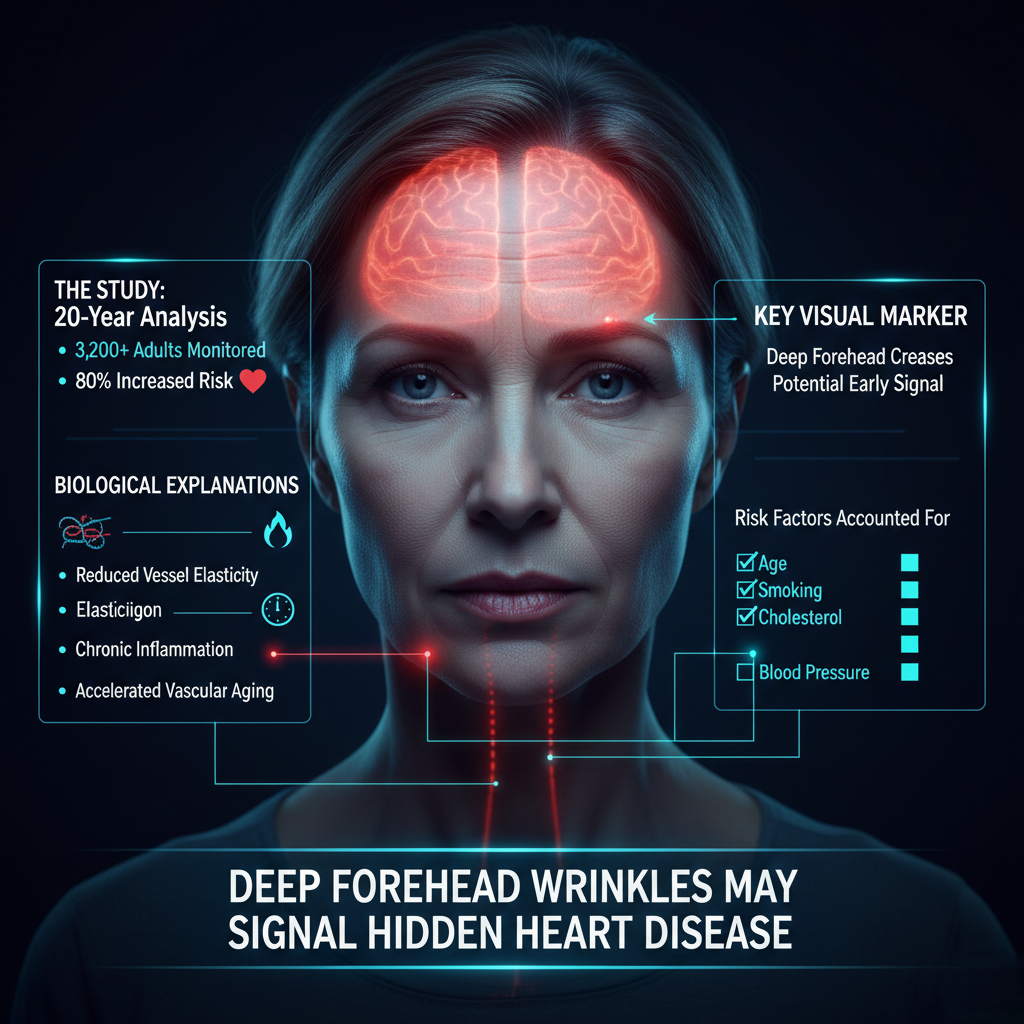
Researchers followed more than 3,200 adults over a 20-year period.
Participants were monitored for cardiovascular conditions and overall health outcomes.
A Surprising Pattern Emerged
People with clearly visible forehead creases were significantly more likely to develop heart-related problems.
This association remained strong even after adjusting for common risk factors.
Why Forehead Wrinkles May Be Linked to Heart Health
Scientists believe the connection lies beneath the skin.
The same biological processes that age blood vessels may also deepen wrinkles.
Possible Biological Explanations
- Reduced elasticity in blood vessels
- Chronic inflammation throughout the body
- Poor microcirculation under the skin
- Accelerated vascular aging
These changes affect both the skin and the cardiovascular system simultaneously.
Strong Results Even After Adjusting Risk Factors
One of the study’s most compelling findings was its consistency.
The wrinkle–heart disease link persisted regardless of lifestyle factors.
Factors Already Accounted For
- Age
- Smoking habits
- Cholesterol levels
- Body weight
- Blood pressure
This suggests wrinkles may act as an independent visual marker of cardiovascular aging.
Wrinkles Are Not a Diagnosis But a Possible Warning
Researchers stress that forehead wrinkles alone do not confirm heart disease.
However, they may serve as an early signal worth paying attention to.
A Simple Visual Cue With Potential Value
Unlike blood tests or scans, wrinkles are visible without medical tools.
This makes them an accessible prompt for early cardiovascular screening.
How This Finding Could Change Preventive Medicine
Doctors already assess physical signs like nail color or eye changes.
Forehead wrinkles may eventually join this list as a supportive indicator.
Early awareness could encourage lifestyle changes before symptoms appear.
That includes diet improvements, exercise, and regular heart checkups.
What You Should Do If You Have Deep Forehead Wrinkles
There is no need for alarm.
But awareness is important.
Practical Steps to Protect Heart Health
- Schedule routine cardiovascular checkups
- Monitor blood pressure and cholesterol
- Maintain an active lifestyle
- Reduce chronic stress and inflammation
- Avoid smoking and processed foods
Wrinkles may simply be a reminder to prioritize prevention.
Why This Research Matters
Heart disease often develops silently for years.
Visual clues could help identify risk earlier than symptoms.
This study reinforces the idea that the body works as a connected system.
What appears on the surface may reflect deeper health changes.
Conclusion: More Than a Cosmetic Concern
Forehead wrinkles may be more than signs of aging.
They could reflect underlying cardiovascular changes happening over time.
While they are not diagnostic, they may offer a valuable early hint.
Listening to these subtle signals could help protect long-term heart health.
Sometimes, the body speaks quietly and we just need to notice.
Frequently Asked Questions (FAQs)
Do forehead wrinkles mean I have heart disease?
No. Wrinkles alone do not diagnose heart disease but may indicate increased risk.
Why would wrinkles be linked to cardiovascular health?
Both involve aging blood vessels, inflammation, and reduced elasticity.
Should doctors use wrinkles as a medical test?
Not yet. Researchers suggest they may complement traditional risk assessments.
Where was this research presented?
The findings were revealed at a cardiology congress in Monaco.
