


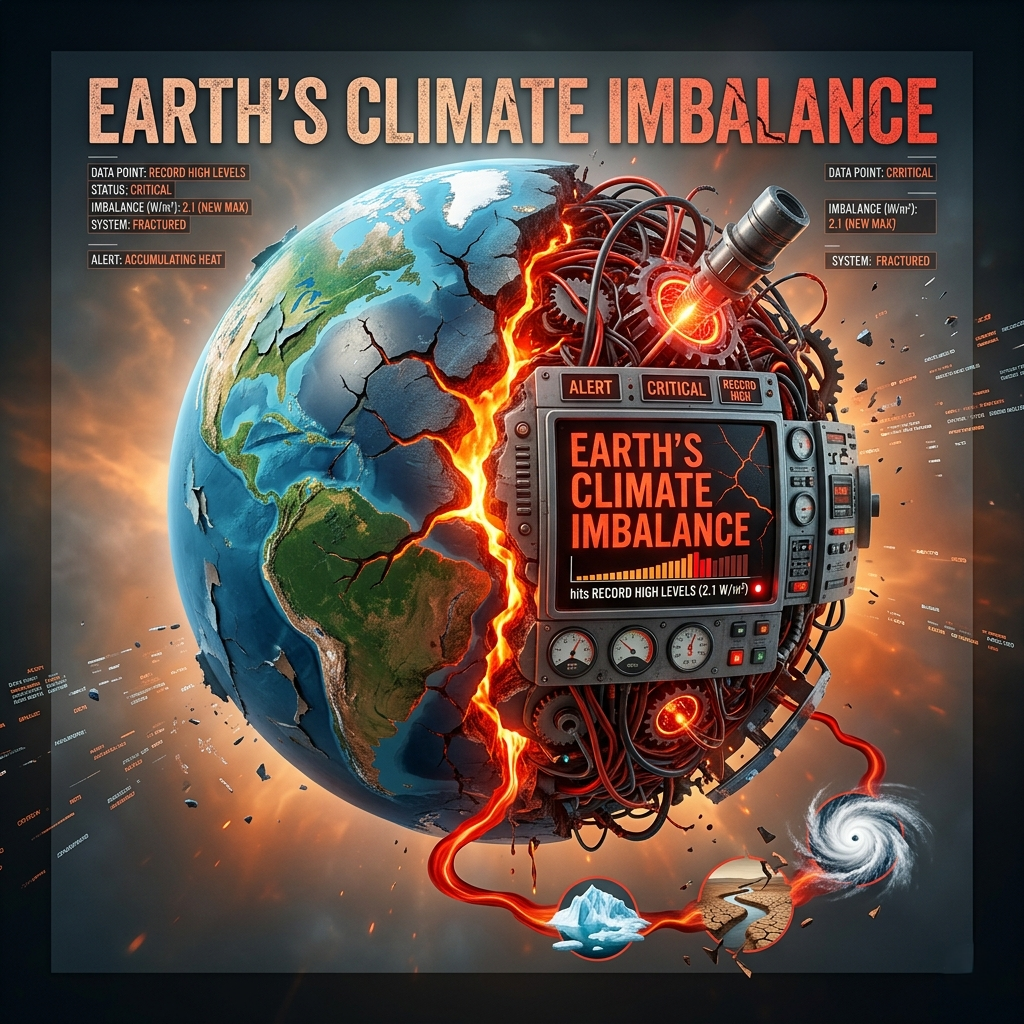
Something serious is happening to our planet and it’s speeding up.
Experts now say Earth’s climate is more out of balance than at any point in recorded history. That means the system keeping our planet stable is under pressure like never before.
According to the World Meteorological Organization, this imbalance is driven mainly by human activity. As a result, the planet is heating faster than expected.
What Does “Climate Imbalance” Really Mean?
Let’s break it down simply.
Earth receives energy from the sun and releases heat back into space. Normally, this stays balanced.
However, now more heat is being trapped than released. This creates a growing “energy imbalance.”
In short:
- More energy coming in
- Less energy going out
- Extra heat stays trapped
Because of this, global temperatures continue to rise year after year.
Record-Breaking Temperatures Confirm the Crisis
The numbers tell a clear story.
Global temperatures are now about 1.43°C higher than pre-industrial levels. That might sound small, but it has huge effects.
In fact, the last 11 years have been the warmest ever recorded. This steady rise shows the problem isn’t slowing down it’s accelerating.
What’s Driving This Rapid Change?
The main cause is easy to understand: greenhouse gases.
Key contributors include:
- Carbon dioxide (CO₂) from burning fossil fuels
- Methane emissions from agriculture and energy
- Deforestation, reducing natural carbon absorption
- Industrial pollution, increasing heat retention
Because these gases trap heat, Earth keeps absorbing more energy than it releases.
Oceans Are Taking the Biggest Hit
Here’s something many people don’t realize the oceans absorb over 90% of the excess heat.
That sounds helpful, but it comes with serious consequences.
What’s happening in the oceans:
- Surface waters are warming twice as fast as before
- Marine ecosystems are under stress
- Coral reefs are bleaching and dying
- Storm systems are becoming more powerful
Over time, this extra heat turns oceans into fuel for extreme weather.
Extreme Weather Is Becoming the New Normal
Because the planet is holding more heat, weather patterns are changing quickly.
You may notice:
- Stronger hurricanes and cyclones
- Longer and hotter heatwaves
- More intense rainfall and flooding
- Increased drought in some regions
These changes are not random; they are direct results of the energy imbalance.
Polar Ice Is Melting at Alarming Rates
Another visible impact is the loss of ice.
Glaciers and polar ice reached near-record lows in 2025. This contributes to rising sea levels and threatens coastal communities.
As ice melts, less sunlight is reflected back into space. Instead, more heat is absorbed, making the problem even worse.
Why António Guterres Is Urging Immediate Action
The urgency of the situation has reached global leaders.
António Guterres has warned that we must act now. He is calling for a rapid shift away from fossil fuels.
His key message:
- Move toward renewable energy
- Reduce emissions immediately
- Protect both climate and global security
Without quick action, the risks will continue to grow.
The Role of El Niño in Future Warming
Another factor is the upcoming El Niño climate pattern.
El Niño naturally raises global temperatures. However, combined with current warming, it could push temperatures even higher.
Experts fear that by 2027, the world could see even more dangerous heat levels.
Long-Term Effects Could Last Centuries
This is not just a short-term issue.
Scientists warn that today’s changes could affect Earth for hundreds or even thousands of years.
That means:
- Long-lasting climate shifts
- Permanent ecosystem damage
- Ongoing sea level rise
Because of this, the decisions we make now are extremely important.
What Can Be Done to Fix the Imbalance?
While the situation is serious, solutions do exist.
Practical steps include:
- Switch to renewable energy
Solar and wind can reduce emissions quickly - Cut fossil fuel use
Reducing coal and oil is critical - Protect forests and oceans
Nature helps absorb carbon - Improve energy efficiency
Less waste means less impact - Support global climate policies
Collective action creates real change
Even small steps, when combined globally, can slow the damage.
A Simple Way to Understand the Crisis
Think of Earth like a room with a heater.
If the heater stays on and the windows are closed, the room keeps getting hotter.
That’s exactly what’s happening to our planet.
FAQs
What is Earth’s climate imbalance?
It means the planet is trapping more heat than it releases, leading to global warming.
Why are oceans important in this issue?
Oceans absorb most of the excess heat, which affects marine life and weather patterns.
How much has Earth warmed so far?
Global temperatures are about 1.43°C above pre-industrial levels.
What is El Niño, and why does it matter?
El Niño is a natural warming pattern that can increase global temperatures further.
Can this problem still be controlled?
Yes, but only with fast and strong global action to reduce emissions.
Final Thoughts
Earth’s climate imbalance is no longer a future threat; it’s happening right now. Reports from the World Meteorological Organization clearly show the scale of the problem.
However, there is still hope.
If the world acts quickly and wisely, the worst outcomes can be avoided. The key is a simple act now, not later.
👉 Stay informed, make eco-friendly choices, and support clean energy solutions. Every step matters in protecting our planet.
