

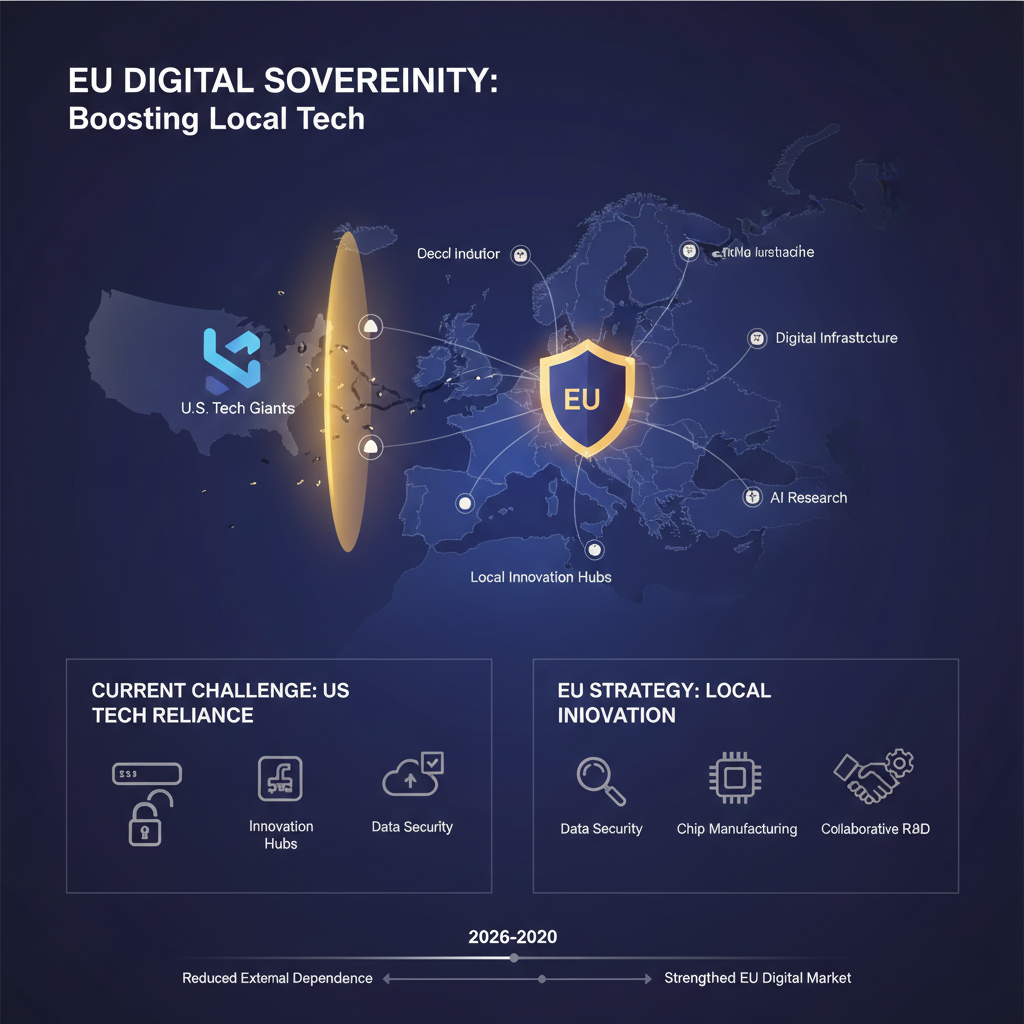
The European Union wants more control over its digital future.
To do that, it plans to reduce its dependence on U.S. technology.
This move could reshape how technology is built, owned, and used across Europe.
Why the EU Wants Less Dependence on U.S. Tech
European leaders are worried about relying too much on foreign tech companies.
Key concerns include:
- Data privacy and protection
- Economic independence
- Long-term digital security
They believe core technologies should be controlled closer to home.
Building a Strong European Tech Ecosystem
Supporting Local Companies and Startups
The EU plans to invest more in:
- Research and development
- Local startups
- European tech companies
This support may include grants, tax relief, and partnerships. Focus on Key Technology Areas
The strategy targets fast-growing sectors such as
- Artificial intelligence
- Software development
- Semiconductors
- Cloud computing
These areas are currently dominated by U.S. firms.
Policy Changes to Favor European Technology
New rules may encourage the use of:
- European-made software
- Local hardware solutions
- Homegrown AI systems
Public institutions may be asked to choose EU-based tech first.
Possible Global Impact of This Strategy
A Shift in the Tech Power Balance
Experts say this plan could change the global tech market.
If successful, Europe could:
- Produce new global tech leaders
- Reduce reliance on foreign platforms
- Increase competition worldwide
This could benefit innovation in the long run.
Short-Term Challenges to Expect
Not everyone agrees with the approach.
Critics warn about:
- Higher short-term costs
- Training workers on new systems
- Compatibility issues with global platforms
Some believe cooperation works better than separation.
Collaboration vs. Independence Debate
Many experts argue that total separation isn’t realistic.
They suggest:
- Stronger European tech
- Continued global collaboration
- Compatible systems across borders
The balance between independence and cooperation remains a key question.
FAQs: EU Reducing Reliance on U.S. Technology
Why does the EU want to reduce U.S. tech dependence?
The EU wants better control over data, security, and long-term digital growth.
Which tech sectors will be affected most?
AI, cloud computing, software, and semiconductors are key focus areas.
Will this increase costs for businesses?
Possibly in the short term, as systems change and workers are trained.
Does this mean Europe will stop using U.S. tech?
No. The goal is to reduce reliance, not completely cut ties.
Could this help European startups grow?
Yes. More funding and policy support could help local companies compete globally.
Final Thoughts
The EU’s plan marks a clear push toward digital independence.
While challenges are expected, long-term investment in local innovation could strengthen Europe’s position in global technology.
How fast European alternatives can compete with U.S. tech will be closely watched.
