


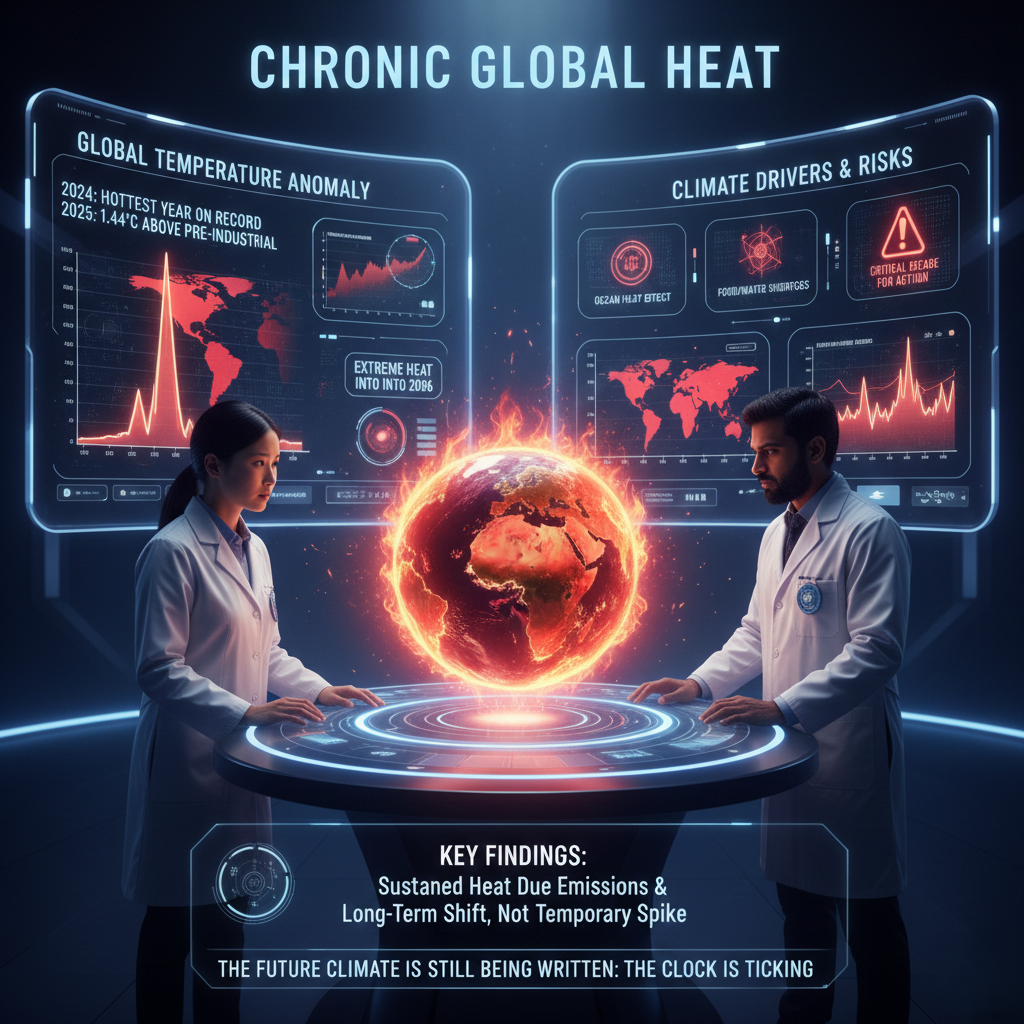
Recent heat records are not a temporary spike.
Climate experts now warn that intense global heat is likely to persist well into 2026, signaling a long-term shift rather than a short-lived anomaly.
According to climate monitoring agencies, 2025 ranked among the three hottest years ever recorded, with global temperatures reaching roughly 1.44°C above pre-industrial levels. That places it close behind 2024, currently the hottest year in modern history.
The message from scientists is increasingly clear:
the planet is entering a sustained period of extreme heat.
Why Global Temperatures Keep Rising
Researchers from universities in Canada and across Europe point to two powerful drivers behind the trend.
The main forces fueling extreme heat
- Rising greenhouse gas emissions
- Record-breaking heat stored in the world’s oceans
While emissions trap heat in the atmosphere, oceans absorb most of that excess energy—temporarily masking the full impact.
Over time, however, that stored heat is released back into the air.
The Ocean Heat Effect Explained
The world’s oceans act like a massive heat reservoir.
They absorb more than 90% of the excess heat caused by human activity.
Why this matters
When oceans release that heat:
- Air temperatures rise further
- Heatwaves become longer and more intense
- Weather systems grow more unstable
This delayed release helps explain why temperatures continue climbing even during years with fewer short-term climate drivers.
Heatwaves Are Becoming the New Normal
Climate institutes warn that persistent warming is already reshaping weather patterns.
Prolonged extreme heat increases the likelihood of:
- Longer and deadlier heatwaves
- Warmer nights with little cooling
- Heat stress across entire regions
What were once rare events are becoming routine in many parts of the world.
Serious Risks to Food, Water, and Health
Sustained global heat has consequences far beyond discomfort.
Food production under pressure
Extreme heat can:
- Reduce crop yields
- Damage soil moisture
- Increase the risk of food shortages
Staple crops such as wheat, rice, and maize are especially vulnerable.
Freshwater systems at risk
Higher temperatures strain water supplies by:
- Accelerating evaporation
- Shrinking snowpacks and glaciers
- Increasing drought frequency
Many regions already facing water stress could see conditions worsen.
Growing Threats to Public Health
Heat is one of the deadliest climate-related hazards.
Rising temperatures increase:
- Heat exhaustion and heatstroke
- Cardiovascular strain
- Respiratory complications
Elderly populations, outdoor workers, and low-income communities face the greatest risks.
Why the Next Decade Is Critical
Climate experts stress that this decade represents a narrow window for action.
Without rapid and sustained emissions cuts:
- Extreme heat may become permanent
- Climate patterns could shift irreversibly
- Adaptation costs will rise sharply
Delaying action increases risks for future generations.
What Can Still Make a Difference
Scientists emphasize that solutions already exist.
Key priorities include:
- Rapid reduction of fossil fuel use
- Expansion of renewable energy
- Improved energy efficiency
- Stronger international climate commitments
Every fraction of a degree matters.
Frequently Asked Questions (FAQs)
Is extreme heat guaranteed to continue?
If emissions remain high, prolonged heat is very likely to persist.
Why does warming continue even after record years?
Oceans release stored heat over time, adding to atmospheric warming.
Can global temperatures still be stabilized?
Yes, but only with immediate and large-scale emissions reductions.
The Takeaway: Extreme Heat Is No Longer Temporary
The evidence is mounting:
extreme global heat is becoming a defining feature of the modern climate.
What happens next depends on decisions made today by governments, industries, and societies worldwide.
Without decisive action, scientists warn that record-breaking heat may soon feel routine, reshaping ecosystems, economies, and everyday life across the planet.
The future climate is still being written—but the clock is ticking.
