


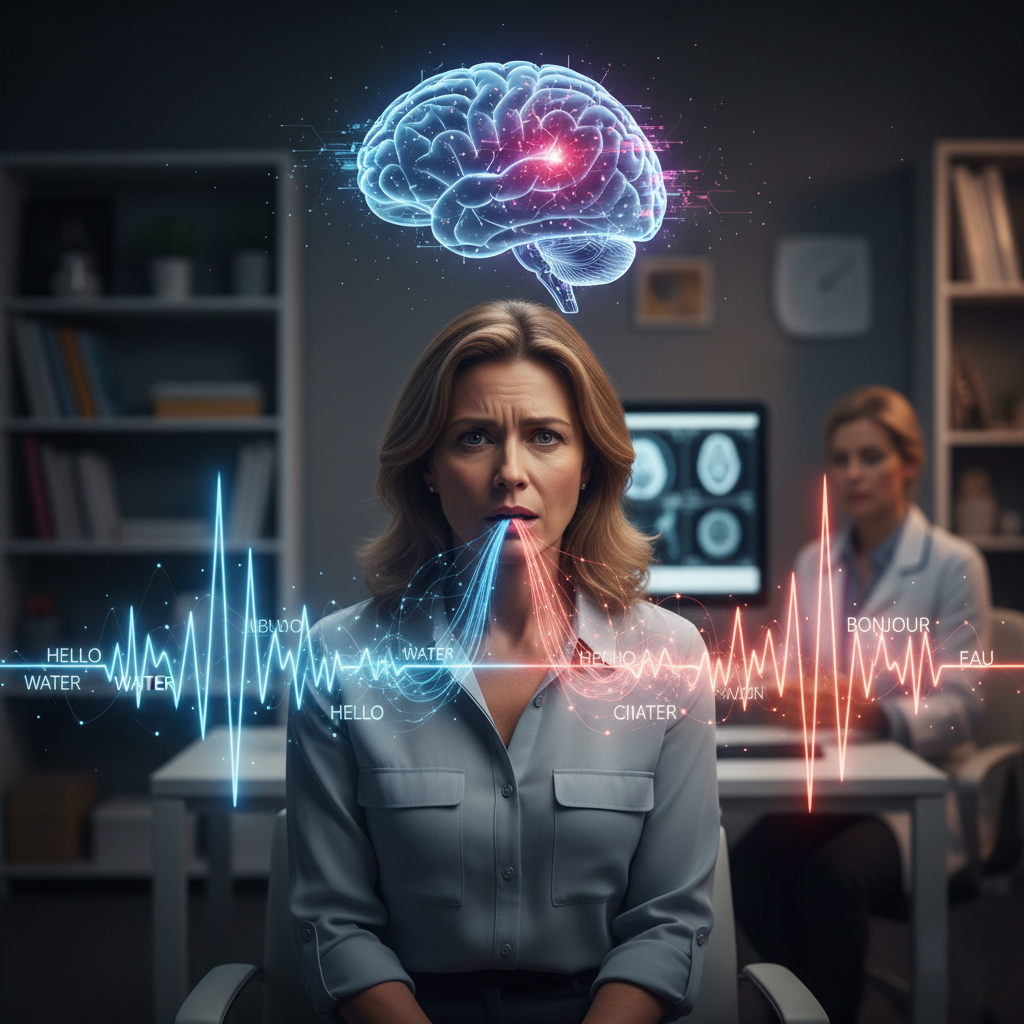
Imagine waking up and suddenly sounding like you’re from another country.
Not by choice. Not by practice. Just overnight.
That’s what happens in Foreign Accent Syndrome (FAS)—a rare neurological speech condition that can completely change how someone sounds.
It’s unusual. It’s real. And it shows how delicate the brain’s speech system truly is.
What Is Foreign Accent Syndrome?
Foreign Accent Syndrome is a rare condition where a person suddenly begins to speak with what sounds like a foreign accent.
The person is not pretending.
They are not copying anyone.
The change usually happens after:
- A stroke
- A traumatic brain injury
- Brain surgery
- Severe migraines (in rare cases)
- Other neurological disorders
The shift is unintentional and medically documented in neurological case studies.
What Causes Foreign Accent Syndrome?
FAS is linked to small areas of brain damage that affect speech control.
These areas help coordinate:
- Tongue movement
- Lip positioning
- Jaw motion
- Vocal cord timing
- Speech rhythm
Even tiny disruptions can change pronunciation patterns.
The most common trigger is a stroke affecting the brain’s speech centers, including regions like
- Broca’s area
- motor cortex
When these regions are slightly damaged, speech timing shifts.
That shift can make the accent sound “foreign.”
Why Does It Sound Like a Different Accent?
This is where things get interesting.
The person’s language ability does not change.
Their vocabulary and grammar stay normal.
What changes is the sound pattern.
Small differences in:
- Vowel length
- Consonant sharpness
- Syllable stress
- Speech rhythm
…can make listeners think the speaker is from another country.
For example:
- An English speaker may suddenly sound French.
- An American may sound Australian.
- A British speaker may sound Eastern European.
But linguistically, the accent isn’t truly that region’s accent.
It just resembles it because of timing and pronunciation shifts.
Real-World Case Examples
Foreign Accent Syndrome has been reported in several medical journals.
One well-known case involved a woman who developed an “Australian-sounding” accent after a stroke—despite never visiting Australia.
In another case, a patient appeared to speak with a French accent after a traumatic brain injury.
These cases were documented in neurological and speech pathology research, not media myths.
Symptoms of Foreign Accent Syndrome
The symptoms are subtle but noticeable.
Common signs include:
- Unusual speech rhythm
- Different vowel pronunciation
- Altered stress patterns
- Slight pauses between syllables
- Changes in pitch
Importantly, FAS does not affect:
- Intelligence
- Language comprehension
- Memory
- Personality
It only affects how speech sounds.
How Is Foreign Accent Syndrome Treated?
There is no single cure.
Treatment usually involves speech therapy with a trained speech-language pathologist.
Therapy focuses on:
- Muscle coordination training
- Rhythm and pacing correction
- Pronunciation exercises
- Breathing and voice control
In some cases, the accent gradually fades.
In others, it may remain long-term.
Recovery depends on the extent of neurological damage.
How Rare Is Foreign Accent Syndrome?
FAS is extremely rare.
Fewer than a few hundred confirmed cases have been documented worldwide.
Because of its rarity, it is often misunderstood or dramatized in media.
But medically, it is a recognized neurological condition.
Why This Condition Matters
Foreign Accent Syndrome reminds us how complex the brain truly is.
Speech seems simple.
But behind every word is a highly coordinated system of:
- Neural signals
- Muscle timing
- Airflow control
- Sound shaping
Even a tiny disruption can change how someone sounds—without changing what they mean.
It’s a powerful example of how delicate human communication really is.
FAQs
Is Foreign Accent Syndrome psychological?
No. It is a neurological condition usually linked to stroke or brain injury.
Can someone fake Foreign Accent Syndrome?
While people can imitate accents, true FAS is medically documented and linked to brain changes.
Does FAS affect understanding language?
No. It only affects speech production, not comprehension.
Can the accent go away?
Sometimes. With speech therapy, some patients improve. Others may keep the accent long-term.
Is Foreign Accent Syndrome permanent?
It depends on the cause and severity of the brain injury.
Final Thoughts
Foreign Accent Syndrome may sound unbelievable, but it’s very real.
It shows how sensitive our brain’s speech systems are. Even small neurological changes can shift how we sound to the world.
