


Imagine trucks that never need to stop for charging. Sounds futuristic, right?
Well, it’s already happening in Germany. A new system called eHighways is changing how goods move across the country.
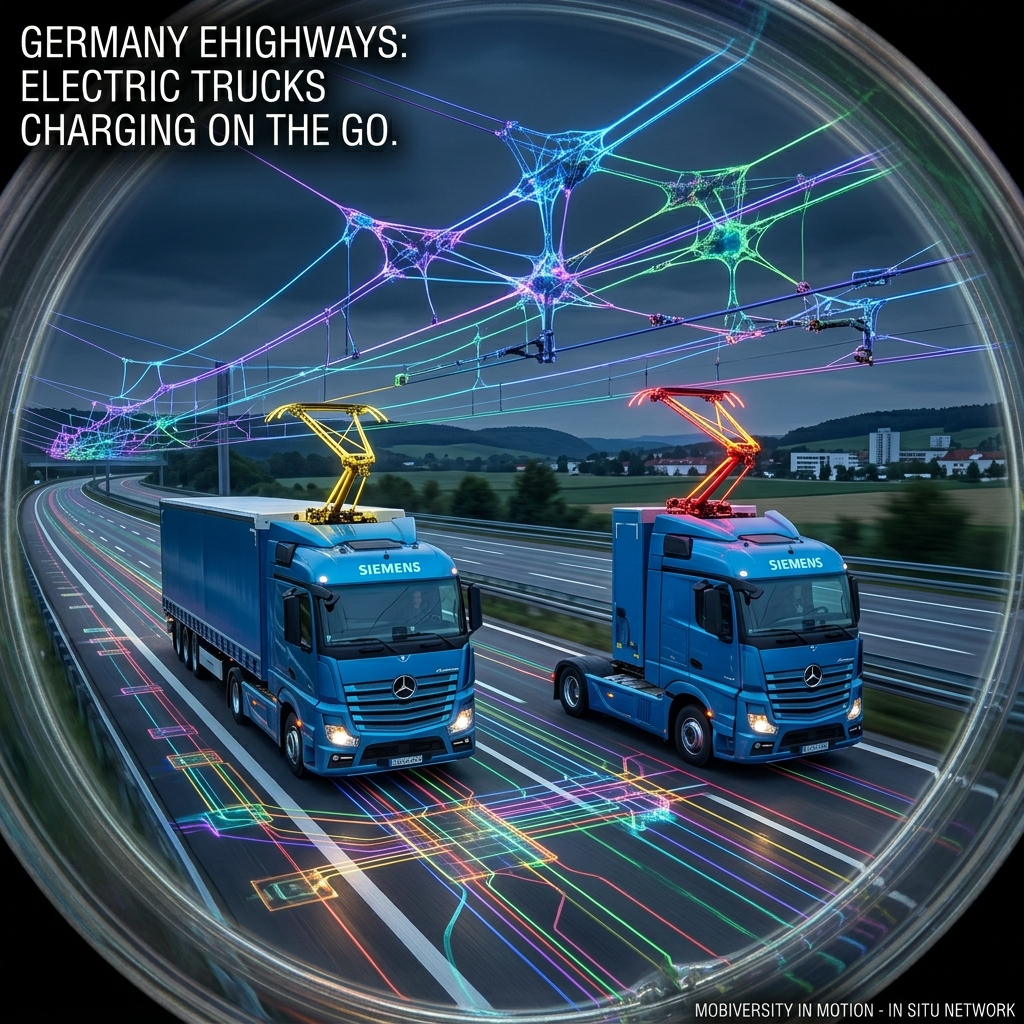
Instead of relying on fuel or long charging stops, trucks can now draw power directly from overhead cables—just like trams.
What are eHighways and how do they work?
eHighways are special road sections with overhead electric lines. Trucks equipped with smart technology connect to these lines while driving.
How It Works
- Trucks use retractable pantographs
- Sensors help align with overhead cables
- Power flows directly into the truck
- Charging happens while moving
Because of this, trucks can travel long distances without stopping.
Charging on the Go: A Game-Changer
Traditional electric trucks need time to recharge. However, eHighways remove that problem completely.
Key Benefits
- Continuous movement without delays
- No long charging stops
- Higher efficiency compared to fuel engines
As a result, logistics becomes faster and smoother.
Massive Environmental Impact
This system is not just smart—it’s also clean.
If only 30% of truck traffic uses eHighways, the impact could be huge.
Environmental Gains
- Prevent up to 6 million tons of CO₂ emissions yearly
- Use 100% renewable electricity
- Reduce dependence on fossil fuels
So, this innovation supports a greener future.
Big Cost Savings for Transport Companies
Switching to electric highways also makes financial sense.
Economic Advantages
- Up to €20,000 saved per truck annually
- Lower fuel costs
- Reduced maintenance expenses
For large logistics companies, this could mean millions in savings.
Why eHighways Are More Efficient
Compared to traditional engines, this system is far more efficient.
Efficiency Breakdown
- Direct electric power reduces energy loss
- No fuel combustion needed
- Smoother energy transfer
Because of this, eHighways are about twice as efficient as internal combustion engines.
Real-World Example
Picture a 40-ton truck traveling across Germany. Instead of stopping to refuel, it connects to overhead lines and keeps moving.
At the same time, it produces zero emissions and saves money. That’s a win for both business and the environment.
The Future of Global Logistics
Germany is leading the way, but other countries are watching closely.
If this system expands, we could see the following:
- Electrified highways worldwide
- Faster and cleaner supply chains
- Reduced global carbon emissions
Clearly, this is more than just a local innovation—it’s a global shift.
FAQs
What is an e-highway?
It’s a road system where trucks get electricity from overhead cables while driving.
Do trucks need special equipment?
Yes, they require pantographs and sensors to connect to the power lines.
Is this better than battery-powered trucks?
In many cases, yes. It removes the need for long charging stops and improves efficiency.
Will other countries adopt this?
Possibly. Many nations are exploring similar solutions for clean transport.
Final Thoughts
eHighways show how innovation can transform entire industries. They combine the efficiency of rail systems with the flexibility of road transport.
👉 As the world moves toward cleaner energy, solutions like this could play a major role in reducing emissions and shaping the future of logistics. 🚛⚡
