


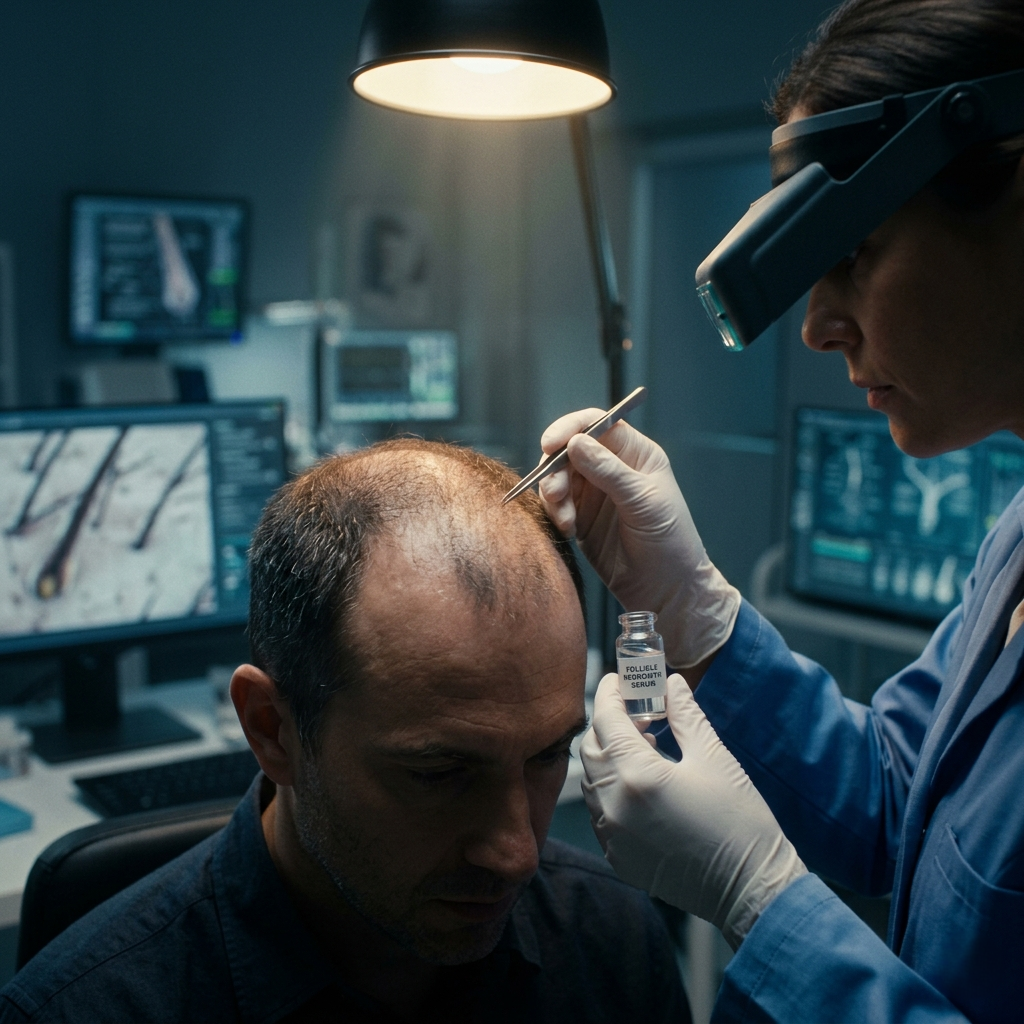
Introduction
What if most hair loss treatments you’ve seen were never meant to solve the real problem?
It’s a frustrating thought. Yet, new research suggests that real progress in hair regrowth is finally happening just not in the way the beauty industry promised.
For years, people spent billions chasing results. Now, science is starting to focus on something deeper: the hair follicle itself.
What Is a Hair Follicle and Why It Matters
A hair follicle is a tiny structure under your skin that grows hair.
It controls everything:
- Hair growth cycle
- Thickness and strength
- Regrowth after shedding
So, when follicles weaken, shrink, or stop working, hair loss begins.
That’s why real solutions must target the follicle, not just the hair you can see.
What Scientists Are Discovering Now
Recent studies published in Nature show a major shift in research.
Instead of slowing hair loss, scientists are now trying to:
1. Reactivate dormant follicles
Some follicles don’t die; they just become inactive.
Researchers are working on ways to “wake them up” so hair can grow again naturally.
2. Create new follicles
Even more exciting, scientists are exploring how to grow entirely new follicles in the lab.
If successful, this could change everything.
Why This Changes Everything
For decades, most products focused on:
- Slowing hair loss
- Making hair look thicker
- Maintaining existing strands
However, they rarely addressed the root cause.
The key difference now:
- Old approach: Manage the problem
- New approach: Solve the problem
So instead of temporary fixes, science is aiming for long-term solutions.
The Role of the Beauty Industry
Here’s where things get uncomfortable.
The global hair loss industry has made billions through:
- Expensive shampoos
- Oils and serums
- Subscription-based treatments
- Cosmetic solutions
While some products help slightly, many rely more on marketing than biology.
As a result, people often spend years chasing results that never fully come.
Where Real Innovation Is Happening
Interestingly, much of the serious follicle research is happening in parts of Asia.
Scientists there are focusing on the following:
- Stem cell technology
- Tissue engineering
- Regenerative medicine
These fields aim to rebuild or restore follicles, not just protect what’s left.
Real-World Perspective
Imagine two approaches:
- One sells you a product every month to “maintain” your hair
- The other aims to restore natural hair growth permanently
Clearly, the second approach is more powerful but also more complex and slower to reach the market.
That’s why progress feels delayed, even though real science is moving forward.
Why It Took So Long
It’s easy to feel frustrated. However, there are a few reasons:
- Biology is complex and takes time to understand
- Clinical testing must ensure safety
- Businesses often profit more from long-term treatments
So, while science advances steadily, commercial products don’t always reflect that progress.
What This Means for You
You don’t need to fall for hype anymore.
Instead:
- Be cautious of “miracle cures.”
- Focus on scientifically backed treatments
- Stay updated on real research developments
Most importantly, understand that true solutions take time, but they are getting closer.
FAQs
1. Can hair follicles really be regrown?
Scientists are working on it. Early research shows promising results, especially with stem cell approaches.
2. Are current hair loss products effective?
Some help slow hair loss, but most don’t create new follicles.
3. When will real treatments be available?
It may take a few more years, as testing and approvals are still ongoing.
4. Is the beauty industry misleading consumers?
Some products rely heavily on marketing, so it’s important to check scientific evidence.
Final Thoughts
Hair loss has long been treated as a cosmetic issue. However, science is finally approaching it as a biological problem.
That shift changes everything.
While frustration is understandable, real progress is happening, and it’s moving toward solutions that could actually restore natural hair growth.
