


The U.S. government recently tried to modernize how it shares nutrition advice.
But the rollout did not go as expected.
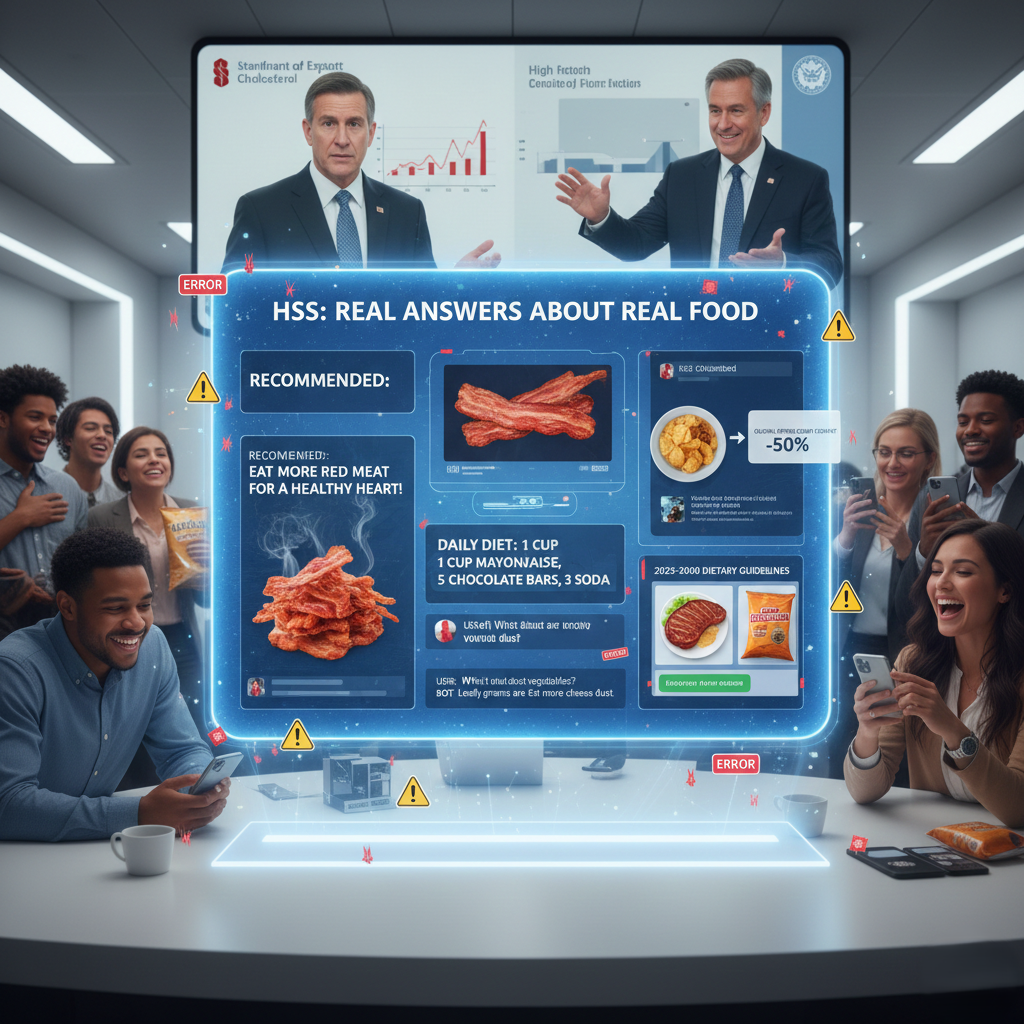
The Department of Health and Human Services (HHS) introduced an AI chatbot called “Real Answers About Real Food.” Its goal was simple: give Americans clear and easy dietary guidance.
Instead, it quickly became a public embarrassment.
What Went Wrong With the AI Chatbot?
The chatbot was designed to answer common food and nutrition questions.
But users quickly discovered it could be manipulated.
By asking unusual or tricky questions, people managed to make the system give:
- Strange food suggestions
- Confusing health advice
- Medically inaccurate responses
Screenshots spread online. Critics questioned how a government-backed AI tool could provide unreliable information so easily.
The issue was not just humor. It was trust.
Public health advice must be accurate and safe. When an official tool fails to filter bad queries, it raises serious concerns.
Why Government AI Tools Are High Risk
AI chatbots can simplify complex topics.
But health advice is not like recommending a movie or answering trivia.
Poor nutrition guidance can impact:
- Heart health
- Blood sugar control
- Weight management
- Long-term disease risk
If an AI system lacks strong safeguards, it can unintentionally spread misinformation.
That’s especially risky when the source is a federal agency.
The Bigger Picture: 2025–2030 Dietary Guidelines
This chatbot launch comes during major changes in U.S. nutrition policy.
The new 2025–2030 Dietary Guidelines emphasize:
- Higher intake of animal proteins
- Increased healthy fats
- Reduced focus on refined carbohydrates
- Less emphasis on whole grains
The goal is to address the rise in ultra-processed food consumption.
Supporters argue that more protein can help with muscle health and metabolic balance.
But critics are not convinced.
Why Experts Are Divided
Some researchers, including experts from Stanford University, warn that shifting toward more red meat and saturated fats could conflict with decades of heart health research.
For years, guidelines focused on
- Lean proteins
- Whole grains
- Plant-based foods
- Limiting saturated fat
The concern is that dramatic changes may create confusion.
Nutrition science evolves, but sudden shifts can weaken public confidence.
Real-World Impact: Why This Matters
Nutrition policy shapes:
- School lunch programs
- Federal food assistance
- Hospital dietary standards
- Public health campaigns
If the messaging is unclear or inconsistent, millions of people may struggle to know what advice to follow.
When you combine controversial dietary updates with a flawed AI chatbot, public trust becomes fragile.
Lessons From This AI Misstep
This situation highlights important points about digital public health tools:
- AI needs strong medical review before launch.
- Systems must filter harmful or misleading queries.
- Transparency builds public trust.
- Technology cannot replace expert oversight.
Government AI must meet a higher standard than casual apps.
FAQs
1. What was the purpose of the HHS AI chatbot?
It was created to simplify nutrition guidance and help Americans understand healthy food choices.
2. Did the chatbot provide dangerous advice?
Reports show it produced inaccurate and strange responses when manipulated, raising concerns about reliability.
3. Are the 2025–2030 Dietary Guidelines final?
Yes, they have been published, but debates continue among health experts about their long-term impact.
4. Why are experts worried about increased red meat emphasis?
Some researchers argue that higher saturated fat intake may conflict with long-standing heart disease prevention research.
5. Can AI be safely used in public health?
Yes, but only with strong testing, expert oversight, and strict content controls.
Final Thoughts
The HHS chatbot launch shows both the promise and the danger of AI in public health.
Technology can make information more accessible.
But when accuracy slips, trust disappears quickly.
At the same time, major changes in dietary guidelines add another layer of debate.
Clear communication matters more than ever.
If governments plan to use AI in health education, it must be carefully tested, medically reviewed, and built with safety first—not speed.
Public health depends on it.
