


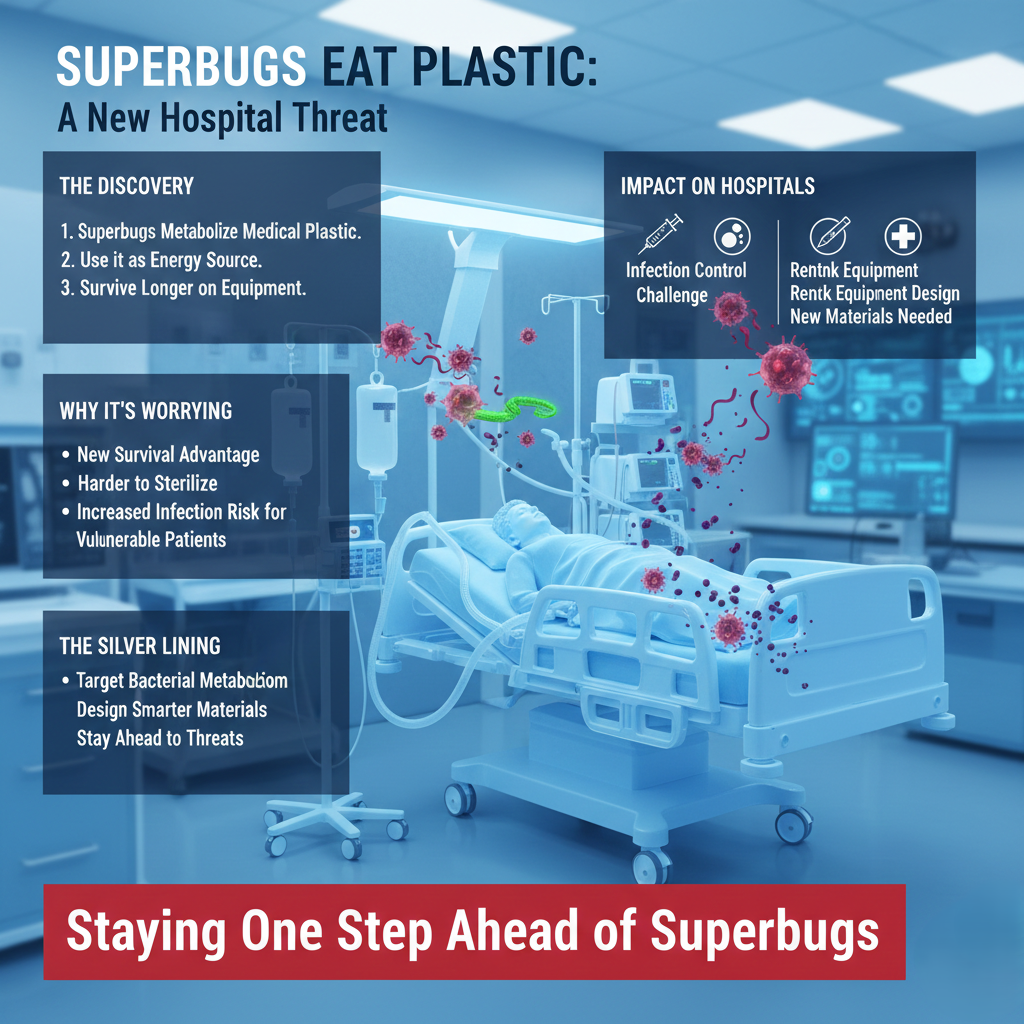
Researchers have uncovered a troubling new ability in a dangerous hospital superbug.
Scientists found that some antibiotic-resistant bacteria can break down and feed on medical plastics commonly used in hospitals.
This discovery could make infections harder to prevent and control.
What Exactly Did Scientists Discover?
During laboratory testing, researchers observed bacteria consuming compounds found in medical plastics.
These plastics are used in:
- Catheters
- Tubes and IV lines
- Medical storage containers
- Other hospital devices
Using genetic analysis, scientists confirmed that the bacteria can metabolize plastic, turning it into a source of energy.
Why This Is So Concerning
These bacteria are already known as superbugs because they resist many antibiotics.
Their ability to feed on plastic gives them:
- A new survival advantage
- More places to hide and grow
- Longer survival on hospital equipment
This makes infections harder to eliminate, especially in clinical settings.
Higher Risk for Vulnerable Patients
Patients with weakened immune systems are most at risk.
This includes:
- ICU patients
- Cancer patients
- Elderly individuals
- People with long-term medical devices
If bacteria can survive on plastic equipment, infections may become more persistent.
What This Means for Hospital Safety
Traditional sterilization focuses on killing bacteria on surfaces.
But this discovery raises new concerns:
- Bacteria may survive inside plastic materials
- Cleaning methods may not reach hidden areas
- Plastic breakdown could help bacteria spread
Experts say infection-control strategies may need updating.
Rethinking Medical Equipment Design
This research could change how medical tools are made.
Scientists may need to:
- Develop plastics that resist bacterial growth
- Create materials bacteria cannot digest
- Improve surface coatings for medical devices
Designing smarter materials could reduce infection risks.
A Silver Lining: New Ways to Fight Infections
Understanding how bacteria interact with plastic is also helpful.
It allows researchers to:
- Target bacterial plastic metabolism
- Design better disinfectants
- Block survival pathways
- Stay ahead of bacterial evolution
Knowledge is a powerful weapon.
A Reminder of How Fast Microbes Adapt
This discovery highlights a bigger issue.
Microorganisms adapt quickly to:
- Human environments
- Medical technology
- New materials
What we create to heal can sometimes create new challenges.
Frequently Asked Questions
Are all bacteria able to eat plastic?
No. This ability was found in specific antibiotic-resistant strains.
Does this mean hospitals are unsafe?
No, but it does mean safety practices may need improvement.
Can this lead to new treatments?
Yes. Understanding the mechanism can guide better prevention.
Final Thoughts: Staying One Step Ahead of Superbugs
This discovery is unsettling, but important.
It shows how adaptable bacteria can be and why constant research is essential.
By understanding these threats early, scientists can design better tools, safer materials, and stronger defenses.
