


Bees may be small, but their work is anything but.
Behind every jar of honey is an incredible story of distance, teamwork, and patience that most people never realize.
What looks like a simple natural food actually represents one of nature’s most impressive achievements.
How Fast Can a Bee Fly?
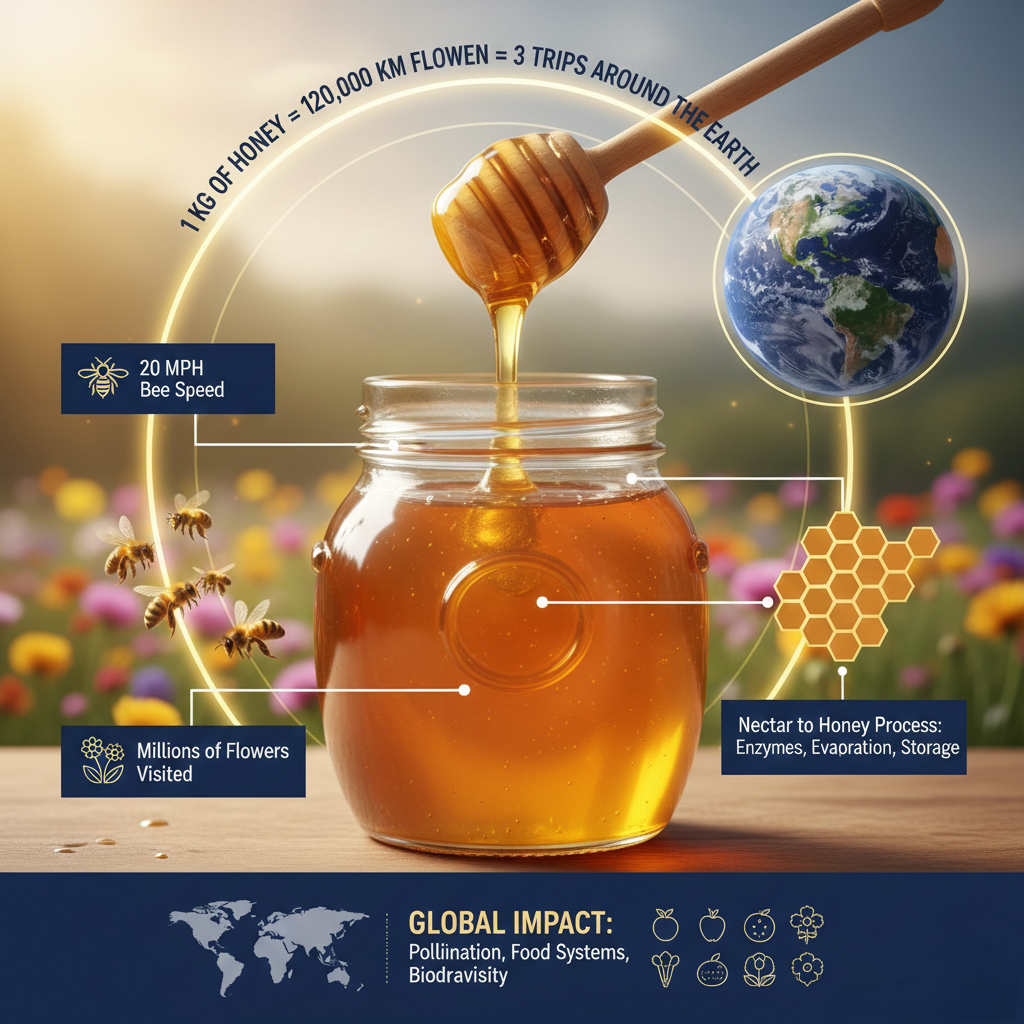
A single honeybee can fly at speeds of up to 20 miles per hour.
For such a tiny insect, that’s already remarkable.
But the real magic begins when thousands of bees work together as one colony.
The Shocking Distance Behind One Kilogram of Honey
To produce just one kilogram of honey, a bee colony must collectively fly a distance equal to circling the Earth three times.
That’s roughly:
- 120,000 kilometers
- Millions of individual flights
- Endless trips between flowers and the hive
Each bee only flies short distances, but together the total adds up fast.
Millions of Flowers, One Spoon of Honey
Each bee collects tiny drops of nectar from flowers.
One bee alone gathers very little.
But a full hive will:
- Visit millions of flowers
- Collect nectar drop by drop
- Carry it back to the hive
- Slowly turn it into honey
Every spoonful represents thousands of trips.
How Nectar Becomes Honey
Once nectar reaches the hive, bees begin a careful process.
They:
- Break down sugars
- Reduce moisture
- Store it in honeycomb cells
- Seal it with wax
This preserves the honey and makes it safe to eat long-term.
Why Bees Are So Important to Nature
Bees do more than make honey.
They play a key role in:
- Pollinating plants
- Growing fruits and vegetables
- Supporting biodiversity
- Keeping ecosystems healthy
Without bees, many foods we rely on would disappear.
The Power of Teamwork in a Bee Colony
One bee’s effort seems tiny.
But together, bees show what teamwork can achieve.
Their colonies operate with:
- Clear roles
- Perfect coordination
- Shared goals
- Total efficiency
Nature proves that small actions add up.
Why This Matters to Humans
Understanding bees helps us value them more.
Protecting bees means:
- Protecting food systems
- Supporting the environment
- Preserving natural balance
Every jar of honey tells a much bigger story than we think.
Frequently Asked Questions
Do bees really fly that far?
Yes. Collectively, the colony’s total distance equals circling Earth multiple times.
How long does it take to make one kilogram of honey?
It can take weeks or even months, depending on flower availability.
Do all bees make honey?
Only honeybees produce honey in large amounts.
Final Thoughts: Small Creatures, Massive Impact
Bees remind us that size doesn’t limit impact.
Through patience, teamwork, and nonstop effort, they create something valuable and lasting.
The next time you taste honey, remember — you’re tasting the result of a journey around the world.
