


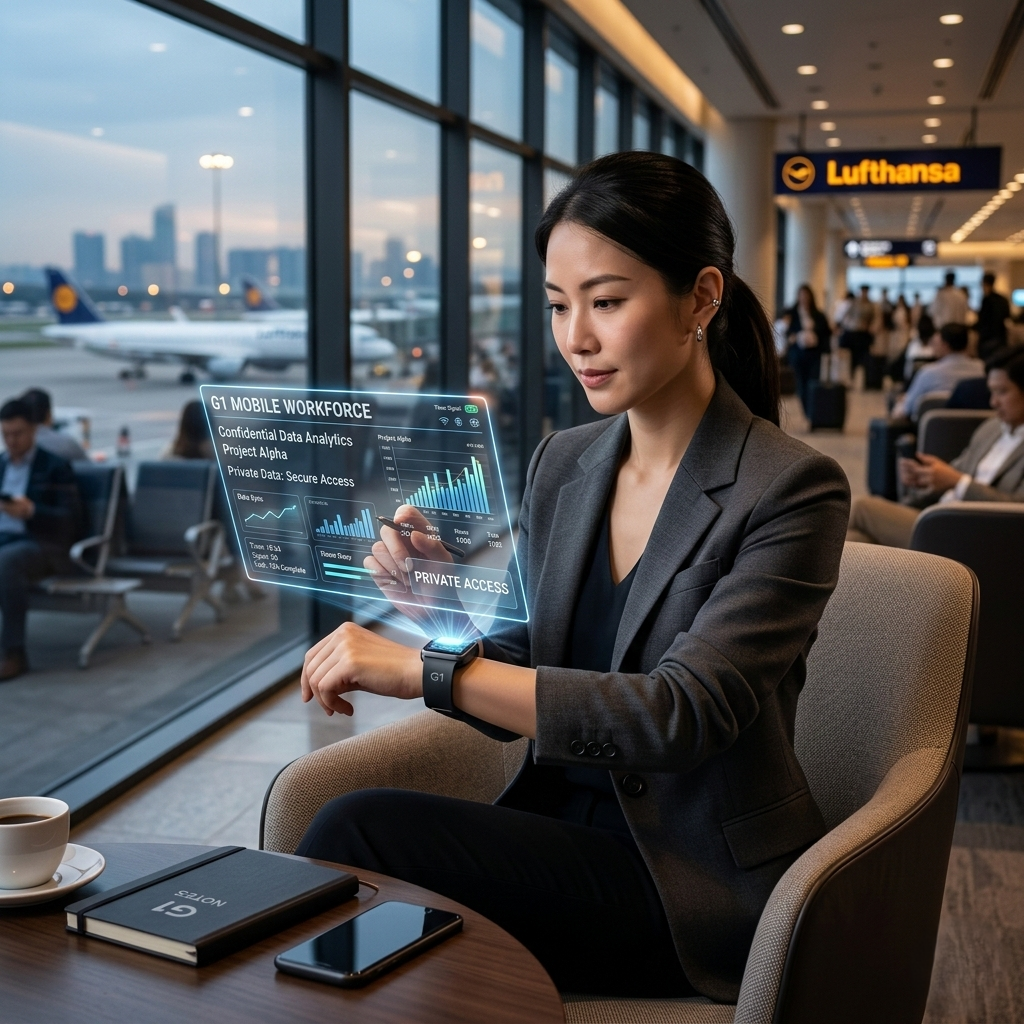
Working in a café sounds great — until someone looks over your shoulder.
In busy places like airports or coworking spaces, screen privacy becomes a real concern. However, a new device aims to solve that problem completely.
The G1 wearable device replaces the traditional laptop screen with a private virtual workspace that only the wearer can see.
Let’s explore what makes this technology so interesting.
What Is the G1 Wearable?
The G1 is part of a new wave of wearable computing devices.
Instead of opening a laptop and exposing your screen to everyone nearby, you wear the device like smart glasses. As a result, your digital workspace appears in front of your eyes — but no one else can see it.
This creates a fully private digital environment in public spaces.
How It Replaces Traditional Screens
Normally, working on the go means carrying the following:
- A laptop
- Maybe a portable monitor
- Extra cables and adapters
However, the G1 removes the need for a physical display. The device projects a virtual multi-window workspace directly into your field of view.
Consequently, it feels like having several monitors floating in front of you.
You can:
- Open multiple windows
- Arrange apps side by side
- Expand your workspace beyond physical limits
All without anyone seeing your content.
Why Privacy Matters in Public Workspaces
Public work environments create real risks.
For example:
- Business travelers handle sensitive documents in airports
- Freelancers work on client files in cafés
- Remote employees access confidential dashboards
With a traditional screen, “shoulder surfing” becomes possible. However, a private virtual display eliminates that risk.
Because only the wearer sees the interface, sensitive data stays protected.
The Rise of Spatial Computing
The G1 represents a broader shift toward spatial computing.
Spatial computing moves digital content off physical screens and into virtual space.
Instead of staring at hardware, users interact with floating windows placed around them. As a result, the physical device becomes smaller while the digital workspace becomes larger.
This shift changes how we think about mobile offices.
Real-World Example: Airport Productivity
Imagine waiting for a flight with two hours to spare.
Traditionally, you open your laptop and search for a seat with some privacy. Even then, someone nearby might see your emails or financial data.
Now imagine wearing the G1 instead.
You sit anywhere, connect to your system, and instantly access a large private workspace. No visible screen. No exposed information.
That level of portability and privacy changes the travel work experience.
Key Benefits of the G1 Wearable
Here’s why devices like the G1 are gaining attention:
- Enhanced privacy in shared spaces
- Reduced bulk without external monitors
- Multi-screen experience without extra hardware
- Flexible digital layout in virtual space
- Modern mobile office design
Together, these features support professionals who work remotely or travel often.
Is This the Future of Mobile Work?
While traditional laptops remain common, wearable displays signal a clear direction.
As remote work grows, people demand the following:
- Portability
- Data security
- Minimal equipment
- Flexible environments
Spatial computing meets those needs by removing the physical screen barrier.
Although adoption may take time, devices like the G1 show how digital workspaces could evolve beyond the laptop.
FAQs
What makes the G1 different from a laptop?
The G1 replaces the physical screen with a private virtual display that only the wearer can see.
Can others see what you’re working on?
No. The digital workspace remains visible only to the person wearing the device.
Is spatial computing replacing traditional screens?
Not completely yet. However, it introduces a new way to interact with digital content without relying on physical monitors.
Who benefits most from this device?
Remote workers, business travelers, freelancers, and anyone concerned about screen privacy in public spaces.
Final Thoughts
The way we work continues to evolve. First, desktops became laptops. Then laptops became ultra-thin and portable.
Now, wearable devices like the G1 push the idea even further.
By removing the physical screen and creating a private digital workspace, this technology offers portability, flexibility, and stronger privacy in public environments.
If spatial computing continues to improve, the future mobile office may not include a visible screen at all.
The question is simple: would you trade your laptop display for a private virtual workspace?
As technology advances, that choice may soon become more common than we expect.
