


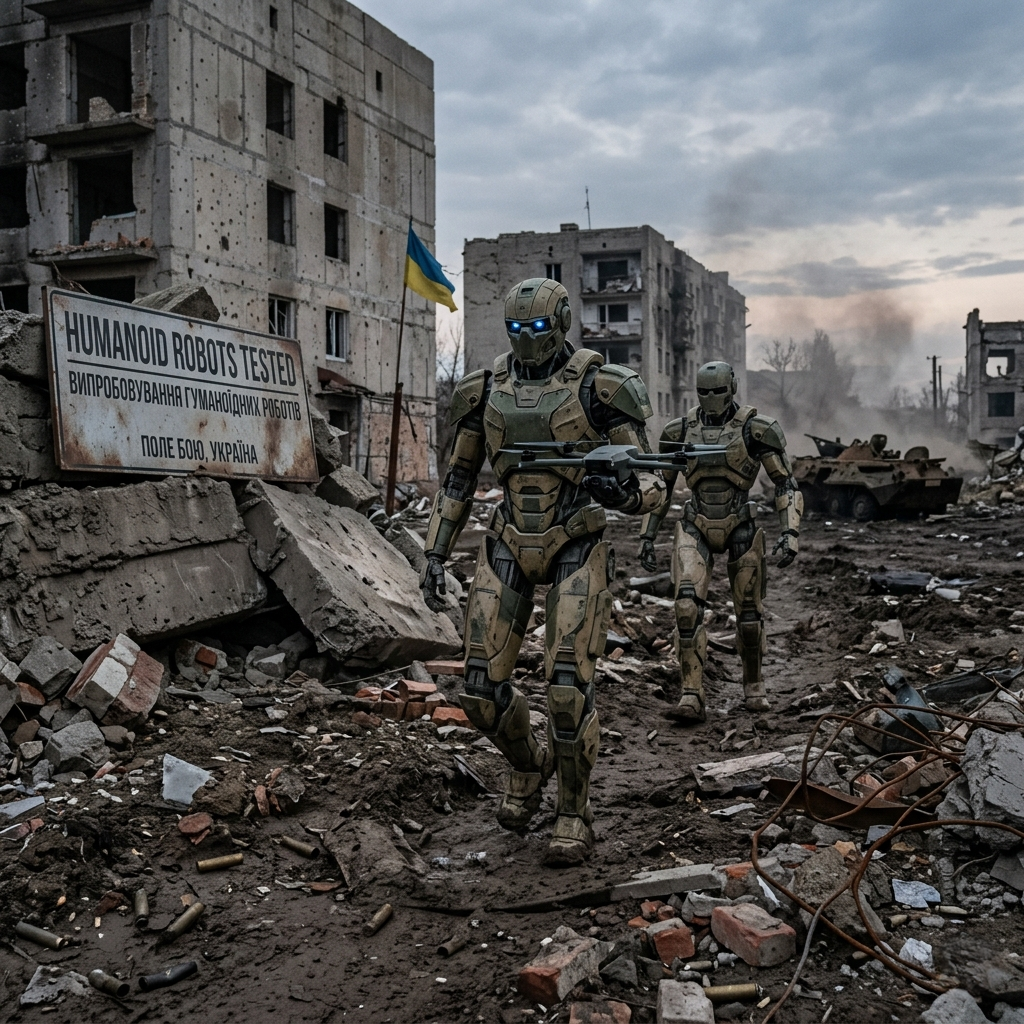
War technology is changing fast. Now, humanoid robots are stepping into real combat zones. Recently, a US startup called Foundation sent advanced robots to Ukraine for testing.
This move signals a big shift in how wars may be fought in the future. Let’s break it down in simple terms.
What Is the Phantom MK-1 Robot?
The Phantom MK-1 is a humanoid robot built specifically for military use. It looks and moves somewhat like a human, which helps it perform complex tasks easily.
It was officially introduced in October 2025. Since then, it has quickly gained attention for its battlefield potential.
Key Features of Phantom MK-1
- Height: 5 feet 9 inches
- Weight: Around 180 pounds
- Vision system: Camera-based
- Movement: Quiet and smooth actuators
- Control: Human-supervised decision-making
Because of these features, the robot can operate efficiently in risky environments.
Why Ukraine Is Being Used for Testing
Ukraine has become a real-world testing ground for new military technology. Due to ongoing conflict, many companies are trying to test their innovations in live conditions.
As a result, the Phantom MK-1 robots were deployed near active front lines.
What Are They Testing?
The robots are currently being evaluated for:
- Surveillance and reconnaissance
- Transporting supplies
- Handling dangerous materials
- Entering high-risk combat zones
In other words, these robots are doing jobs that could put human soldiers in danger.
How These Robots Are Changing Warfare
This is where things get interesting. Instead of sending soldiers into risky areas, armies can now deploy machines.
Major Advantages
- Reduced human risk – Fewer soldiers exposed to danger
- 24/7 operation – Robots don’t get tired
- Precision tasks – Better handling of hazardous materials
- Stealth movement – Quiet actuators reduce detection
However, humans still make all lethal decisions. This ensures ethical control remains in place.
Real-World Example: Robots in High-Risk Missions
Imagine a building suspected of containing explosives. Instead of risking lives, a Phantom MK-1 can enter first.
It can scan the area, send back visuals, and even move dangerous objects safely.
Because of this, military teams gain better information while staying protected.
Future Plans: Scaling to 50,000 Units
Foundation is not stopping here. The company plans to produce up to 50,000 robots by 2027.
That’s a massive number. It clearly shows how serious this shift toward robotic warfare is becoming.
As production increases, these robots may become standard tools in modern armies.
Concerns and Ethical Questions
Even though the technology is impressive, it raises important concerns.
Key Issues
- Should robots be involved in war?
- How much control should humans keep?
- Could this lead to autonomous weapons in the future?
For now, humans remain in charge of critical decisions. Still, the debate is ongoing.
FAQs
Are humanoid robots fully autonomous in war?
No, humans still control important decisions, especially lethal actions. Robots mainly assist with tasks and data collection.
Why use humanoid robots instead of drones?
Humanoid robots can move like humans. So, they can enter buildings, carry items, and perform more complex tasks than drones.
Is Ukraine the only testing ground?
Right now, it’s one of the main locations. However, other regions may also be used in the future.
Are these robots safe?
They are designed to be safe and controlled. However, like any military technology, risks still exist.
Final Thoughts
Humanoid robots like the Phantom MK-1 are changing the face of modern warfare. They reduce human risk, improve efficiency, and open new possibilities.
At the same time, they bring serious ethical questions. So, while the technology is exciting, careful control is essential.
👉 As this field grows, staying informed becomes more important than ever. If you’re interested in future tech and AI, keep following for more updates on innovations shaping our world. 🚀
