


Introduction
Solar power works best on bright, sunny days. However, performance often drops during cloudy skies or rainfall. Because of this limitation, scientists continue searching for smarter renewable solutions.
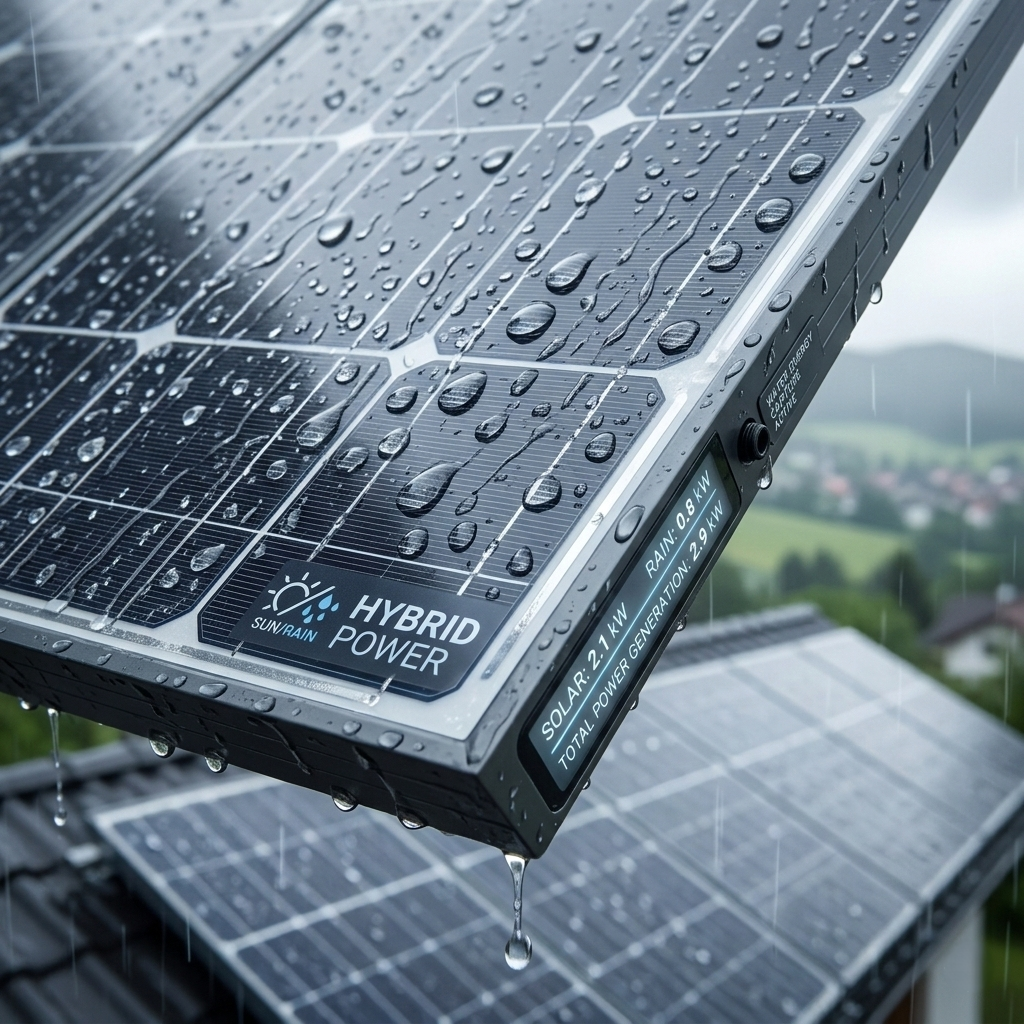
Recently, researchers introduced hybrid solar panels that generate electricity from both sunlight and falling raindrops. This innovative design could improve clean energy production, especially in regions with unpredictable weather.
Instead of depending on just one natural resource, this system captures energy from multiple environmental conditions. As a result, renewable energy systems may become more reliable in the future.
What Are Hybrid Solar Panels?
Hybrid solar panels combine traditional solar technology with another energy-harvesting system. These panels still collect sunlight, but they also capture energy from raindrops hitting the surface.
The key idea is simple. When sunlight disappears during storms or cloudy weather, rainfall itself becomes a secondary energy source.
Therefore, energy generation continues even when typical solar panels slow down.
Core Components of the System
A hybrid solar panel includes two main technologies:
- Traditional solar cells that convert sunlight into electricity
- Triboelectric Nanogenerator (TENG) that captures energy from raindrops
Together, these technologies allow the panel to produce power under more environmental conditions.
How Traditional Solar Panels Work
Before understanding hybrid panels, it helps to know how standard solar systems operate.
Solar panels contain photovoltaic cells. These cells absorb sunlight and convert light energy into electrical current.
However, several factors reduce efficiency:
- Cloud cover blocking sunlight
- Rainy weather conditions
- Reduced daylight hours
- Dust or debris on the panel surface
Consequently, energy output drops whenever sunlight becomes weaker.
Hybrid systems aim to solve this limitation.
The Role of the Triboelectric Nanogenerator
The second key technology in hybrid panels is the triboelectric nanogenerator.
This device converts small mechanical movements into electrical energy. In simple terms, it captures power from motion.
For hybrid solar panels, the motion comes from raindrops striking the panel surface.
How It Works
When a raindrop hits the panel:
- The droplet impacts the triboelectric layer.
- Friction creates a tiny electrical charge.
- The system captures and transfers this charge.
- The energy contributes to overall electricity production.
Each raindrop produces only a small charge. However, thousands of droplets falling during rainfall can generate meaningful additional energy.
Why Rain Energy Matters
Rainwater normally represents wasted kinetic energy on traditional solar panels. Standard systems simply allow droplets to slide off the surface.
However, hybrid panels transform that unused energy into electricity.
Although the output remains smaller than sunlight-generated power, the extra contribution still improves overall efficiency.
More importantly, electricity production continues during rainstorms when regular solar panels perform poorly.
Benefits of Hybrid Solar Panels
Hybrid solar technology offers several advantages for renewable energy systems.
1. Continuous Power Generation
First, these panels collect energy from both sunlight and rainfall. Therefore, electricity production becomes more consistent across changing weather conditions.
2. Better Performance in Rainy Regions
Regions with frequent rainfall often struggle with solar efficiency. However, hybrid systems turn rainy weather into an energy opportunity.
3. Improved Renewable Reliability
Because energy comes from multiple sources, the system becomes more dependable. Consequently, power grids may rely less on backup energy sources.
4. Smarter Use of Natural Energy
Hybrid technology captures energy from natural events that previously went unused.
Even small environmental forces can contribute to electricity production.
Real-World Example: Rainy Climate Regions
Countries with tropical or coastal climates often experience heavy rainfall throughout the year.
For example, regions in Southeast Asia, South America, and parts of Europe frequently face cloudy skies and storms.
Traditional solar panels still work there, but efficiency drops during wet seasons.
Hybrid solar panels could perform better in these locations because rainfall itself becomes a secondary power source.
Comparison: Traditional vs Hybrid Solar Panels
| Feature | Traditional Solar Panels | Hybrid Solar Panels |
|---|---|---|
| Sunlight Energy | Yes | Yes |
| Rain Energy | No | Yes |
| Performance During Rain | Reduced | Partially maintained |
| Technology | Photovoltaic cells | Solar + Triboelectric system |
| Energy Sources | Single source | Multiple sources |
Because hybrid systems collect energy from different environmental factors, they may offer more stable performance.
Challenges Researchers Still Face
Although the concept is promising, scientists still need to solve several challenges.
Efficiency Optimization
The electricity produced by each raindrop remains very small. Therefore, engineers continue improving the triboelectric layer to increase output.
Durability
Solar panels already face harsh outdoor conditions. Adding additional layers requires materials that can withstand rain, heat, and long-term exposure.
Manufacturing Cost
New technologies often increase production costs initially. However, improvements in materials science may lower costs over time.
Despite these challenges, research continues moving forward.
The Future of Hybrid Renewable Systems
Hybrid solar panels represent a growing trend in renewable energy innovation.
Instead of depending on a single environmental factor, scientists now design systems that collect power from multiple sources.
Future developments may include:
- Solar panels that harvest wind vibrations
- Panels that capture temperature differences
- Multi-layer renewable systems combining several energy sources
As technology advances, renewable energy systems could become far more adaptable.
FAQs
What are hybrid solar panels?
Hybrid solar panels combine traditional solar cells with additional technologies, such as triboelectric nanogenerators, allowing them to generate electricity from both sunlight and rainfall.
Can rain really produce electricity?
Yes. When raindrops hit certain materials, they create tiny electrical charges through friction. Devices like triboelectric nanogenerators capture that energy.
Do hybrid solar panels replace traditional panels?
Not necessarily. Instead, they enhance traditional solar systems by adding another way to generate electricity.
How much electricity can raindrops generate?
Each raindrop produces only a small amount of energy. However, during heavy rainfall, thousands of droplets can generate additional electricity.
Are hybrid solar panels available commercially?
Most hybrid solar systems remain in the research stage. However, ongoing studies suggest they may become viable commercial technologies in the future.
Final Thoughts
Hybrid solar panels show how creative engineering can improve renewable energy systems. By capturing power from both sunlight and rain, these panels expand the possibilities of clean energy generation.
Instead of losing energy during storms, future solar systems may continue producing electricity from falling raindrops. As research progresses, hybrid technologies could make renewable energy more reliable worldwide.
The idea is simple but powerful: nature provides many forms of energy. With smarter design, we can capture more of it.
