

Close Menu
Innovate And ExploreInnovate And Explore

    Subscribe to Updates

    Get the latest creative news from FooBar about art, design and business.

    What's Hot

    How to Grow Instagram from 0 to 10K Followers in 2026 Using Organic Methods

    May 22, 2026

    Smart Wearables Are Reshaping the Future of Everyday Technology

    May 13, 2026

    Everyday Tech How-To Guides for a Smarter and Easier Digital Life

    May 13, 2026
    Facebook Instagram
    Facebook Instagram YouTube TikTok
    Innovate And ExploreInnovate And Explore
    • Artificial Intelligence
    • Medical Research
    • Technology News
    • Science News
    • VR Headset
    • Palantir
    Innovate And ExploreInnovate And Explore
    Home » Is AI “Renting” Humans? Here’s What’s Really Happening
    Artificial Intelligence

    Is AI “Renting” Humans? Here’s What’s Really Happening

    alfredBy alfredFebruary 20, 2026No Comments4 Mins Read
    Facebook Twitter Pinterest LinkedIn Tumblr WhatsApp Email
    Share
    Facebook Twitter LinkedIn WhatsApp Pinterest Email

    You may have seen headlines saying AI is “renting humans.”

    That sounds dramatic.
    But the reality is more practical—and more interesting.

    Artificial intelligence is now being used to organize human workers for tasks machines still can’t do on their own.

    Let’s break it down in simple terms.

    Why AI Still Needs Humans

    AI is great at digital tasks like

    • Analyzing large datasets
    • Generating text and images
    • Automating workflows
    • Detecting patterns

    But it cannot:

    • Deliver physical packages
    • Assemble hardware
    • Inspect real-world locations
    • Interact physically with environments

    That’s where humans come in.

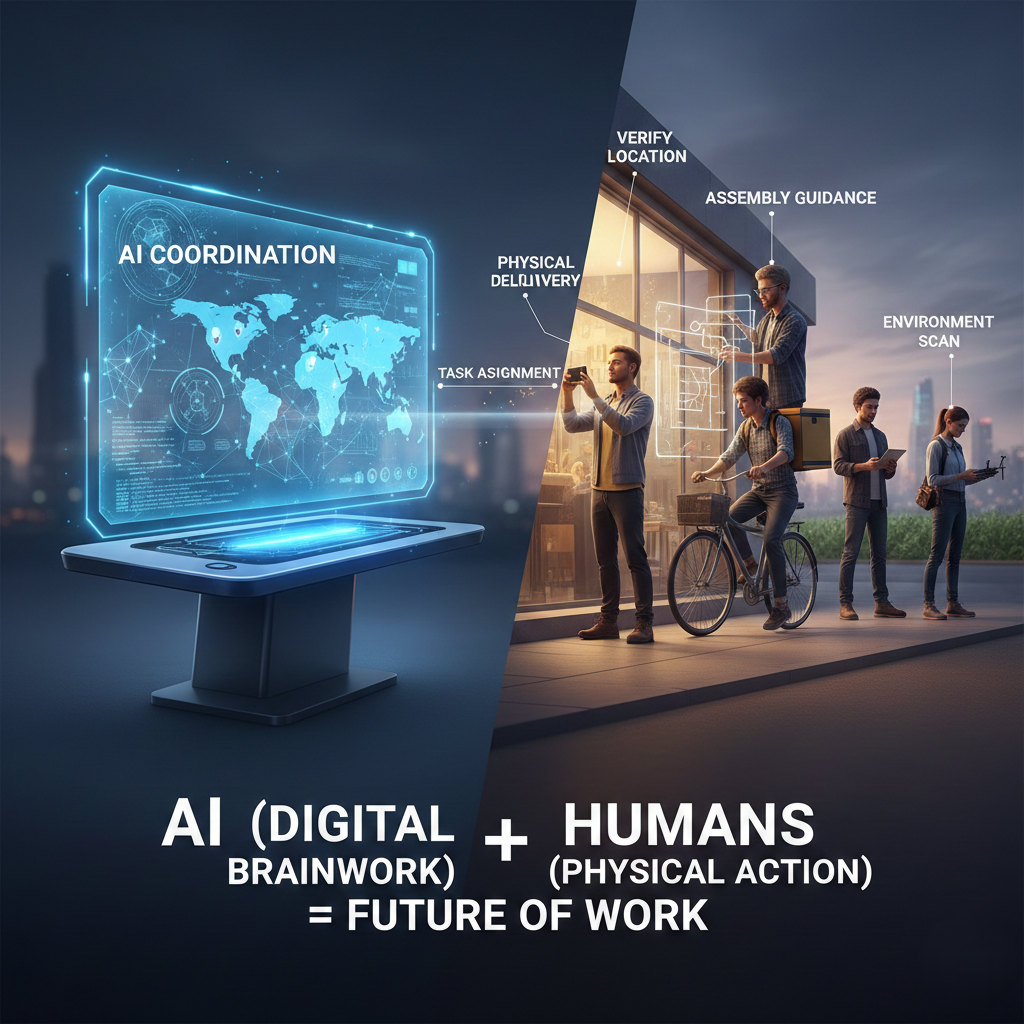
    AI handles coordination.
    Humans handle execution.

    How AI Assigns Tasks to People

    Some tech platforms use AI systems to distribute jobs automatically.

    Instead of a manager assigning work manually, an algorithm decides:

    • Who gets a task
    • When it needs to be done
    • How it should be prioritized

    This creates a gig-style model.

    Workers log in, choose tasks, complete them, and get paid.

    Examples of tasks include:

    • Verifying business locations
    • Labeling images for machine learning
    • Testing physical products
    • Scanning neighborhoods or stores

    These are tasks AI alone cannot fully perform.

    The Role of Cryptocurrency Payments

    Some decentralized platforms pay workers in cryptocurrency instead of traditional money.

    This can make global participation easier.

    Anyone with internet access and a crypto wallet can potentially join.

    Benefits include:

    • Borderless payments
    • Faster transactions
    • Lower banking barriers

    But there are also challenges.

    Crypto prices can change quickly.
    Local tax rules may still apply.
    Regulations differ by country.

    Workers need to understand those risks before participating.

    Important Clarification: AI Is Not the Boss

    It’s important to clear up a common misunderstanding.

    AI does not independently hire or manage people.

    • Humans design the platforms.
    • Humans set payment rules.
    • Humans oversee operations.

    AI is simply a tool that automates coordination.

    When people say “AI renting humans,” it’s a metaphor.

    Behind every system, there are real companies and real decision-makers.

    Real-World Example: Human-AI Collaboration

    Imagine a company building a global map database.

    AI can analyze satellite images.

    But it may need humans to:

    • Confirm whether a store is still open
    • Take photos of locations
    • Verify street-level conditions

    AI identifies where help is needed.
    Humans go out and complete the task.

    This hybrid system is becoming more common in logistics, mapping, retail, and product testing.

    Why This Trend Is Growing

    There are a few reasons this model is expanding:

    1. AI needs real-world data to improve.
    2. Companies want faster task distribution.
    3. Gig workers prefer flexible schedules.
    4. Digital payment systems make global work easier.

    It’s a natural evolution of the gig economy.

    Risks and Ethical Questions

    As this system grows, concerns also grow.

    Key questions include:

    • Are workers paid fairly?
    • Who is accountable for mistakes?
    • How transparent are algorithms?
    • What happens if AI makes biased decisions?

    Regulation and oversight will likely increase as these platforms expand.

    FAQs

    1. Can AI directly hire humans?

    No. AI cannot legally or independently hire anyone. Companies use AI tools to assign and manage tasks.

    2. Why do some platforms use cryptocurrency?

    Crypto allows global payments without traditional banking systems, but it comes with volatility and regulatory risks.

    3. What types of jobs are assigned this way?

    Common tasks include data labeling, product testing, location verification, and environmental scanning.

    4. Is this replacing traditional jobs?

    In some cases, it shifts work into gig-based systems. However, it also creates new flexible earning opportunities.

    5. Is this safe for workers?

    It depends on the platform. Workers should review payment terms, legal rules, and risks before participating.

    Final Thoughts

    AI is not replacing humans in the real world.

    Instead, it’s coordinating them more efficiently.

    Machines handle the digital brainwork.
    Humans provide physical action, judgment, and adaptability.

    This partnership between AI and people is likely to expand in the coming years.

    The key is balance—using technology to improve efficiency while protecting fairness, transparency, and worker rights.

    As AI evolves, the future of work may not be human versus machine.

    It may be human plus machine.

    advanced encryption standard ai chatgpt ai science news artificial general intelligence california science center hologram museum medical research palantir quantum physics science center science fair board science museum scientific method tech news virtual reality headset
    Share. Facebook Twitter Pinterest LinkedIn Tumblr WhatsApp Email
    alfred

    Related Posts

    How to Grow Instagram from 0 to 10K Followers in 2026 Using Organic Methods

    May 22, 2026

    Smart Wearables Are Reshaping the Future of Everyday Technology

    May 13, 2026

    Everyday Tech How-To Guides for a Smarter and Easier Digital Life

    May 13, 2026

    The Rise of AI Girlfriends and Virtual Companions: Future or Danger?

    May 10, 2026

    The Dark Side of Deepfake Technology in 2026

    May 9, 2026

    How AI Video Generators Are Replacing Traditional Content Creation

    May 9, 2026
    Add A Comment
    Leave A Reply Cancel Reply

    Don't Miss

    How to Grow Instagram from 0 to 10K Followers in 2026 Using Organic Methods

    By alfredMay 22, 2026

    Introduction Starting from zero on Instagram feels tough at first. However, with the right strategy,…

    Smart Wearables Are Reshaping the Future of Everyday Technology

    May 13, 2026

    Everyday Tech How-To Guides for a Smarter and Easier Digital Life

    May 13, 2026

    The Rise of AI Girlfriends and Virtual Companions: Future or Danger?

    May 10, 2026
    Stay In Touch
    • Facebook
    • Twitter
    • Pinterest
    • Instagram
    • YouTube
    • Vimeo
    Our Picks

    How to Grow Instagram from 0 to 10K Followers in 2026 Using Organic Methods

    May 22, 2026

    Smart Wearables Are Reshaping the Future of Everyday Technology

    May 13, 2026

    Everyday Tech How-To Guides for a Smarter and Easier Digital Life

    May 13, 2026

    The Rise of AI Girlfriends and Virtual Companions: Future or Danger?

    May 10, 2026

    Subscribe to Updates

    Get the latest creative news from SmartMag about art & design.

    Techlo Inno
    Innovate And Explore
    Facebook Instagram YouTube TikTok
    • About Us
    • Cookies Policy
    • Editorial Policy
    • Terms & Conditions
    © 2026 Innovate and Explore. Designed by Techlo Inno.

    Type above and press Enter to search. Press Esc to cancel.

    Powered by
    ►
    Necessary cookies enable essential site features like secure log-ins and consent preference adjustments. They do not store personal data.
    None
    ►
    Functional cookies support features like content sharing on social media, collecting feedback, and enabling third-party tools.
    None
    ►
    Analytical cookies track visitor interactions, providing insights on metrics like visitor count, bounce rate, and traffic sources.
    None
    ►
    Advertisement cookies deliver personalized ads based on your previous visits and analyze the effectiveness of ad campaigns.
    None
    ►
    Unclassified cookies are cookies that we are in the process of classifying, together with the providers of individual cookies.
    None
    Powered by