


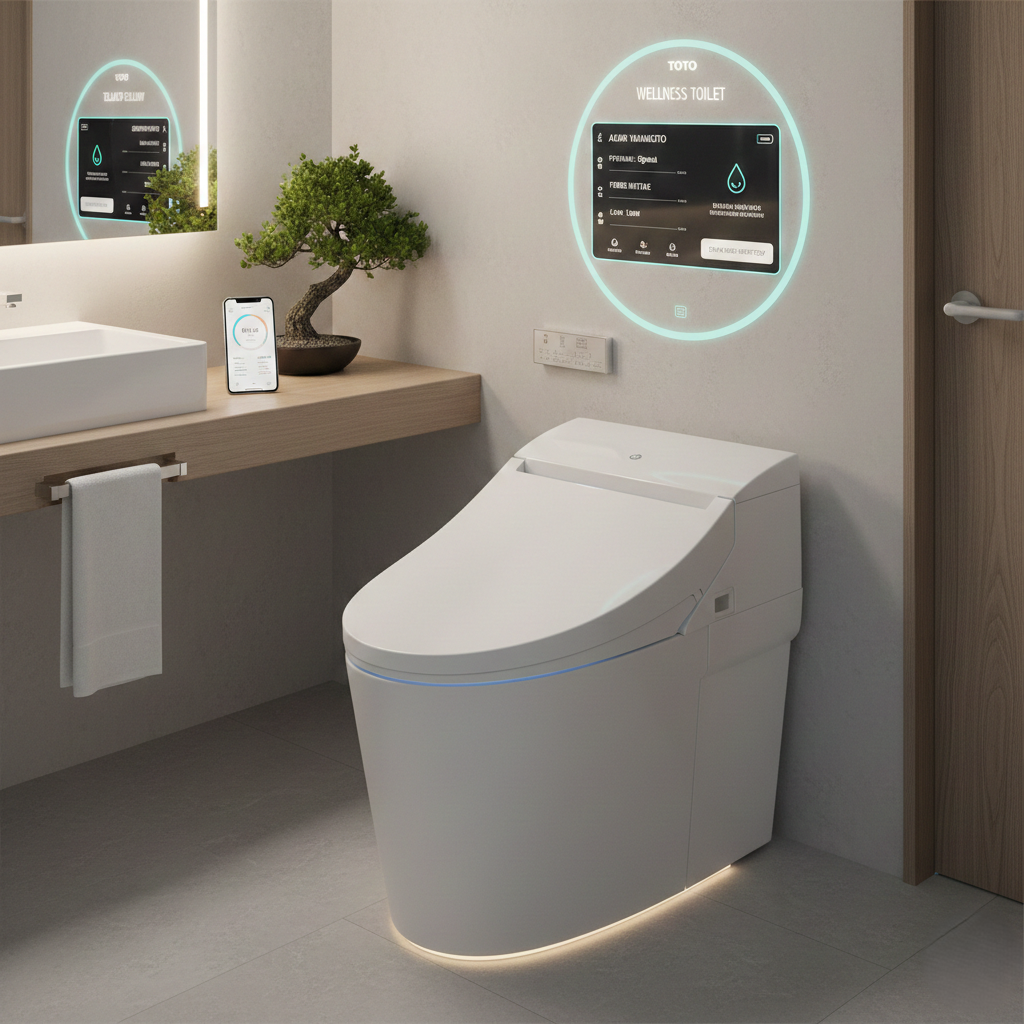
Japan is famous for its high-tech bathrooms.
Now, those bathrooms are stepping into healthcare.
Instead of being just a place for hygiene, the toilet is becoming a quiet health monitoring tool.
How AI Smart Toilets Work
Major Japanese brands like TOTO are developing advanced “wellness toilets.”
These systems use sensors and artificial intelligence to analyze waste in real time.
During a normal bathroom visit, the toilet can check markers linked to:
- Hydration levels
- Digestive health
- Nutritional balance
- Possible internal irregularities
After analysis, a personalized report is sent directly to your smartphone.
All of this happens automatically.
Why This Matters for Preventive Healthcare
Most people only visit a doctor when symptoms become serious.
But many health issues develop slowly over time.
By tracking small daily changes, AI smart toilets aim to catch early warning signs before problems grow.
Instead of waiting months for lab tests, users can monitor trends from home.
That shift could make preventive care more practical and accessible.
Personalized Reports for Each Family Member
One standout feature is user recognition.
The system can identify which household member is using the toilet.
This means:
- Data stays private
- Reports go to the correct profile
- Health trends remain personalized
Families can share one device while keeping their information separate.
Real-World Benefits
Imagine getting simple advice like:
- “Drink more water today.”
- “Increase fiber intake.”
- “Hydration levels slightly lower than usual.”
Over time, this pattern tracking could help monitor chronic conditions without repeated hospital visits.
For elderly individuals or people managing ongoing health issues, that convenience could be life-changing.
How This Compares to Traditional Testing
Traditional health monitoring often requires:
- Clinic appointments
- Lab sample collection
- Waiting days for results
- Follow-up visits
Smart toilets aim to reduce that cycle by offering non-invasive daily tracking.
They don’t replace doctors. But they could support routine wellness management.
Challenges and Concerns
Of course, this technology raises questions.
Privacy
Health data must be securely stored and protected.
Accuracy
AI systems must meet medical-grade reliability standards.
Cost
High-tech devices may not be affordable for everyone at first.
Despite these challenges, innovation continues to move forward.
Japan’s Role in Smart Living Technology
In a country already known for robotics and automation, integrating AI into daily life feels like a natural step.
From smart homes to wearable devices, Japan continues to explore how technology can blend seamlessly into routines.
Now, the bathroom is becoming part of that digital health ecosystem.
FAQs
Do AI smart toilets replace doctors?
No. They provide monitoring and insights but do not replace professional medical diagnosis or treatment.
What kind of health data do they track?
Hydration, digestive markers, and certain biological indicators are visible in waste.
Is the data private?
Manufacturers emphasize secure storage and user recognition to protect personal information.
Are these toilets available worldwide?
Currently, they are primarily being introduced in Japan, with potential expansion in the future.
Can they detect serious diseases?
They are designed for monitoring patterns and early signals, not for full medical diagnosis.
Final Thoughts
AI smart toilets show how everyday objects are becoming part of personalized medicine.
By placing smart sensors into something people already use daily, Japan is turning the bathroom into a simple health checkpoint.
Preventive care may no longer start at a hospital.
It might begin quietly at home—one routine visit at a time.
As technology continues to blend into daily life, smart health monitoring could become as normal as checking your phone.
