

Close Menu
Innovate And ExploreInnovate And Explore

    Subscribe to Updates

    Get the latest creative news from FooBar about art, design and business.

    What's Hot

    What Are Phonons? The Tiny Physics Behind Future Technology

    April 23, 2026

    Vitamin K Shot Refusal Raises Serious Risks for Newborns

    April 23, 2026

    Top AI Tools for Remote Work to Boost Productivity in 2026

    April 23, 2026
    Facebook Instagram
    Facebook Instagram YouTube TikTok
    Innovate And ExploreInnovate And Explore
    • Artificial Intelligence
    • Medical Research
    • Technology News
    • Science News
    • VR Headset
    • Palantir
    Innovate And ExploreInnovate And Explore
    Home » Koala Fingerprints Look Almost Human—Here’s Why
    Medical Research

    Koala Fingerprints Look Almost Human—Here’s Why

    alfredBy alfredFebruary 16, 2026No Comments3 Mins Read
    Facebook Twitter Pinterest LinkedIn Tumblr WhatsApp Email
    Share
    Facebook Twitter LinkedIn WhatsApp Pinterest Email

    It sounds unbelievable, but it’s true.

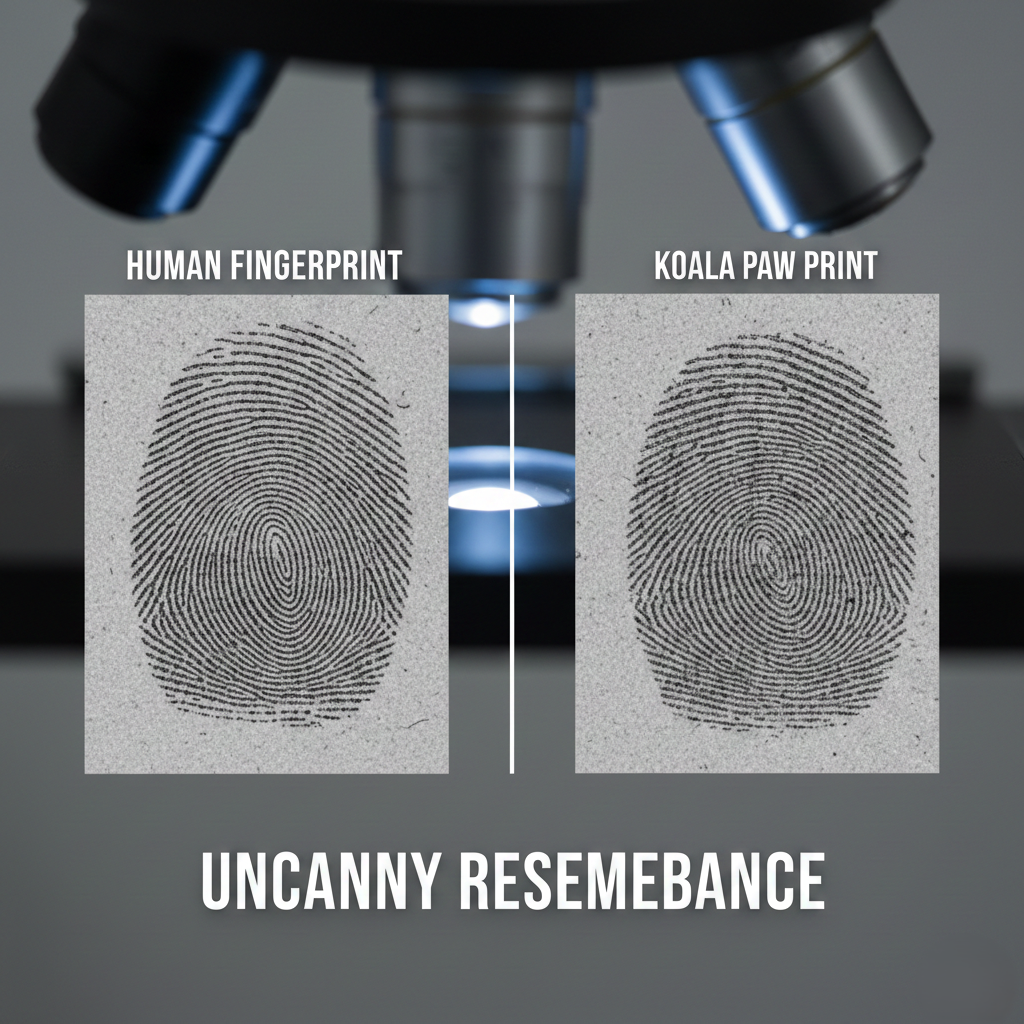
    Koala fingerprints look so similar to human fingerprints that even trained experts can struggle to tell them apart under a microscope.

    Yes, the same ridges and swirls found on your fingers can also be found on a koala’s paws.

    Let’s break down how this happens.

    What Scientists Discovered

    Researchers at the University of Adelaide carefully studied koala prints using microscopes and forensic analysis.

    They found that:

    • Koalas have ridges, loops, and whorls like humans.
    • The patterns are extremely detailed.
    • Under certain conditions, they can appear nearly identical to human fingerprints.

    This similarity has been confirmed through scientific examination.

    Why Do Koalas Have Fingerprints?

    Here’s the surprising part.

    Koalas are not closely related to humans. They are marsupials, while we are placental mammals.

    So why the similar prints?

    The answer is convergent evolution.

    What Is Convergent Evolution?

    Convergent evolution happens when unrelated species develop similar traits because they need them for similar tasks.

    In this case:

    • Humans use fingerprints for grip and fine motor control.
    • Koalas use them to tightly grasp tree branches.

    Both species rely on strong grip and sensitive touch.

    So evolution came up with a similar solution.

    The Science Behind the Grip

    Fingerprint ridges help improve friction and sensitivity.

    For humans, that means:

    • Better control when holding tools
    • More precise movements
    • Enhanced tactile feedback

    For koalas, it means:

    • Secure climbing
    • Strong branch grip
    • Better stability in trees

    Different lifestyles. Same biological advantage.

    Could Koala Prints Confuse Forensic Science?

    This is where things get interesting.

    In theory, koala fingerprints could create confusion in forensic investigations—especially in areas where koalas live.

    However, in real-world investigations:

    • Context is carefully examined.
    • Additional biological evidence is analyzed.
    • Experts use more than just ridge patterns.

    Still, it’s a fascinating reminder that nature can surprise us.

    Real-World Perspective

    Imagine finding a fingerprint on an object in a forested area of Australia.

    Without careful analysis, distinguishing between a human and a koala print under magnification could be challenging.

    That doesn’t mean crimes are being blamed on koalas. But it shows how close the resemblance truly is.

    FAQs

    Are koala fingerprints exactly the same as human fingerprints?

    They are extremely similar in ridge structure and pattern, but not biologically identical at the cellular level.

    Are koalas closely related to humans?

    No. Koalas are marsupials, while humans are placental mammals. The similarity developed independently.

    Has this caused forensic mistakes?

    There is no strong evidence of major forensic errors, but researchers have noted the potential for confusion in theory.

    Why don’t other animals have similar fingerprints?

    Some primates do, but koalas are unusual because they are not closely related to humans yet developed similar ridge patterns.

    Final Thoughts

    The discovery of koala fingerprints is a perfect example of how evolution can produce similar solutions in very different species.

    Two animals separated by millions of years of evolution ended up with nearly identical fingerprint patterns—all because they both needed strong grip and precise touch.

    It’s a small detail, but it reveals something big about how nature works.

    advanced encryption standard ai chatgpt ai science news artificial general intelligence california science center hologram museum medical research palantir quantum physics science center science fair board science museum scientific method tech news virtual reality headset
    Share. Facebook Twitter Pinterest LinkedIn Tumblr WhatsApp Email
    alfred

    Related Posts

    What Are Phonons? The Tiny Physics Behind Future Technology

    April 23, 2026

    Vitamin K Shot Refusal Raises Serious Risks for Newborns

    April 23, 2026

    Top AI Tools for Remote Work to Boost Productivity in 2026

    April 23, 2026

    Earth’s CO₂ Levels Hit 430 ppm: A Serious Climate Warning

    April 22, 2026

    AI Cameras in Factories: What’s Really Happening Behind Viral Videos?

    April 22, 2026

    Top AI Tools for Startups to Grow Faster in 2026

    April 22, 2026
    Add A Comment
    Leave A Reply Cancel Reply

    Don't Miss

    What Are Phonons? The Tiny Physics Behind Future Technology

    By alfredApril 23, 2026

    Introduction Most people have never heard of phonons. Yet, they quietly control how modern technology…

    Vitamin K Shot Refusal Raises Serious Risks for Newborns

    April 23, 2026

    Top AI Tools for Remote Work to Boost Productivity in 2026

    April 23, 2026

    Earth’s CO₂ Levels Hit 430 ppm: A Serious Climate Warning

    April 22, 2026
    Stay In Touch
    • Facebook
    • Twitter
    • Pinterest
    • Instagram
    • YouTube
    • Vimeo
    Our Picks

    What Are Phonons? The Tiny Physics Behind Future Technology

    April 23, 2026

    Vitamin K Shot Refusal Raises Serious Risks for Newborns

    April 23, 2026

    Top AI Tools for Remote Work to Boost Productivity in 2026

    April 23, 2026

    Earth’s CO₂ Levels Hit 430 ppm: A Serious Climate Warning

    April 22, 2026

    Subscribe to Updates

    Get the latest creative news from SmartMag about art & design.

    Techlo Inno
    Innovate And Explore
    Facebook Instagram YouTube TikTok
    • About Us
    • Cookies Policy
    • Editorial Policy
    • Terms & Conditions
    © 2026 Innovate and Explore. Designed by Techlo Inno.

    Type above and press Enter to search. Press Esc to cancel.

    Powered by
    ►
    Necessary cookies enable essential site features like secure log-ins and consent preference adjustments. They do not store personal data.
    None
    ►
    Functional cookies support features like content sharing on social media, collecting feedback, and enabling third-party tools.
    None
    ►
    Analytical cookies track visitor interactions, providing insights on metrics like visitor count, bounce rate, and traffic sources.
    None
    ►
    Advertisement cookies deliver personalized ads based on your previous visits and analyze the effectiveness of ad campaigns.
    None
    ►
    Unclassified cookies are cookies that we are in the process of classifying, together with the providers of individual cookies.
    None
    Powered by