


Introduction: A Smarter Way to Travel
Airports can be stressful. Long lines, confusing layouts, and language barriers often make travel harder than it should be.
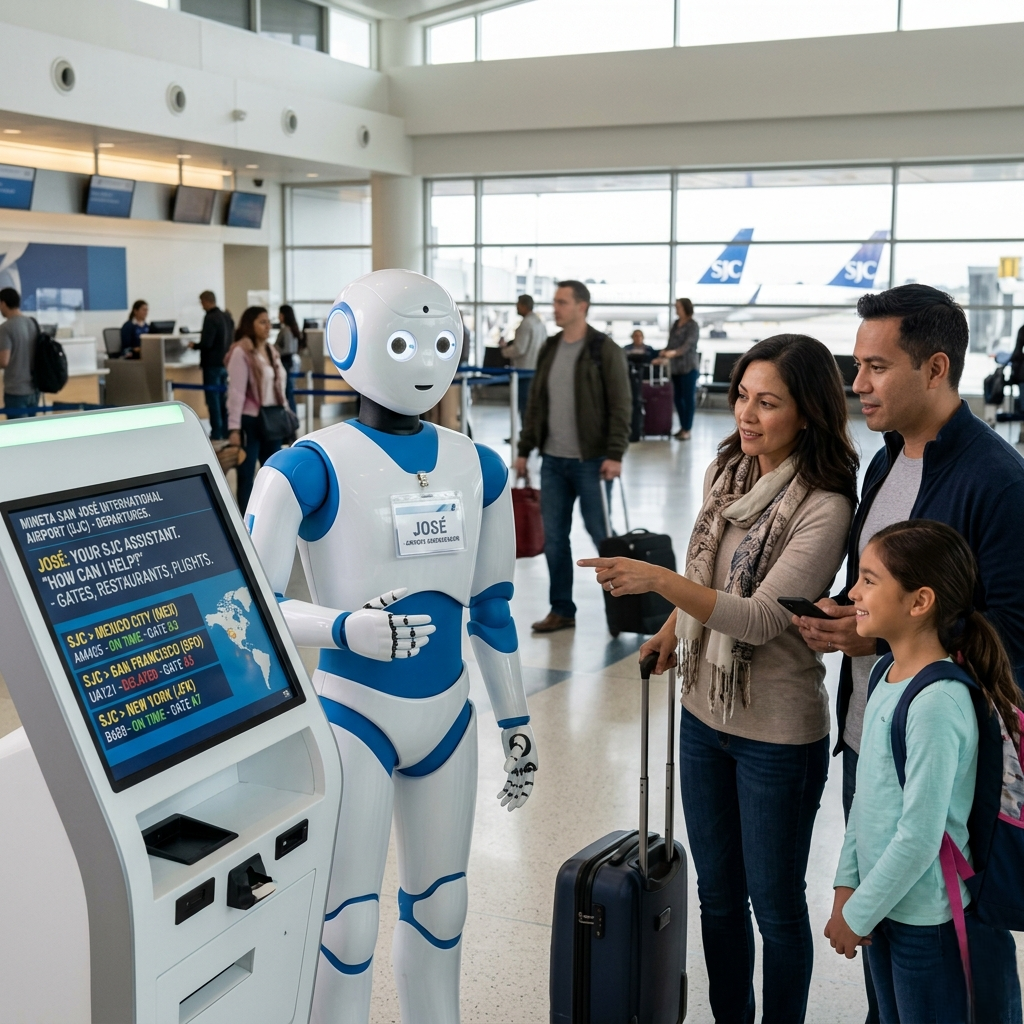
Now, things are starting to change. At San José Mineta International Airport, travelers are being welcomed by a friendly new helper a humanoid robot named José.
This small innovation could make a big difference in how we experience airports.
Who Is José the Robot?
José is a smart humanoid assistant built by
IntBot
You can find it in Terminal B near Gate 24, close to the Zoom Zone.
Its main job is simple: help travelers move through the airport with less stress.
What José can do:
- Give directions to gates and services
- Answer common travel questions
- Share real-time airport updates
Because of this, passengers can get help instantly without waiting in line.
Breaking Language Barriers
One of José’s most impressive features is its ability to speak over 50 languages.
This makes a huge difference for international travelers.
Why this matters:
- Reduces confusion for non-English speakers
- Speeds up communication
- Makes travel more inclusive
As a result, more people can get help quickly and easily.
Designed for Busy Airport Life
Airports are fast-paced and often crowded. So, José is built to handle real-world conditions.
It can:
- Understand different types of questions
- Respond clearly even in noisy environments
- Assist multiple travelers throughout the day
Because of this, it works reliably even during peak hours.
The Pilot Program: Testing the Future
Right now, José is part of a four-month trial program.
During this time, airport officials are studying:
- How useful the robot is for passengers
- Whether it reduces staff workload
- How it improves overall travel experience
If successful, this could lead to more robots in airports worldwide.
How This Changes Travel
José represents a shift toward smarter, more efficient airports.
Potential benefits:
- Faster passenger support
- Less confusion and stress
- Improved airport operations
Over time, AI assistants like this could become as common as check-in kiosks.
Real-World Comparison
| Feature | Traditional Help Desk | Robot Assistant José |
|---|---|---|
| Availability | Limited hours | Always available |
| Languages | Few | 50+ languages |
| Wait time | Can be long | Instant response |
Clearly, robots offer speed and convenience that traditional systems struggle to match.
What’s Next for AI in Airports?
José is just the beginning.
In the future, airports may include:
- More advanced humanoid assistants
- AI-powered navigation apps
- Smart security and boarding systems
Because of this, travel could become smoother and more personalized.
FAQs About José the Airport Robot
1. Where can I find José?
In Terminal B near Gate 24 at San José Airport.
2. Can it really speak many languages?
Yes, it supports over 50 languages.
3. Is this permanent?
Not yet. It’s currently being tested in a pilot program.
4. Can it replace human staff?
No, it supports staff by handling basic tasks.
Conclusion: A Glimpse Into the Future of Travel
José may look like a simple robot, but it represents something bigger.
It shows how technology can make travel easier, faster, and less stressful.
