


Introduction
What if Mars once had the ingredients for life?
That idea just became much more real.
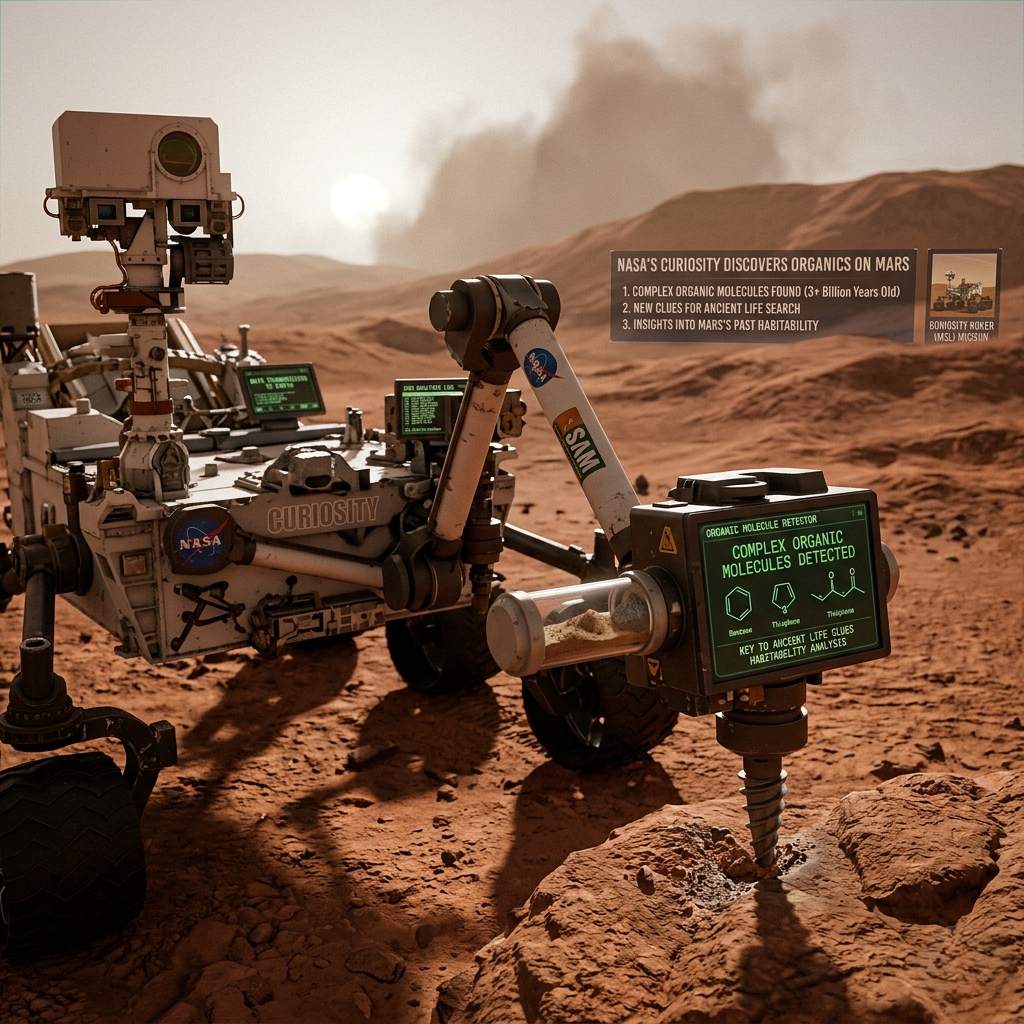
NASA’s Curiosity rover has made a groundbreaking discovery.
It found complex organic molecules buried deep in Mars’ surface.
This could be one of the strongest clues yet that life might have once existed there.
What Exactly Was Discovered?
Scientists uncovered organic molecules in a 3.5-billion-year-old dried lakebed.
This ancient site lies within Gale Crater, a region already known for past water activity.
Key Highlights
- Seven organic compounds identified
- Five never seen on Mars before
- Includes nitrogen-bearing molecules
- These are linked to DNA building blocks
So, while it’s not proof of life, it’s a big step forward.
Why Organic Molecules Matter
Organic molecules are often called the “building blocks of life.”
They form the basis of:
- DNA
- Proteins
- Cellular structures
According to Amy Williams, these compounds are like the “bricks” needed to build life.
Therefore, finding them on Mars is a huge deal.
Life on Mars? Not So Fast
It’s important to stay realistic.
Scientists still don’t know where these molecules came from.
Two Main Possibilities
- Ancient microbial life
- Delivery by meteorites
Both explanations are possible.
So, for now, the mystery remains unsolved.
How Did These Molecules Survive?
Mars is a harsh environment today.
It has:
- Strong radiation
- Thin atmosphere
- Extreme temperatures
Yet, these molecules survived for billions of years.
Why This Is Important
- Suggests underground protection
- Proves organic material can last long-term
- Increases chances of finding more evidence
As a result, scientists are now even more excited about future missions.
Mars Once Looked More Like Earth
Billions of years ago, Mars was very different.
It had:
- Liquid water
- A thicker atmosphere
- More stable conditions
In many ways, it resembled early Earth.
Because of this, researchers believe Mars may have been habitable at one point.
What Comes Next: Future Mars Missions
The next big step is deeper exploration.
The Rosalind Franklin rover, planned for 2028, will take things further.
What Makes It Special?
- Will drill up to 2 meters underground
- Targets areas protected from radiation
- Searches for better-preserved organic material
This could finally help answer whether life ever existed on Mars.
Real-World Impact: Why This Matters to Us
This discovery goes beyond Mars.
It changes how we think about life in the universe.
Bigger Questions It Raises
- Is life common in the universe?
- Did life start the same way everywhere?
- Could other planets support life too?
Clearly, we are getting closer to answers.
FAQs
Did NASA find life on Mars?
No, not yet. Scientists found organic molecules, but they are not direct proof of life.
What are organic molecules?
They are chemical compounds that form the basis of life, including DNA and proteins.
Why is Gale Crater important?
It once held water, making it a key location for studying Mars’ past habitability.
What will future missions do?
They will dig deeper into Mars’ surface to find better-preserved evidence of organic material or possible life.
Final Thoughts
This discovery marks a major milestone in space exploration.
Finding organic molecules on Mars shows that the planet once had the right conditions for life.
While we still don’t have all the answers, the pieces are starting to come together.
👉 As new missions explore deeper, we may soon answer one of humanity’s biggest questions:
Are we truly alone in the universe?
