


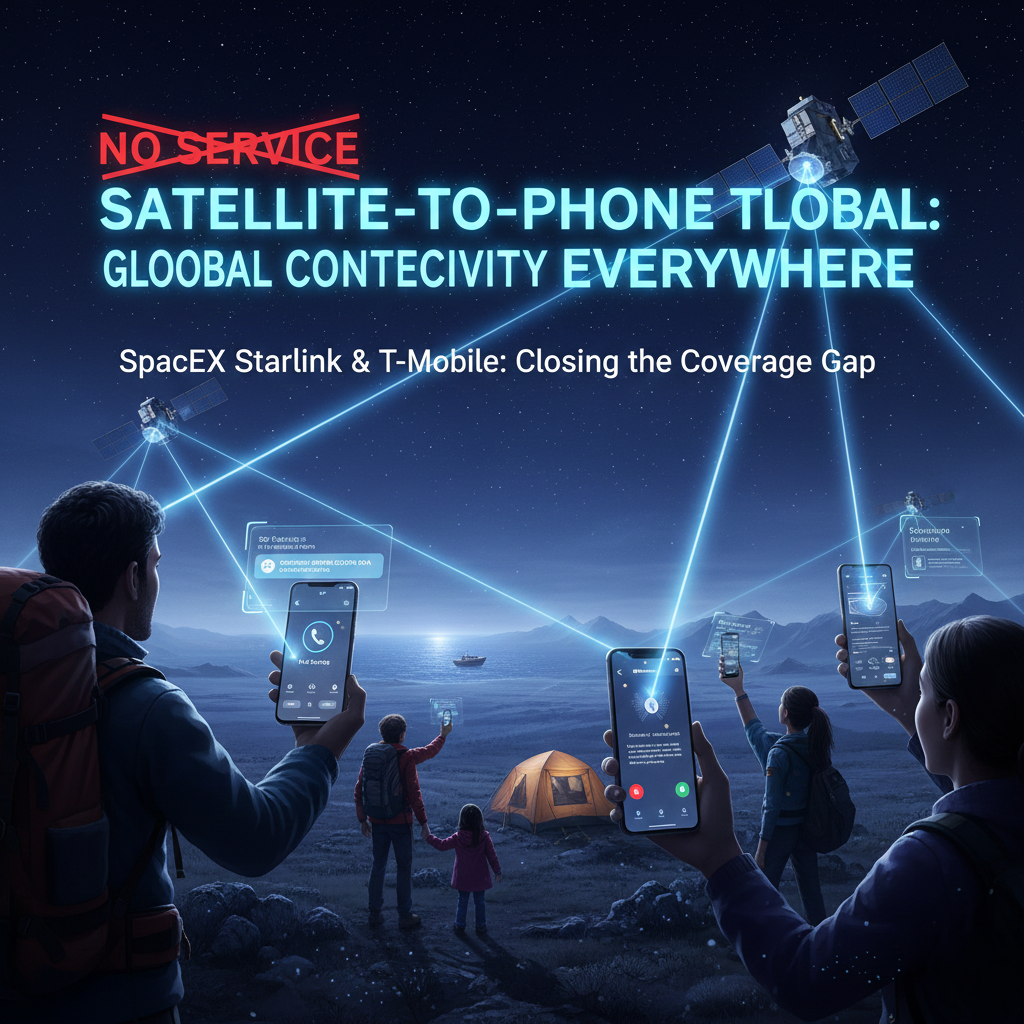
The dreaded phrase “No Service” may soon become a relic of the past.
SpaceX’s newest Starlink satellites have begun fully enabling direct-to-cell connectivity for T-Mobile users, marking a major milestone in mobile communications.
For the first time, standard smartphones without special hardware can connect directly to satellites, even when no cell towers are nearby.
How Direct-to-Cell Satellite Connectivity Works
Phones Connecting Straight to Space
Unlike traditional networks that rely entirely on ground-based towers, this system allows phones to link directly to satellites orbiting Earth.
Key features include:
- No satellite phone required
- No external antennas or hardware
- Works with existing smartphones
- Automatic connection when terrestrial networks fail
The satellite essentially acts as a floating cell tower in space.
Coverage Where Towers Can’t Reach
From Wilderness to Open Ocean
This breakthrough could dramatically expand mobile coverage into places where service has always been unreliable or nonexistent.
Potential coverage areas include:
- Remote wilderness and national parks
- Deserts and mountain regions
- Open oceans and maritime routes
- Disaster zones with damaged infrastructure
For travelers, explorers, and emergency responders, this could be life-changing.
A Major Leap for Emergency Communication
Connectivity When It Matters Most
One of the most significant impacts may be in emergency situations.
When cell towers are down due to natural disasters or accidents, satellite-based messaging and calling could provide a critical lifeline.
This technology could improve:
- Emergency response times
- Search-and-rescue coordination
- Public safety in remote areas
Reliable communication saves lives.
What This Means for the Future of Mobile Networks
A Shift Toward Space-Based Coverage
As satellite-to-phone technology matures, mobile networks may increasingly rely on hybrid systems combining terrestrial towers with space-based coverage.
This approach could:
- Close long-standing global connectivity gaps
- Reduce dependence on dense infrastructure
- Expand access in underserved regions
In the long term, space may become a core part of everyday mobile communication.
Early Rollout and Expansion
Still Growing, But Promising
While the technology is rolling out gradually, early activation for T-Mobile users represents a significant proof of concept.
As more satellites launch and software improves, coverage, reliability, and supported features are expected to expand.
Frequently Asked Questions (FAQs)
Do I need a special phone to use satellite connectivity?
No. Standard smartphones are designed to work without additional hardware.
Will this replace traditional cell towers?
No. It complements existing networks by filling coverage gaps, not replacing them.
Can this be used worldwide?
Global expansion is expected, but availability depends on regional regulations and satellite deployment.
Final Thoughts
Direct-to-cell satellite connectivity marks a turning point in how humans stay connected.
By extending mobile service beyond the limits of Earth-based towers, SpaceX and T-Mobile are helping redefine what “coverage” really means.
If this technology scales as expected, losing signal could soon be the exception not the rule.
