


New research reveals that men who become fathers later in life may pass on more harmful genetic changes than previously thought.
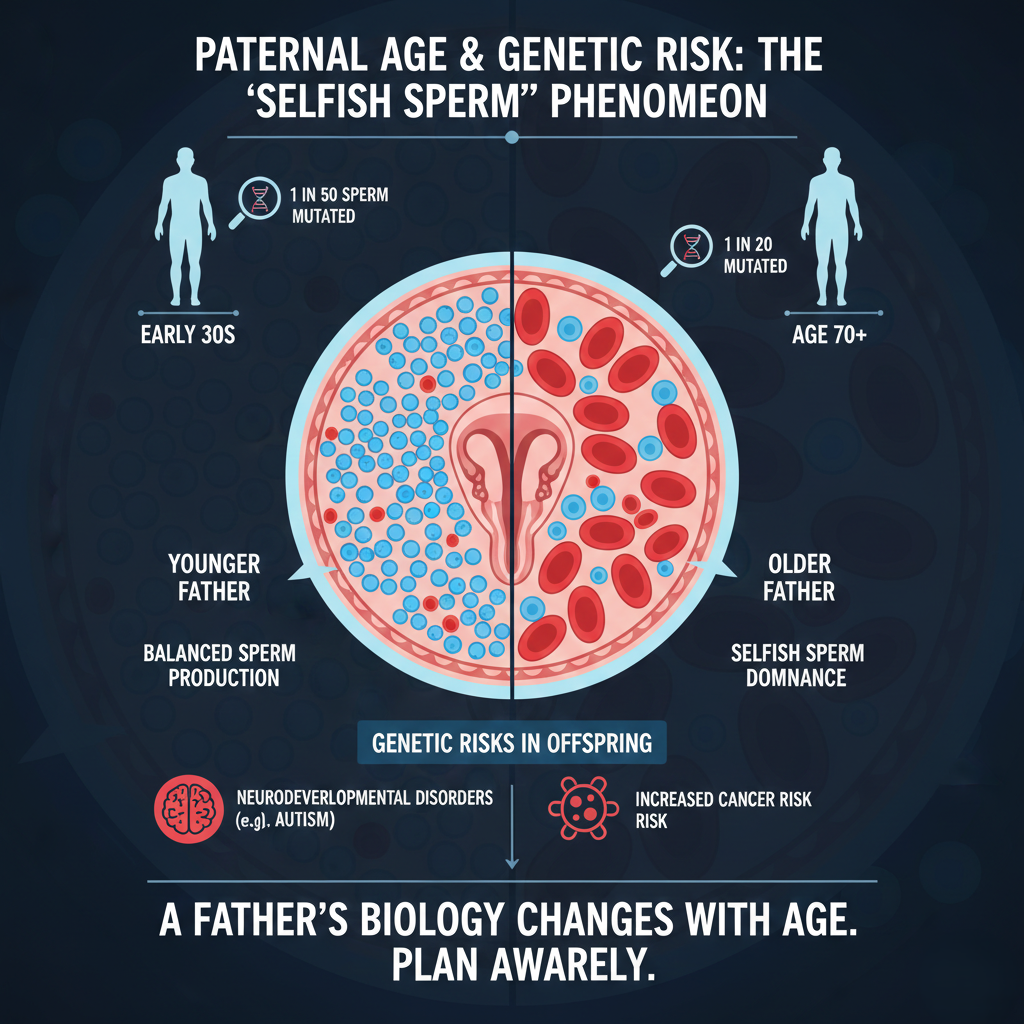
Scientists have identified a process called “selfish sperm,” in which certain mutated stem cells in the testes multiply faster as men age, gradually dominating sperm production.
How Selfish Sperm Works
As men get older:
- Mutated stem cells gain a growth advantage
- These cells multiply faster than healthy ones
- Over time, they increase the number of sperm carrying harmful mutations
Large-scale genomic data shows:
- By age 70, nearly 1 in 20 sperm cells may carry mutations
- In men in their early 30s, the rate is closer to 1 in 50
Importantly, these mutations arise naturally from aging, not lifestyle factors like smoking or alcohol.
Why This Matters
Researchers have identified over 40 genes affected by selfish sperm. Many are linked to:
- Neurodevelopmental disorders, such as autism
- Higher cancer risk
This explains why children of older fathers may face increased risks for certain developmental challenges.
Implications for Family Planning
These findings show that a father’s age plays a critical role in genetic health, alongside maternal age.
- Sperm genetics change over time, with mutations accumulating gradually
- Understanding paternal biology is important for family planning and child health considerations
Frequently Asked Questions (FAQs)
What are selfish sperm?
Selfish sperm are mutated stem cells in the testes that multiply faster than healthy cells, increasing the chance of passing on harmful genetic changes.
Does lifestyle affect these mutations?
No. These mutations are mainly driven by aging, not habits like smoking or drinking.
How can older fathers reduce risks?
While aging cannot be reversed, genetic counseling and awareness can help prospective parents understand potential risks and plan accordingly.
Final Thoughts
This research reshapes how we view reproductive health.
Men’s age is now recognized as a key factor in the genetic health of their children, highlighting that sperm biology changes over time.
For anyone planning a family, understanding these effects is crucial to making informed decisions about timing and genetic risks.
