


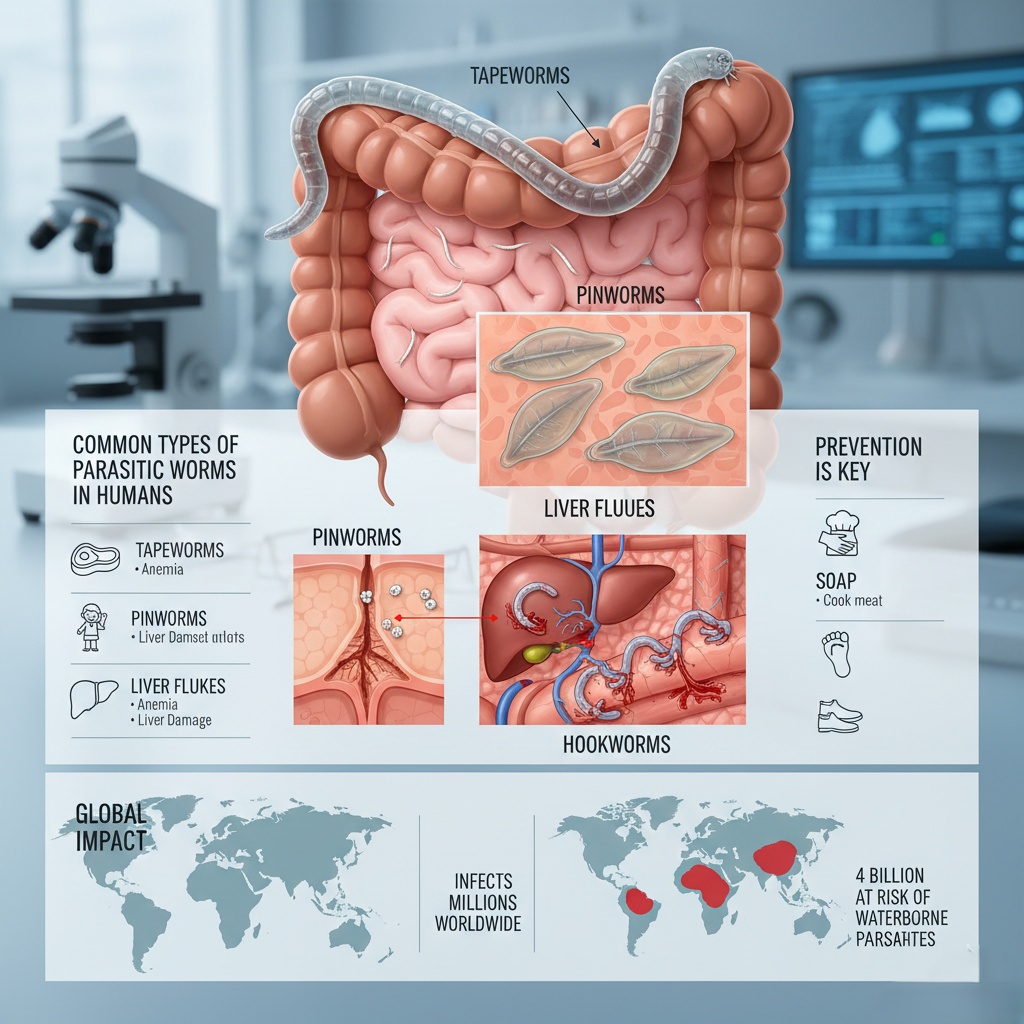
Parasitic worms may sound rare, but they infect millions of people worldwide.
Many live quietly inside the body and cause damage over time.
These infections often start through contaminated food, soil, or poor hygiene.
Without treatment, they can lead to serious health problems.
What Are Parasitic Worms (Helminths)?
Parasitic worms, also called helminths, are organisms that survive by living inside humans.
They steal nutrients and damage organs without being noticed at first.
Most infections are more common in areas with poor sanitation, but they can happen anywhere.
Common Types of Parasitic Worms in Humans
Different worms affect the body in different ways.
Some cause mild discomfort, while others can be dangerous if untreated.
Tapeworms: The Silent Nutrient Thieves
Tapeworms usually enter the body through undercooked meat.
Once inside, they can grow several feet long in the intestines.
They absorb nutrients meant for the host.
Common symptoms include:
- Weakness and fatigue
- Vitamin deficiencies
- Digestive discomfort
- Unexplained weight loss
In many cases, people don’t notice symptoms for months.
Pinworms: Common but Uncomfortable
Pinworms mostly affect children, especially in schools and daycare settings.
They cause intense itching around the anus, especially at night.
This happens when female worms lay eggs on the skin.
Possible problems include:
- Broken skin from scratching
- Secondary infections
- Poor sleep
- Stomach pain or nausea
While not usually dangerous, pinworms spread very easily.
Liver Flukes: A Serious Health Threat
Liver flukes are among the most dangerous parasitic worms.
They invade the:
- Liver
- Bile ducts
- Gallbladder
Over time, they cause inflammation, scarring, and blocked bile flow.
Long-term infections can lead to:
- Chronic liver disease
- Severe digestive issues
- Increased risk of liver cancer
Early detection is very important.
Hookworms: Blood-Feeding Parasites
Hookworms enter the body through bare skin, often the feet.
Their larvae live in contaminated soil and penetrate the skin.
They then attach to the intestines and feed on blood.
Common symptoms include:
- Anemia
- Fatigue
- Weight loss
- Abdominal pain
Children and pregnant women are at higher risk of complications.
How Parasitic Worm Infections Are Diagnosed
Doctors usually confirm infections with simple tests.
These may include:
- Stool tests
- Blood tests
- Imaging in severe cases
Early diagnosis prevents long-term damage.
Effective Treatments for Parasitic Worms
The good news is that treatment works very well.
Doctors often prescribe medications such as:
- Albendazole
- Praziquantel
These medicines kill the worms and clear the infection.
Most people recover fully with timely treatment.
How to Prevent Parasitic Worm Infections
Prevention is simple and highly effective.
Basic steps include:
- Washing hands regularly
- Cleaning fruits and vegetables
- Cooking meat thoroughly
- Wearing shoes outdoors
- Avoiding contaminated water and soil
Good hygiene protects both individuals and communities.
Real-World Example: Why Prevention Matters
In many regions, school-based hygiene programs have sharply reduced worm infections.
Simple habits like handwashing and footwear made a huge difference.
This shows prevention works when practiced consistently.
Frequently Asked Questions (FAQs)
Are parasitic worms common?
Yes. They infect hundreds of millions of people worldwide.
Can worms live in the body for years?
Yes. Some infections remain unnoticed for long periods.
Are worm infections deadly?
Most are treatable, but severe cases can be dangerous if ignored.
Can children get parasitic worms easily?
Yes. Children are more vulnerable, especially to pinworms and hookworms.
Final Thoughts: Awareness Is the Best Protection
Parasitic worms may be invisible, but their effects can be serious.
Understanding how they spread helps prevent infection.
With good hygiene, safe food practices, and timely treatment, most infections are completely curable.
