


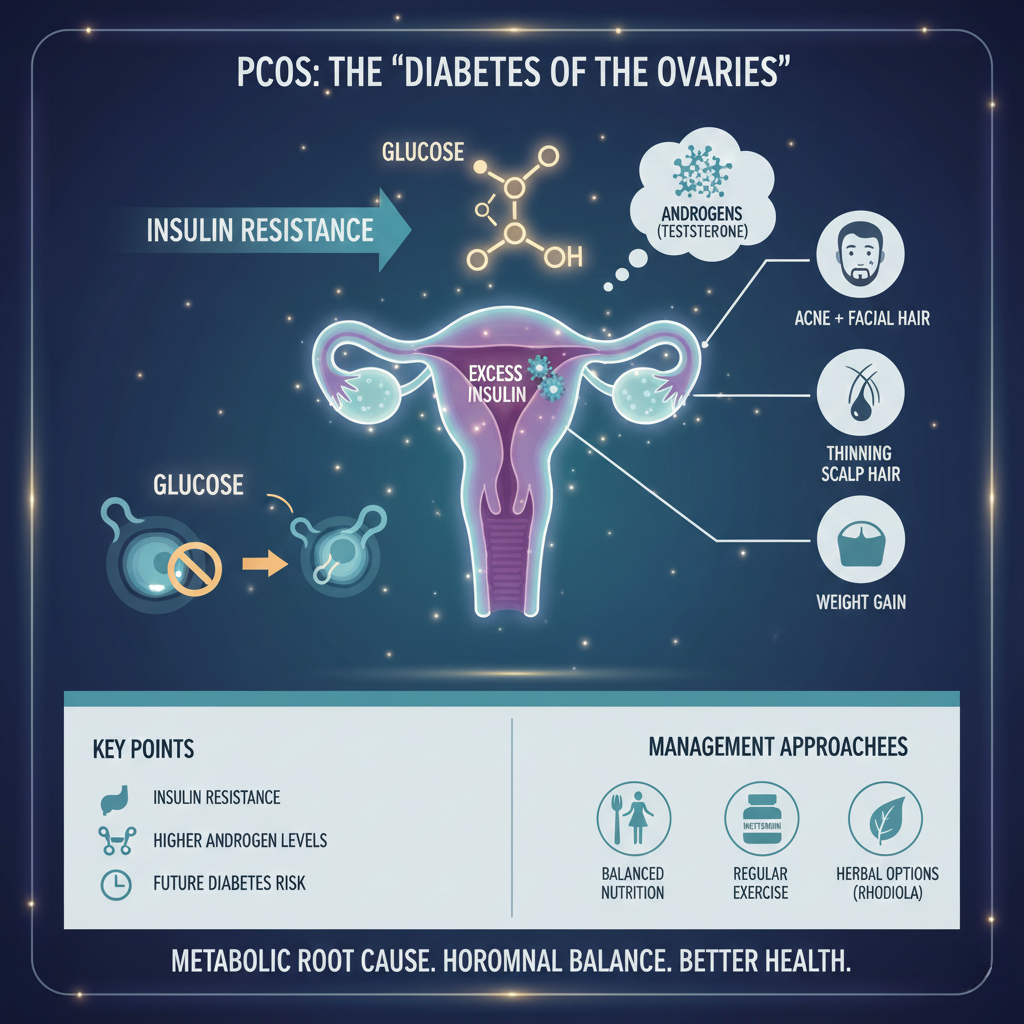
Polycystic Ovary Syndrome (PCOS) is sometimes called the “diabetes of the ovaries” because insulin resistance is a major factor in the condition.
Even if blood sugar levels appear normal, many women with PCOS have high insulin levels, which push the ovaries to produce too many androgens, or male hormones, disrupting normal hormonal balance.
How Insulin Resistance Affects PCOS
When insulin levels remain elevated:
- Ovaries receive constant stimulation
- Irregular or missed ovulation can occur
- Common symptoms include:
- Acne
- Unwanted facial or body hair
- Thinning scalp hair
- Weight gain
This process is similar to type 2 diabetes, where insulin is present but cells don’t respond effectively.
Key Points Behind the Term
- Insulin Resistance: Cells—including ovarian cells—don’t respond properly, causing insulin buildup that interferes with ovarian function.
- Higher Androgen Levels: Excess insulin signals the ovaries to produce more testosterone, leading to hair growth, acne, and hair thinning.
- Not Only Weight-Related: PCOS can affect both overweight and lean individuals. Even slim women may have insulin resistance in the ovaries.
- Future Diabetes Risk: Women with PCOS have up to four times higher risk of type 2 diabetes, and over half may develop prediabetes by age 40.
Approaches to Managing PCOS
Addressing the metabolic root cause is key:
- Balanced nutrition to support blood sugar control
- Regular physical activity to improve insulin sensitivity
- Medications such as Metformin
- Supplements like Inositol, which may help with hormonal balance
Alternative and Herbal Options
Some women explore natural herbs such as Rhodiola, which is promoted for:
- Blood sugar balance
- Hormone regulation
- Mood support
- Menstrual regularity
Note: Evidence is limited, and personal experiences vary. Always consult a qualified healthcare professional before trying supplements for PCOS or hormone-related concerns.
Frequently Asked Questions (FAQs)
Can lean women have insulin resistance in PCOS?
Yes. PCOS affects women of all body types, and insulin resistance may exist even without excess weight.
How does PCOS increase diabetes risk?
Persistent insulin resistance and elevated blood sugar stress the body, making women with PCOS more likely to develop type 2 diabetes or prediabetes.
What lifestyle changes help with PCOS?
- Regular exercise
- Healthy, balanced diet
- Monitoring blood sugar and hormone levels
Final Thoughts
PCOS is more than a reproductive condition—it’s a metabolic disorder at its core.
Understanding the role of insulin resistance can help women manage symptoms, reduce long-term risks, and improve quality of life.
With proper lifestyle choices, medical support, and awareness, women with PCOS can take meaningful steps toward hormonal balance and better health.
