


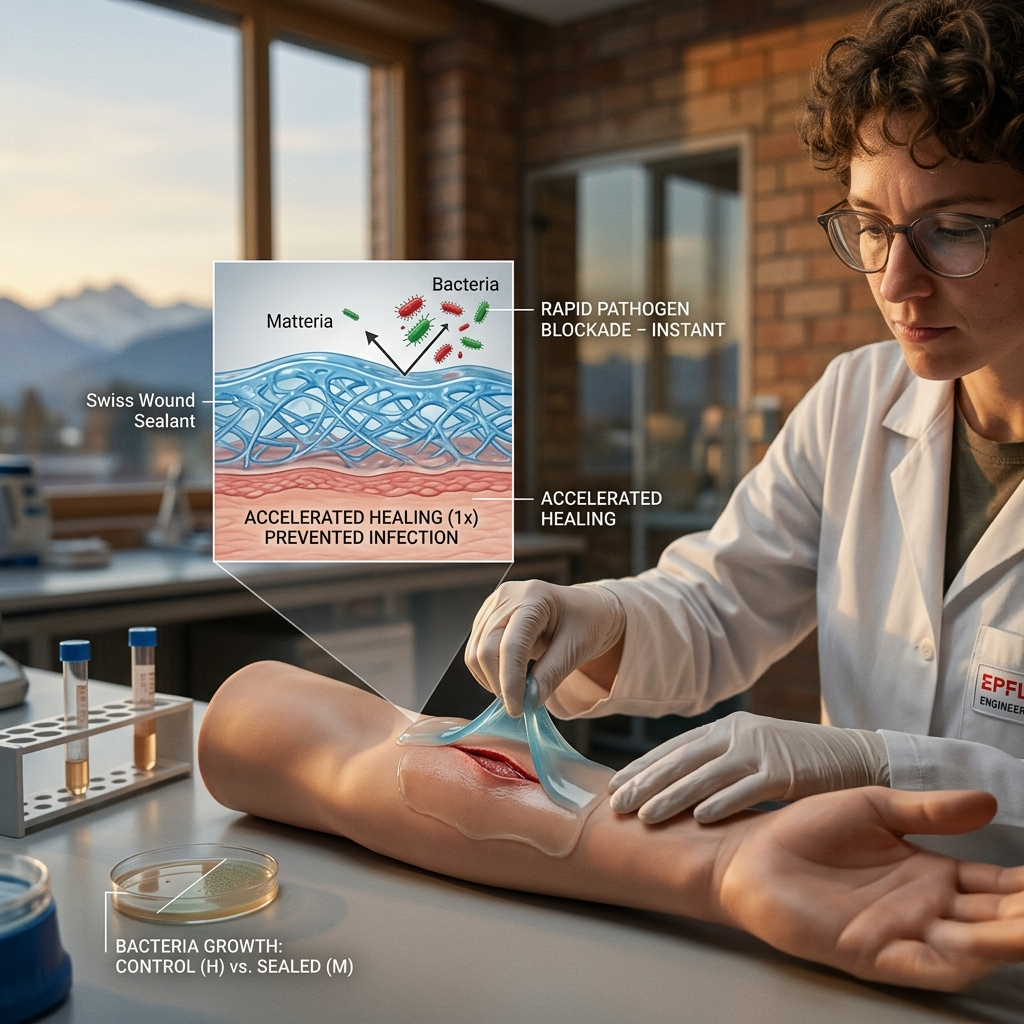
Imagine getting a cut that seals within hours: no infection, no complications, and faster recovery. That’s exactly what researchers in the ETH Zurich Institute of Biomedical Materials are working on today.
This new approach to wound care could change medicine completely. Instead of waiting days for healing and worrying about infection, wounds may soon seal instantly with advanced materials.
Let’s break it down in a simple way.
What Is Rapid Wound Sealing Technology?
Rapid wound sealing technology is a new method that uses engineered materials to close wounds quickly.
Unlike traditional bandages or stitches, this material forms a protective seal over the wound within hours. As a result, bacteria cannot enter, and the healing process begins immediately.
Moreover, the seal stays in place until the skin fully recovers.
How the Technology Works
Polymer Cross-Linking Explained
At the core of this innovation is something called polymer cross-linking.
In simple terms, tiny molecules connect and form a strong, flexible network over the wound. This network acts like an invisible shield.
Here’s what happens step by step:
- The material is applied to the wound.
- It reacts with the surface and forms a tight seal.
- The seal blocks bacteria completely.
- The body heals safely underneath.
Because of this process, the wound stays clean and protected at all times.
Why Infection Prevention Matters
Infections are one of the biggest risks in wound care. Even small cuts can lead to serious problems if bacteria enter the body.
For example, severe infections can develop into sepsis, which is often dangerous and sometimes fatal.
However, this new sealing method changes the game. Since bacteria cannot pass through the barrier, infection risk drops close to zero.
Key Benefits of Rapid Wound Sealing
This technology offers several powerful advantages:
- Instant protection: Wounds seal within hours
- Zero bacterial entry: Strong barrier blocks infection
- Faster healing: The body repairs tissue more efficiently
- Reduced medical costs: Fewer complications mean less treatment
- Lower risk of sepsis: Serious infections become preventable
Because of these benefits, doctors may soon rely less on antibiotics and more on prevention.
Real-World Impact and Progress
According to research published in Advanced Materials, this technology has already shown promising results.
By 2026, it will have helped prevent infections in hundreds of thousands of cases. That’s a huge step forward in modern medicine.
Hospitals and emergency units could especially benefit. For instance, treating injuries quickly in busy environments becomes much safer and easier.
How It Compares to Traditional Wound Care
Let’s quickly compare:
| Feature | Traditional Methods | Rapid Sealing Tech |
|---|---|---|
| Infection Risk | Moderate to High | Near Zero |
| Healing Speed | Slow | Fast |
| Protection | Limited | Complete Barrier |
| Maintenance | Frequent care needed | Minimal care |
Clearly, the new method offers a major upgrade.
Challenges and Future Potential
Although the results are impressive, some challenges still exist.
- Large-scale production needs optimization
- Cost must become affordable worldwide
- Long-term safety studies are ongoing
However, the future looks bright. Soon, this technology could be used in the following:
- Emergency medicine
- Military healthcare
- Remote or rural areas
- Everyday home first aid
As research continues, accessibility will likely improve.
FAQs
How fast does the wound seal?
Most wounds can seal within a few hours after applying the material. This rapid action reduces exposure to bacteria significantly.
Is the seal safe for the body?
Yes, the material is designed to be biocompatible. It supports natural healing without causing harm.
Can it completely prevent infection?
It comes very close. Since bacteria cannot enter, infection risk drops to nearly zero in most cases.
Will this replace stitches and bandages?
In many situations, yes. However, deeper or complex wounds may still require traditional treatment.
Final Thoughts
Rapid wound sealing technology could completely change how we treat injuries. Instead of reacting to infections, we may prevent them from the start.
This shift is powerful. It saves time, reduces risk, and improves recovery for millions of people.
If this innovation continues to grow, everyday wound care may soon become faster, safer, and far more effective.
