


When someone has a stroke, every minute matters.
Fast treatment can mean the difference between recovery and permanent brain damage.
Now, new research suggests robotic technology could allow doctors to treat strokes from thousands of miles away.
It’s still experimental—but the potential is huge.
What Was Demonstrated?
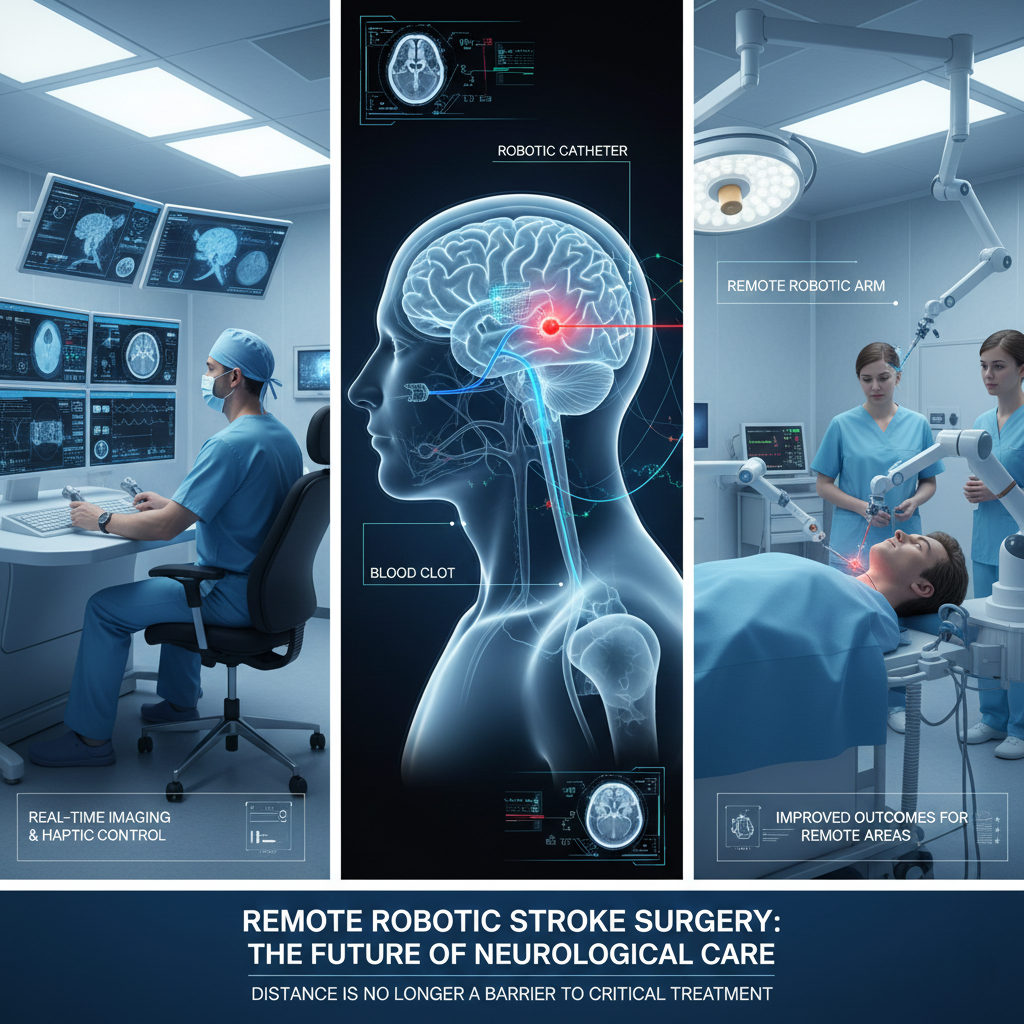
In a recent test, surgeons used robotic systems to perform a clot-removal procedure known as thrombectomy.
Thrombectomy is used to remove blood clots from brain arteries during certain types of stroke.
Using advanced robotic controls, doctors guided tiny instruments through blood vessels with extreme precision.
The twist?
They were not physically in the same room.
Their hand movements were translated in real time by the robotic system at a distant location.
What Is Thrombectomy?
Thrombectomy is a minimally invasive procedure.
Doctors:
- Insert a thin catheter into a blood vessel
- Guide it toward the blocked artery in the brain
- Remove the clot
- Restore blood flow
It’s typically performed in specialized stroke centers.
Timing is critical. The faster the clot is removed, the better the outcome.
Where Was This Tested?
The procedure was not performed on living patients.
Instead, it was tested on donated human bodies with simulated blood flow.
This allowed researchers to:
- Evaluate precision
- Measure safety
- Test navigation accuracy
- Identify technical challenges
This step is essential before moving to real clinical trials.
How the Robotic System Works
The robotic platform uses:
- Real-time imaging
- Motion translation technology
- High-precision instrument control
- Stable remote connectivity
Surgeons view live imaging of the blood vessels while guiding the tools from a remote console.
Even tiny hand movements are translated into controlled actions inside delicate brain arteries.
Why This Could Transform Stroke Care
Stroke treatment often requires specialized teams at advanced hospitals.
Many rural or underserved areas lack immediate access to these facilities.
If remote robotic stroke surgery becomes safe and approved, it could:
- Bring expert care to remote hospitals
- Reduce treatment delays
- Improve survival rates
- Lower long-term disability
Instead of transferring patients long distances, specialists could intervene remotely.
That could save precious time.
The Challenges Ahead
While promising, several hurdles remain:
- Ensuring ultra-stable internet connections
- Preventing system delays or technical failures
- Passing strict safety regulations
- Proving effectiveness in real patient trials
Medical technology must meet very high safety standards before approval.
This is still in the experimental phase.
Real-World Impact: Why Time Matters in Stroke
Brain cells begin to die within minutes after a stroke.
Experts often say, “Time is brain.”
Even small delays can increase the risk of:
- Permanent disability
- Speech problems
- Memory loss
- Paralysis
If robotic systems reduce delays in treatment, outcomes could improve significantly.
FAQs
1. Has remote robotic stroke surgery been done on real patients?
No. So far, testing has been conducted on donated human bodies with simulated blood flow.
2. What type of stroke does thrombectomy treat?
It is mainly used for ischemic strokes caused by blood clots blocking brain arteries.
3. Is this technology available now?
No. It is still experimental and undergoing testing before clinical use.
4. Why is remote capability important?
It could allow specialists to treat patients in rural or underserved areas without needing to travel.
5. What risks need to be addressed?
Technical reliability, system latency, and patient safety must all be thoroughly evaluated.
Final Thoughts
Remote robotic stroke surgery may sound futuristic.
But early demonstrations show it’s technically possible.
While it’s not yet ready for hospitals, this research represents an important step toward expanding access to lifesaving stroke treatment.
If future clinical trials confirm safety and effectiveness, remote thrombectomy could reduce treatment delays and improve outcomes worldwide.
Technology alone won’t replace skilled surgeons.
But it may extend their reach—and that could change everything for stroke patients in remote areas.
Medical innovation is moving fast. The future of stroke care might not depend on distance anymore.
