


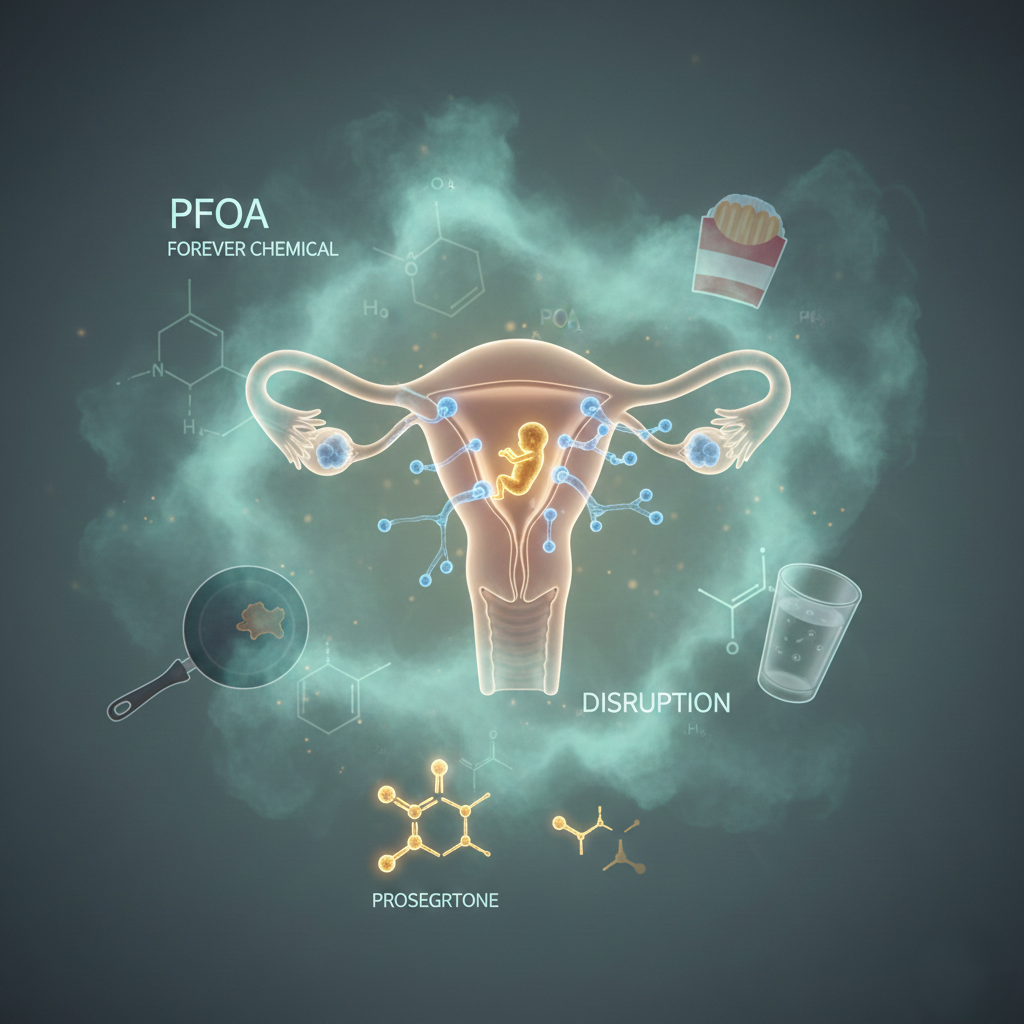
Researchers are raising alarms about “forever chemicals” and their potential effects on the earliest stages of pregnancy.
A recent study found that perfluorooctanoic acid (PFOA), a persistent industrial chemical, can interfere with the delicate process of embryo implantation in the uterus.
How PFOA Affects Early Pregnancy
In animal experiments, pregnant mice exposed to small amounts of PFOA during the implantation window showed:
- Reduced progesterone levels, a hormone critical for preparing the uterus
- Altered uterine surfaces, affecting where embryos normally attach
- Dose-related declines in pinopodes, tiny structures that help embryos anchor
Researchers also observed decreased activity of key immune signaling molecules, IL-1β and IL-6, which help the embryo communicate with the uterus.
These disruptions suggest that successful implantation may be more difficult in the presence of PFOA.
Where PFOA Is Found
PFOA has been widely used in:
- Nonstick cookware
- Food wrappers
- Some contaminated water supplies
Because it persists in the environment and builds up in the body, everyday exposure is a growing concern.
Implications for Human Health
While the study was done in mice, scientists caution that the widespread presence of PFOA makes this a serious issue.
Understanding its effects on fertility could guide:
- Public health recommendations
- Environmental regulations
- Personal safety measures to limit exposure
Why Timing and Hormones Matter
Successful embryo implantation depends on:
- Precise timing in the uterine cycle
- Healthy hormone levels, particularly progesterone
- Strong biological signaling between the embryo and uterus
Even small disruptions from chemicals like PFOA could reduce the chances of pregnancy taking hold.
Frequently Asked Questions (FAQs)
What are “forever chemicals”?
They are synthetic substances that do not break down in the environment, such as PFOA, and can accumulate in the body over time.
Can PFOA exposure affect humans the same way as mice?
The study doesn’t prove the same effect in humans, but widespread exposure makes further research critical.
How can people reduce PFOA exposure?
Avoid products with nonstick coatings and certain food wrappers, and ensure drinking water meets safety standards.
Final Thoughts
This research highlights a growing concern: everyday chemicals may impact fertility and early pregnancy.
While more studies are needed in humans, limiting exposure to PFOA and other “forever chemicals” is a prudent step for reproductive health.
