


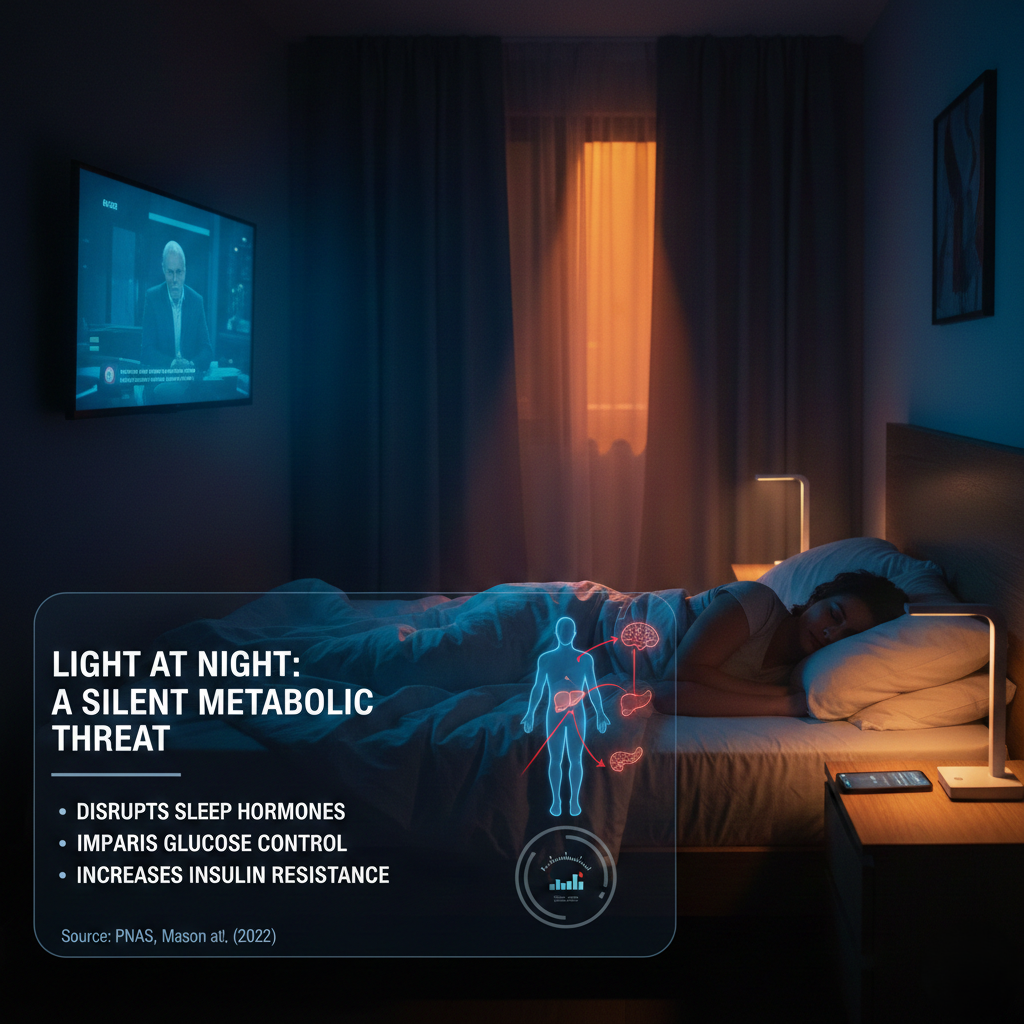
Many people sleep with a TV on or a small light nearby. It feels harmless and even comforting.
But new research suggests that sleeping with light may quietly harm blood sugar control and long-term health.
What the Study Discovered
Researchers publishing in Proceedings of the National Academy of Sciences (PNAS) studied how light exposure during sleep affects the body.
They found that even dim light can interfere with the body’s natural nighttime processes.
These processes are important for keeping blood sugar levels stable.
Why Darkness Matters During Sleep
At night, the body enters a repair mode. Hormones adjust, cells recover, and metabolism resets.
Light exposure sends mixed signals to the brain.
This confusion prevents the body from reaching deep, restorative sleep needed for healthy metabolism.
How Light Affects Blood Sugar Control
When sleep is disrupted by light, the body struggles to manage glucose properly.
Over time, this can lead to:
- Poor blood sugar regulation
- Increased stress on insulin
- Higher metabolic strain
These changes may happen slowly and without clear symptoms.
The Link Between Light and Insulin Resistance
The study also found signs of increased insulin resistance in people exposed to light during sleep.
Insulin resistance means the body does not use insulin effectively.
This is one of the earliest steps toward developing type 2 diabetes.
Common Sources of Light at Night
Many people don’t realize how much light surrounds them while sleeping.
Common sources include:
- Televisions left on
- Bedside lamps
- Phone notifications
- Streetlights through windows
Even low-level light can have an effect.
Simple Ways to Create a Dark Sleep Environment
Improving sleep darkness is easy and low-cost.
Helpful steps include:
- Turn off all lights before sleeping
- Use blackout curtains
- Cover or remove glowing electronics
- Avoid screens at least one hour before bed
Small changes can support better sleep and metabolism.
FAQs
Is dim light really harmful during sleep?
Yes. Research shows even low light can disrupt normal metabolic processes.
Does sleeping with the TV on affect blood sugar?
Yes. TV light can interfere with deep sleep and glucose control.
Can light at night increase diabetes risk?
Regular exposure may raise insulin resistance, increasing diabetes risk over time.
Is it better to sleep in complete darkness?
Yes. Complete darkness supports natural sleep and metabolic balance.
What about night lights?
If needed, use very low, warm-colored lights placed far from the bed.
Final Thoughts
Sleeping with even a small amount of light may seem harmless, but science tells a different story. Light during sleep can disrupt blood sugar control and increase insulin resistance over time.
The good news is that this risk is easy to reduce. Creating a dark sleep environment is a simple habit that may protect your metabolism and overall health.
Sometimes, the smallest lifestyle changes make the biggest difference.
Source:
Mason, I. C., et al. (2022). Light exposure during sleep impairs cardiometabolic function. Proceedings of the National Academy of Sciences.
