


Introduction
Think about how many gadgets you use every day. Phones, earbuds, and smartwatches; they all depend on batteries.
However, there’s one big problem. Most batteries are rigid, bulky, and hard to fit into flexible designs.
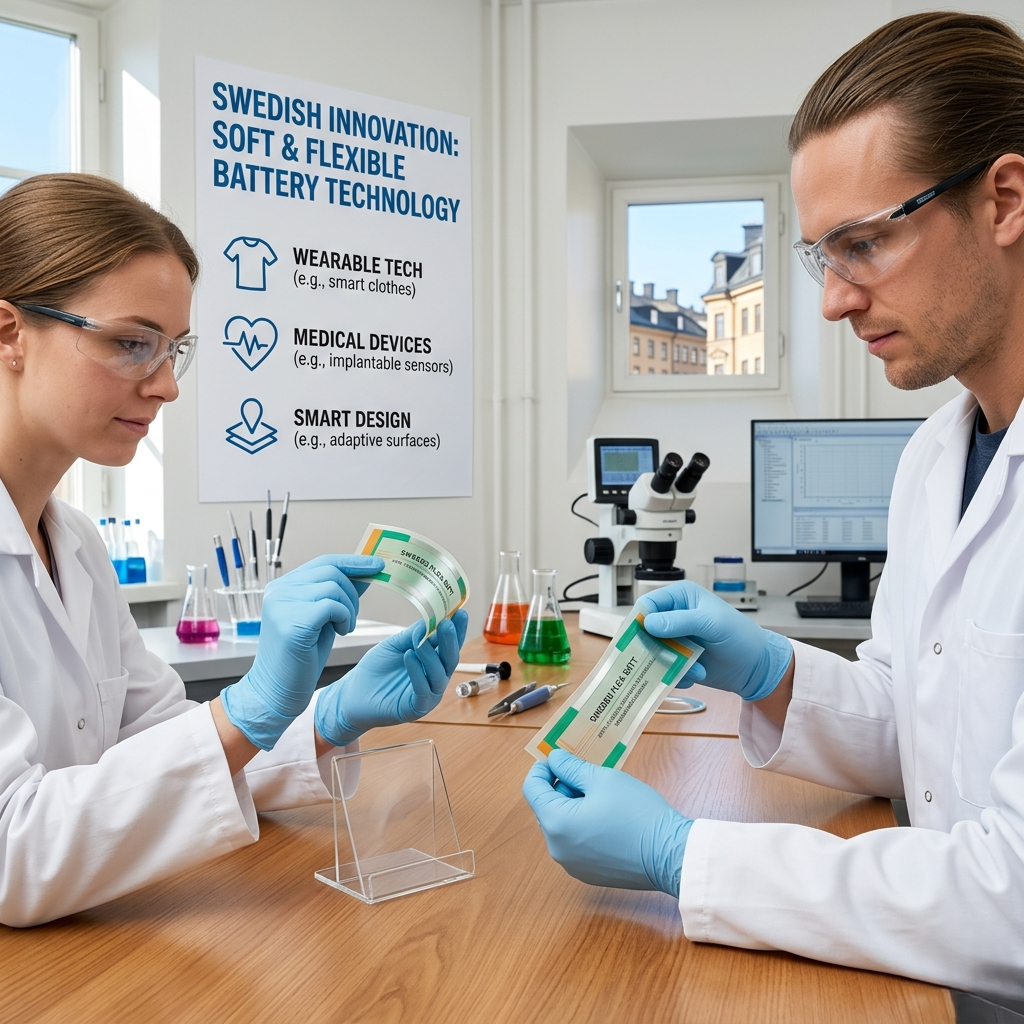
Now, scientists in Sweden have introduced something completely different. A soft, flexible battery that can be shaped like toothpaste.
Yes, this could change everything.
What Is a Flexible Soft Battery?
This new type of battery is not solid like traditional ones. Instead, it has a soft, paste-like structure.
Key Features
- Can bend and stretch easily
- Can be shaped into different forms
- Works in flexible and wearable devices
Because of this, designers are no longer limited by battery shape.
Why Traditional Batteries Are a Problem
Most batteries today are designed as fixed, solid blocks. While they work well, they limit creativity.
Common Limitations
- Hard to fit into small or curved devices
- Not comfortable for wearables
- Restrict innovative product design
As a result, many futuristic ideas never become real products.
How This New Battery Changes Everything
This innovation flips the idea completely. Instead of designing devices around batteries, batteries can now fit the device.
What Makes It Special
- Toothpaste-like texture allows easy shaping
- Flexible structure supports bending and stretching
- Adaptable design fits into almost any form
Therefore, engineers get much more freedom to create new types of devices.
Real-World Applications
This battery is not just a lab experiment. It has real potential across many industries.
1. Wearable Technology
Devices can feel like part of your clothing. No more hard edges or discomfort.
2. Medical Sensors
Soft sensors can sit on the skin comfortably. This improves long-term health monitoring.
3. Smart Clothing
Clothes could include built-in electronics powered by flexible batteries.
4. Future Gadgets
Designers can create products that were previously impossible due to battery limits.
Why This Matters for Energy Efficiency
Flexible electronics are growing fast. However, power sources haven’t kept up—until now.
Key Benefits
- Better use of available space
- Reduced energy waste
- Improved device performance
As a result, devices can become smaller, smarter, and more efficient.
Real-World Context
Companies like Samsung and Apple are already exploring flexible and wearable devices.
So, a battery like this could play a major role in future products from such brands.
Challenges to Consider
Even though this innovation is exciting, it still needs development.
Possible Challenges
- Long-term durability
- Large-scale production
- Cost of manufacturing
However, with ongoing research, these issues may be solved over time.
What This Means for the Future
This is more than just a better battery. It changes how we design and use technology.
As devices become more personal and wearable, flexibility will matter more than ever.
Therefore, this innovation could lead to a new generation of electronics that feel natural and seamless.
FAQs
What is a flexible battery?
It is a battery that can bend, stretch, and change shape without losing functionality.
Why is this invention important?
It removes design limits, allowing more comfortable and advanced devices.
Can this be used in phones?
In the future, yes. It could help create thinner and more flexible smartphones.
Is it available now?
It is still in development, but it shows strong potential for future use.
Conclusion
The soft, shape-shifting battery from Sweden is a big step forward. It doesn’t just improve performance; it changes the way we think about powering devices.
Instead of forcing technology to fit rigid batteries, we can now design power sources around our needs.
