


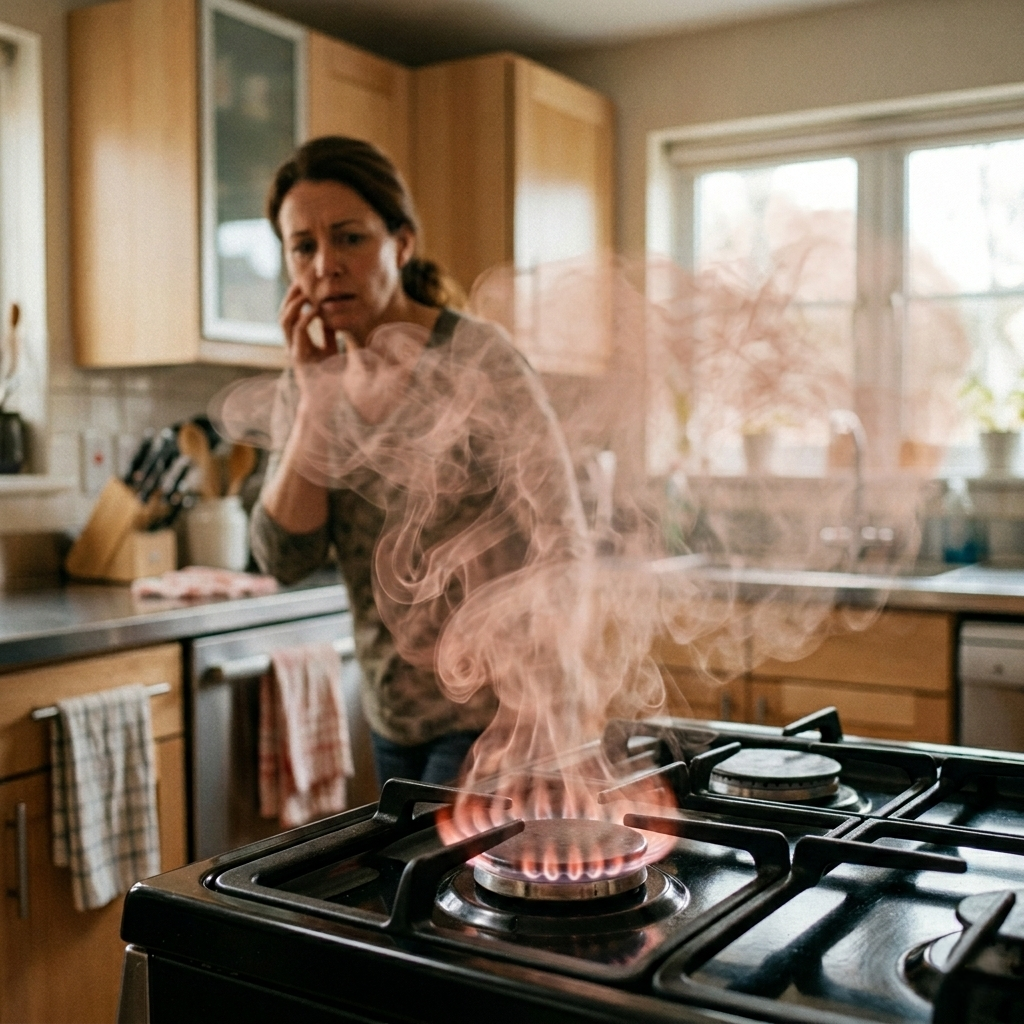
Introduction: The Hidden Risk in Your Kitchen
Most of us think of the kitchen as the heart of the home.
But new research suggests it could also be a source of invisible pollution.
Scientists at Stanford University have found that gas stoves and ovens release benzene — a chemical strongly linked to leukemia and other blood cancers.
And it’s not from burnt food.
It comes directly from burning natural gas or propane.
What Is Benzene and Why Is It Dangerous?
Benzene is a colorless chemical used in many industrial processes.
It is also classified as a known human carcinogen.
Long-term exposure has been linked to:
- Leukemia
- Other blood cancers
- Bone marrow damage
- Weakened immune system
Even low-level exposure over time can increase health risks.
That’s what makes indoor exposure concerning.
How Gas Stoves Release Benzene
When natural gas or propane burns, it produces combustion byproducts.
One of those byproducts is benzene.
Unlike smoke, benzene:
- Has no strong smell
- Is invisible
- Spreads easily through air
The study published in Environmental Science & Technology found that benzene levels can rise quickly during normal cooking.
No food needs to burn for this to happen.
How Benzene Spreads Inside Homes
You might think the risk stays near the stove.
It doesn’t.
Research shows benzene can:
- Travel into living rooms
- Enter bedrooms
- Remain in the air for hours
- Build up in poorly ventilated spaces
In homes without strong ventilation, levels may exceed health-based guidelines.
That’s especially concerning for children.
Why Ventilation Matters So Much
Ventilation can make a major difference.
Without airflow, indoor pollutants get trapped.
Simple improvements can help:
- Use a vent hood that exhausts outdoors
- Open windows while cooking
- Turn on fans to improve air circulation
However, not all range hoods remove air outside. Some simply recirculate it.
That means pollutants may stay inside.
Health Implications for Families
The biggest concern is long-term exposure.
Regular cooking on gas stoves means repeated benzene release.
Over months or years, this could raise the risk of blood-related cancers.
Children may face higher risk because:
- They breathe faster than adults
- Their bodies are still developing
- They spend more time indoors
This doesn’t mean every gas stove causes cancer.
But the risk is real enough to spark serious debate.
Gas vs. Electric Cooking: A Quick Comparison
| Feature | Gas Stove | Electric/Induction |
|---|---|---|
| Benzene emissions | Yes | No combustion emissions |
| Indoor air pollution | Higher | Lower |
| Ventilation need | Critical | Recommended but less urgent |
| Energy source | Natural gas/propane | Electricity |
Electric and induction cooktops do not burn fuel.
That eliminates combustion-related benzene.
What Experts Recommend
Researchers suggest practical steps to reduce exposure.
1. Improve Ventilation
Always use an exhaust fan that vents outdoors.
If possible, cook with windows open.
2. Limit Gas Stove Use
Use alternative appliances like microwaves or electric kettles when practical.
3. Consider Switching to Electric or Induction
Induction cooktops heat faster and do not produce combustion gases.
Switching may lower long-term indoor pollution exposure.
Real-World Example: Small Kitchen, Bigger Risk
Imagine cooking dinner in a small apartment kitchen with no working exhaust fan.
The stove runs for 45 minutes.
Windows are closed.
Benzene levels can rise and remain elevated long after cooking ends.
Now imagine this happening daily.
Over time, exposure adds up.
FAQs: Gas Stove Benzene Risk
Does this mean I should throw out my gas stove?
Not necessarily. Improving ventilation and reducing exposure can lower risk.
Is occasional cooking dangerous?
Short-term exposure is less concerning than repeated, long-term exposure.
Are outdoor grills a concern?
Outdoor use reduces indoor exposure, but benzene is still produced during combustion.
Are gas stoves being banned?
Some cities are limiting new gas connections, but policies vary widely.
The Bigger Conversation: Indoor Air Quality
For years, people focused on outdoor pollution.
Now attention is shifting indoors.
Homes contain:
- Cleaning chemicals
- Building materials
- Cooking emissions
- Heating systems
Understanding indoor air quality is becoming just as important as outdoor pollution control.
Conclusion: Small Changes Can Make a Big Difference
The research from Stanford highlights a hidden source of indoor air pollution.
Gas stoves release benzene, a cancer-linked chemical that can linger in homes.
While the risk depends on ventilation and usage, awareness is key.
Simple steps like better airflow or switching to electric cooking can reduce exposure.
Your kitchen should nourish your family — not quietly expose them to risk.
