


Introduction
Running a small business is exciting. However, it often feels overwhelming when you manage marketing, sales, and daily tasks all at once.
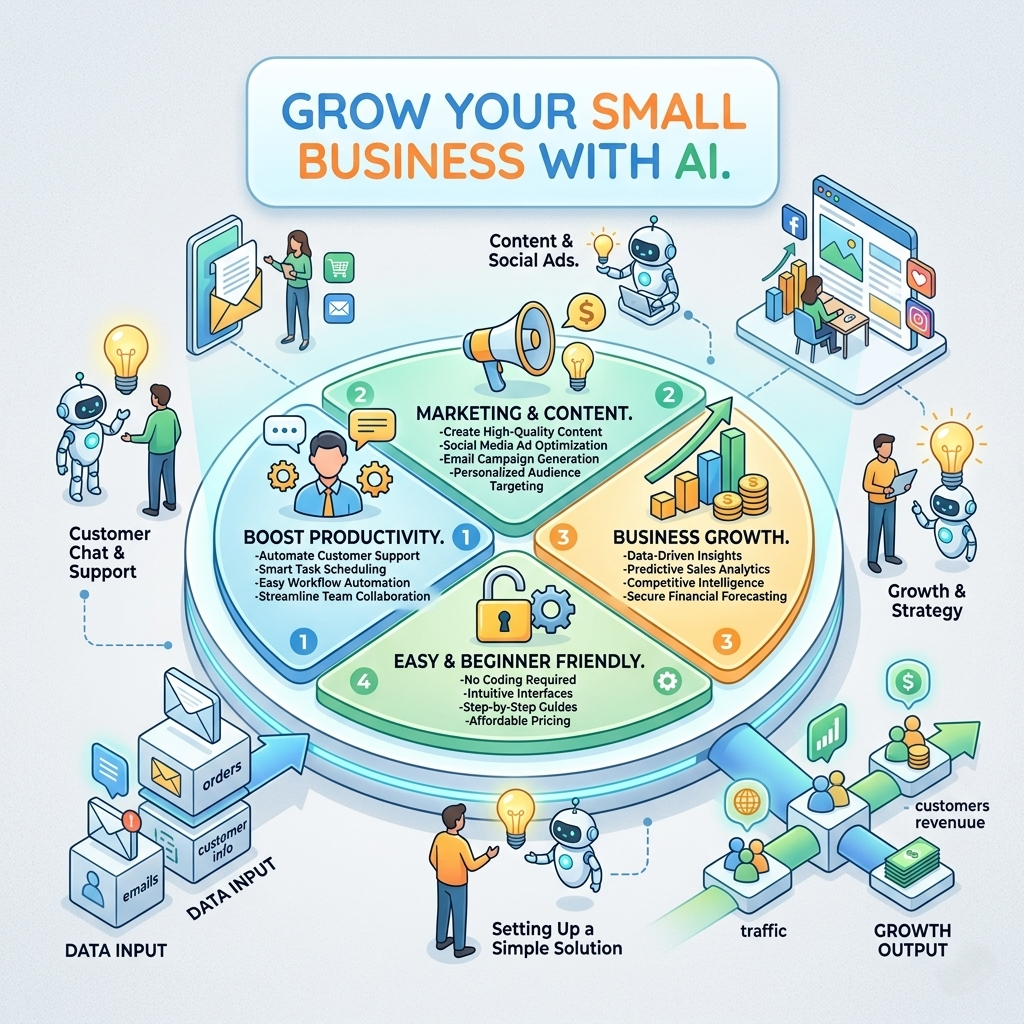
That’s where AI tools come in. They save time, reduce costs, and help you work smarter—not harder.
Even better, many AI tools are now simple and affordable. So, you don’t need technical skills to get started.
In this guide, you’ll discover the best AI tools for small businesses that can boost productivity and bring real growth.
Why Small Businesses Should Use AI Tools
Before we dive in, let’s quickly understand why AI matters.
AI tools help you:
- Automate repetitive tasks
- Improve customer support
- Create content faster
- Analyze data easily
- Increase sales with smarter decisions
As a result, you get more done in less time.
Best AI Tools for Small Businesses in 2026
1. ChatGPT – AI for Content & Customer Support
ChatGPT is one of the most powerful tools for small businesses. It helps you create content, answer customer queries, and even generate ideas.
Key features:
- Blog writing and social posts
- Email drafting
- Customer support automation
Best for: Content creators and service-based businesses
👉 Example: A small online store uses ChatGPT to reply to customer messages instantly.
2. Canva AI – Design Made Easy
Canva makes design simple, even for beginners. Its AI features help create logos, social media posts, and presentations quickly.
Key features:
- Magic Design suggestions
- AI image generator
- Ready-made templates
Best for: Branding and social media
👉 Example: A bakery creates Instagram posts daily without hiring a designer.
3. Jasper AI – High-Converting Marketing Content
Jasper AI is built for marketers. It helps you write ads, blogs, and product descriptions that convert.
Key features:
- SEO-friendly content
- Ad copy generation
- Brand voice customization
Best for: Marketing-focused businesses
👉 Case study: Many eCommerce brands increased conversion rates using Jasper’s AI copywriting.
4. Shopify Magic – AI for eCommerce
Shopify Magic helps online store owners manage products, write descriptions, and automate tasks.
Key features:
- Product description generation
- Email automation
- Store optimization
Best for: Online stores
👉 Example: A clothing shop generates product descriptions in seconds instead of hours.
5. Grammarly – Smart Writing Assistant
Grammarly ensures your emails and content look professional.
Key features:
- Grammar correction
- Tone improvement
- Clarity suggestions
Best for: Professional communication
👉 Example: A freelancer uses Grammarly to send polished proposals.
6. Zapier – Automate Your Workflow
Zapier connects different apps and automates repetitive tasks.
Key features:
- Workflow automation
- App integrations
- No coding required
Best for: Saving time on daily tasks
👉 Example: Automatically send new leads from your website to email marketing tools.
7. Tidio – AI Chatbots for Customer Support
Tidio helps businesses respond to customers instantly.
Key features:
- AI chatbot replies
- Live chat support
- Lead generation
Best for: Customer service
👉 Example: A small website increases sales by answering questions in real-time.
8. Pictory – Turn Content into Videos
Pictory converts blog posts into engaging videos.
Key features:
- Text-to-video
- Auto captions
- Social media clips
Best for: Video marketing
👉 Example: A blogger turns articles into YouTube videos without editing skills.
How to Choose the Right AI Tool
Choosing the right tool can feel confusing. However, these tips make it easier:
- Start with one tool that solves your biggest problem
- Look for easy-to-use interfaces
- Check pricing and free plans
- Read real user reviews
Most importantly, don’t try everything at once.
Real Benefits of Using AI Tools
When used correctly, AI tools can:
- Save 10–20 hours per week
- Reduce hiring costs
- Improve customer experience
- Increase revenue faster
Therefore, even small changes can bring big results.
Common Mistakes to Avoid
Even though AI is powerful, mistakes happen. Avoid these:
- Relying completely on AI without human editing
- Using too many tools at once
- Ignoring your brand voice
- Not testing results
Instead, use AI as a helper, not a replacement.
FAQs
1. Are AI tools expensive for small businesses?
Not really. Many tools offer free plans or affordable pricing, making them accessible for beginners.
2. Do I need technical skills to use AI tools?
No. Most AI tools are beginner-friendly and require little to no technical knowledge.
3. Which AI tool is best for marketing?
Tools like Jasper AI and Canva are great for marketing tasks.
4. Can AI replace employees?
AI helps automate tasks, but it cannot fully replace human creativity and decision-making.
5. How quickly can I see results?
You can see improvements within weeks if you use the tools consistently.
Final Thoughts
AI tools are no longer just for big companies. Today, small businesses can use them to compete and grow faster.
Start small. Pick one tool that fits your needs. Then, expand as your business grows.
If you take action now, you’ll save time, improve efficiency, and unlock new opportunities.
