


Introduction
If your content isn’t getting traffic, the problem is often simple: you’re targeting the wrong keywords.
That’s where keyword research tools come in. They help you find what people are actually searching for, so you can create content that ranks.
The best part? You don’t need expensive software to get started. There are powerful tools both free and paid that can guide you step by step.
Let’s explore the best keyword research tools you should use in 2026.
Why Keyword Research Tools Are Important
Before writing any content, you need to know what your audience wants.
Keyword tools help you:
- Discover high-traffic keywords
- Understand search intent
- Analyze the competition.
- Find content ideas
As a result, you stop guessing and start making data-driven decisions.
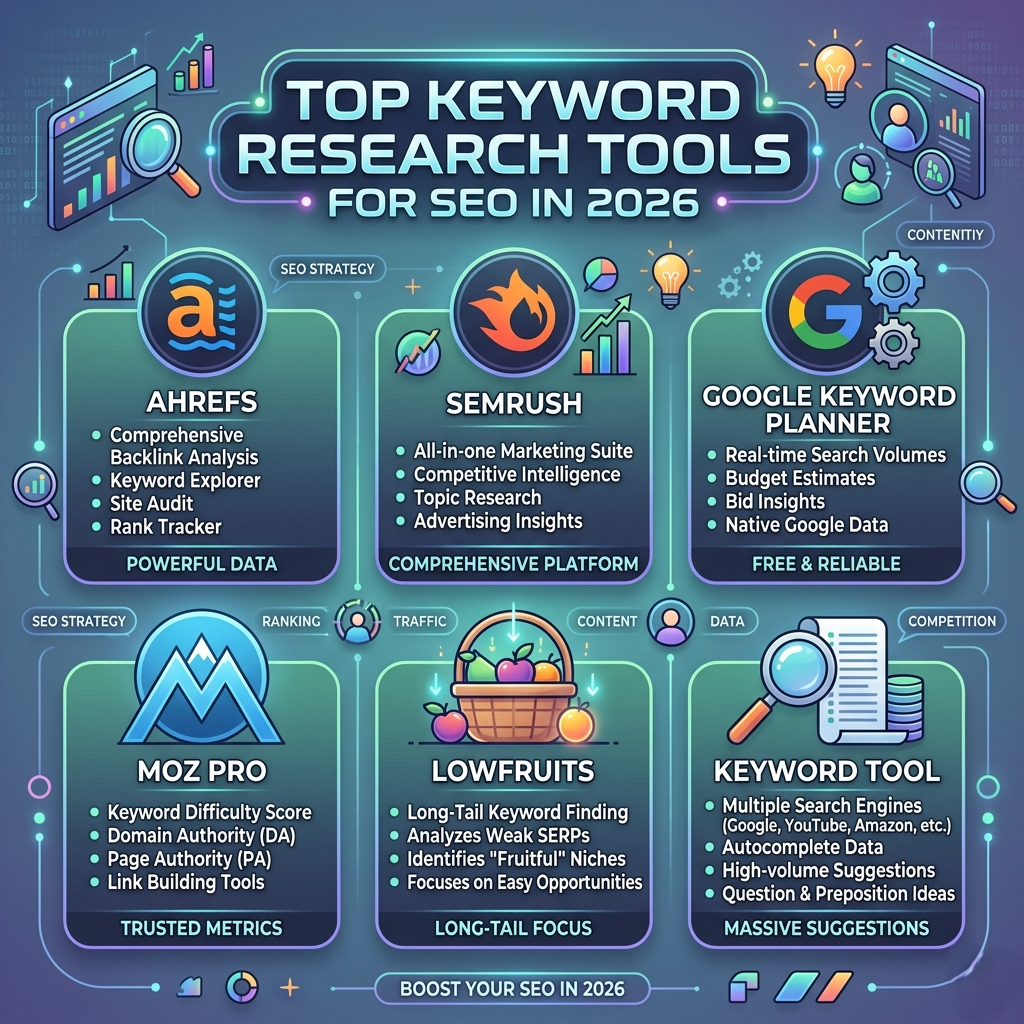
Top Keyword Research Tools You Should Use
1. Google Keyword Planner – Best Free Tool
This is one of the most trusted tools for beginners.
It gives keyword ideas directly from Google’s data.
Key Features:
- Search volume estimates
- Keyword suggestions
- Competition level
- CPC data
👉 Best for: Beginners and basic keyword research
2. Ubersuggest – Easy and Beginner-Friendly
If you want simple and clear data, this tool is perfect.
It shows keyword ideas along with SEO difficulty.
Key Features:
- Keyword suggestions
- Domain analysis
- Content ideas
- Backlink data
👉 Best for: Bloggers and small website owners
3. Ahrefs – Advanced Keyword Research
Ahrefs is a powerful tool used by SEO professionals.
It provides deep insights into keywords and competitors.
Key Features:
- Keyword difficulty score
- Click data (not just searches)
- SERP analysis
- Competitor keywords
👉 Best for: Advanced users and agencies
4. SEMrush All-in-One SEO Tool
SEMrush offers more than just keyword research.
It helps you analyze competitors and track rankings.
Key Features:
- Keyword gap analysis
- Competitor insights
- Search intent data
- Position tracking
👉 Best for: Businesses and marketers
5. AnswerThePublic – Find Real Questions
This tool shows what people are asking online.
So, it’s perfect for creating blog topics and FAQs.
Key Features:
- Question-based keywords
- Search intent insights
- Visual keyword maps
👉 Best for: Content ideas and long-tail keywords
6. Keyword Tool – Long-Tail Keyword Finder
If you want long-tail keywords, this tool is very useful.
It pulls data from Google autocomplete.
Key Features:
- Long-tail keyword ideas
- Multiple platforms (YouTube, Amazon, etc.)
- Easy-to-use interface
👉 Best for: Niche websites and SEO targeting
7. Moz Keyword Explorer – Smart Keyword Insights
Moz offers a clean and simple keyword research experience.
It focuses on helping you pick the best keywords.
Key Features:
- Priority score
- SERP analysis
- Keyword suggestions
- Difficulty metrics
👉 Best for: Balanced research and planning
How to Choose the Right Keyword Tool
Not every tool is right for everyone.
Here’s a simple guide:
- Beginners: Google Keyword Planner + Ubersuggest
- Content creators: AnswerThePublic + Keyword Tool
- Advanced users: Ahrefs or SEMrush
- Balanced use: Moz Keyword Explorer
Start small, then upgrade as your needs grow.
Real-World Example
Let’s say you want to write about “weight loss tips.”
Instead of targeting that competitive keyword, tools may suggest the following:
- “easy weight loss tips at home”
- “weight loss tips for beginners”
These are easier to rank and bring targeted traffic. Common Mistakes to Avoid
Even with the best tools, mistakes can happen.
Avoid these:
- Choosing keywords with high competition
- Ignoring search intent
- Not using long-tail keywords
- Relying on one tool only
Instead, combine tools for better results.
FAQs
1. What is the best free keyword research tool?
Google Keyword Planner is one of the best free tools available.
2. Are paid keyword tools worth it?
Yes, if you want deeper insights and faster results.
3. What are long-tail keywords?
They are longer, more specific search phrases with lower competition.
4. How many keywords should I target per article?
Focus on one main keyword and a few related ones.
Final Thoughts
Keyword research is the foundation of SEO success.
Without it, even great content can go unnoticed. However, with the right tools, you can find the exact keywords your audience is searching for.
So, choose your tools wisely and use them consistently.
