


Introduction: A Time When Sunlight Was Part of Medicine
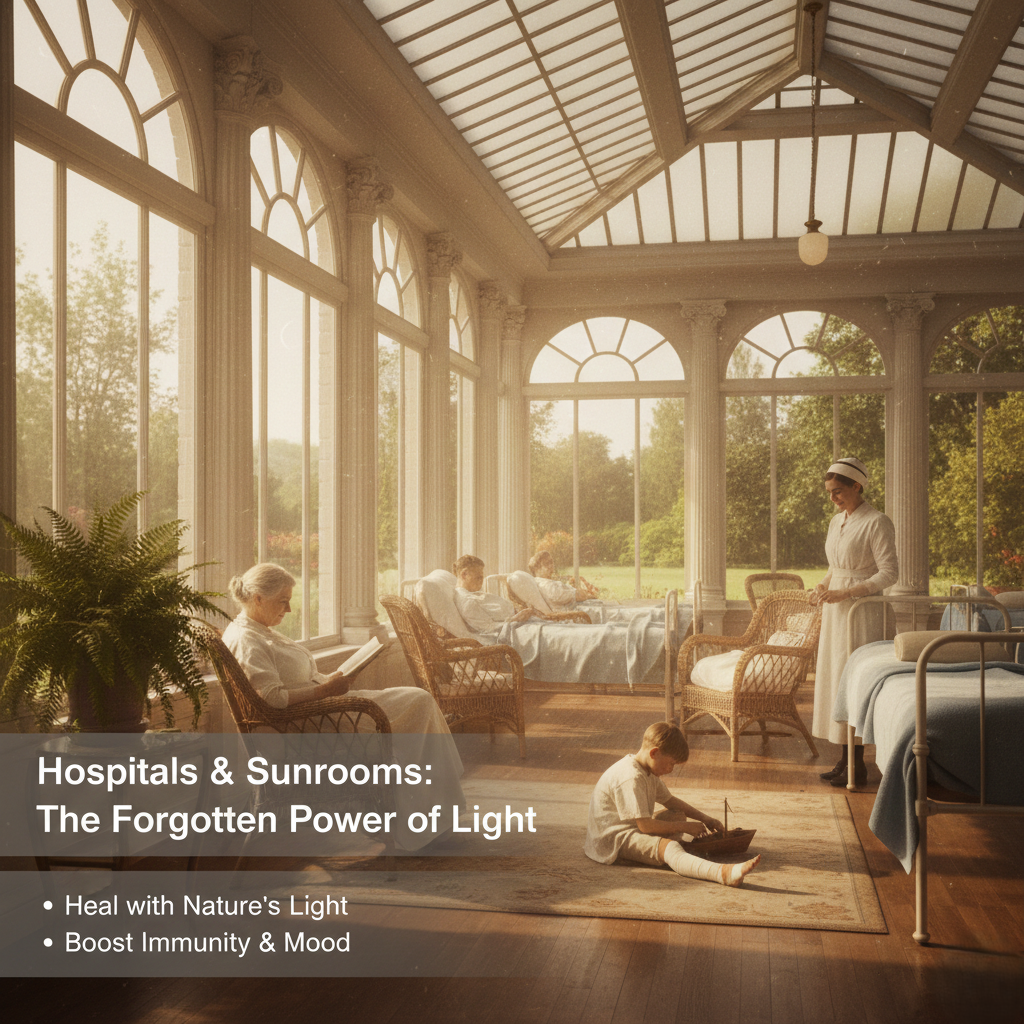
Not long ago, many hospitals were designed with sunrooms.
These bright, glass-filled spaces were built around a simple belief.
Sunlight could help the body heal.
Patients rested in warm daylight, surrounded by calm and natural light.
While solariums have mostly disappeared from modern hospitals, their purpose still matters.
They remind us that healing is not only chemical or surgical it is also environmental.
Why Early Hospitals Valued Sunlight
Before advanced medications, doctors relied on natural therapies.
Fresh air and sunlight were considered essential to recovery.
Sunrooms were especially common in tuberculosis wards.
Patients spent hours bathed in daylight, believed to support strength and resilience.
This approach was rooted in observation rather than technology.
And in many ways, it worked.
The Science Behind Sunlight and Health
Modern research now explains what early doctors sensed intuitively.
Sunlight triggers vital biological processes in the body.
How Sunlight Supports Physical Health
- Stimulates vitamin D production
- Strengthens bones and muscles
- Supports immune system function
- Helps regulate sleep cycles
Vitamin D deficiency is now linked to fatigue, low immunity, and bone disorders.
Ironically, this deficiency is common in modern indoor lifestyles.
Sunlight and Mental Well-Being
Sunlight does more than support the body.
It also plays a major role in mental health.
Effects of Natural Light on the Brain
- Improves mood and emotional balance
- Reduces symptoms of seasonal depression
- Helps regulate serotonin levels
- Enhances focus and daily energy
This is why lack of sunlight often affects motivation and sleep.
Why Solariums Disappeared From Hospitals
As medicine advanced, priorities shifted.
Technology replaced environmental healing spaces.
Hospitals became more compact, efficient, and equipment-focused.
Natural light was often sacrificed for sterile control and cost efficiency.
While modern treatments save lives, something subtle was lost.
The healing atmosphere itself became secondary.
Nature as a Complement, Not a Replacement
Sunlight is not a cure-all.
But it works best alongside modern medicine, not against it.
Today, some hospitals are rediscovering this balance.
Designs now include windows, gardens, and outdoor recovery areas.
Healing environments reduce stress and improve patient outcomes.
Nature supports recovery in ways machines cannot measure easily.
The Indoor Lifestyle Problem
Most people now spend the majority of their lives indoors.
Work, entertainment, and social life often happen under artificial light.
This disconnect from daylight affects both physical and mental health.
The body was not designed for constant indoor living.
Even short daily exposure to sunlight can help restore balance.
Simple Ways to Reconnect With Sunlight
You do not need a hospital sunroom to benefit.
Small habits can make a meaningful difference.
Easy Ways to Get Daily Sun Exposure
- Step outside in the morning light
- Take short walks during daylight hours
- Sit near a window while working
- Spend time in parks or open spaces
Consistency matters more than duration.
Why the Idea Behind Solariums Still Matters
The disappearance of sunrooms does not make them obsolete.
It highlights how easily natural healing can be overlooked.
Sunlight reminds us that health is not only clinical.
It is also sensory, emotional, and environmental.
Reintroducing nature into daily life is not regression.
It is balance.
Conclusion: Healing Was Never Meant to Be Artificial
Solariums may be gone, but their message remains relevant.
The body responds deeply to light, air, and natural rhythms.
In a world dominated by screens and ceilings, sunlight is medicine we forget to take.
Sometimes, healing begins not with a prescription but with stepping outside.
Nature has always known how to help us heal. We just need to let it.
Frequently Asked Questions (FAQs)
Is sunlight really important for health?
Yes. Sunlight supports vitamin D production, mood regulation, and sleep cycles.
How much sun exposure is healthy?
Short daily exposure is usually enough, depending on skin type and location.
Can sunlight replace medical treatment?
No. It should complement, not replace, professional medical care.
Why do people feel better outdoors?
Natural light and environments reduce stress and support brain chemistry.
