

Artificial intelligence is no longer a future concept.
It’s already reshaping how work gets done across industries.
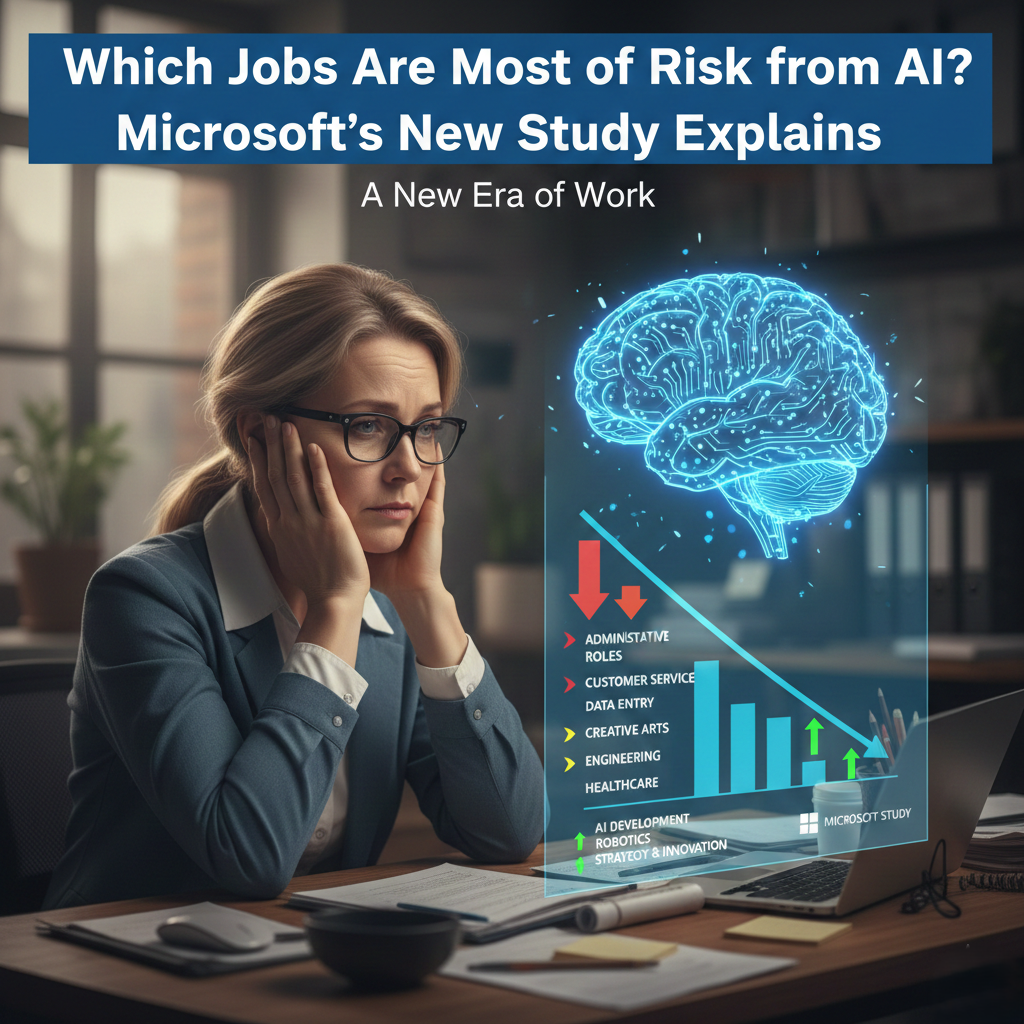
A major new study from Microsoft highlights forty job categories that face the highest risk of disruption from AI.
The message isn’t panic it’s preparation.
Understanding where change is coming helps workers and businesses adapt early.
Why Some Jobs Are More Vulnerable to AI
AI systems excel at tasks that follow clear patterns.
They work quickly, consistently, and without fatigue.
Jobs become vulnerable when they rely heavily on:
- Pattern recognition
- Routine processing
- Repetitive decision-making
- Structured data handling
As AI grows more capable, these tasks can often be automated or heavily assisted.
Jobs Facing the Highest Risk of AI Disruption
According to Microsoft’s research, several roles stand out.
Most Vulnerable Job Categories
These roles rely on predictable workflows:
- Data entry and record management
- Basic accounting and bookkeeping
- Customer support and call center roles
- Routine data analysis
- Administrative processing
AI systems can already perform many of these tasks faster and at lower cost.
Why Speed and Accuracy Matter
Modern AI doesn’t just match human performance it often exceeds it.
It processes large volumes of information in seconds.
For structured tasks, this advantage is decisive.
That’s why these roles are changing first.
Microsoft emphasizes that this shift reflects efficiency, not judgment on workers.
Which Jobs Are Safer for Now
Not all work is equally exposed.
The study highlights several areas with lower immediate risk.
Roles That AI Struggles to Replace
These jobs depend on human qualities AI can’t easily replicate:
- Leadership and management
- Emotional intelligence and empathy
- Creative direction and originality
- Hands-on technical problem solving
- Physical labor and skilled trades
Human experience still matters deeply in these roles.
Why No Job Is Completely Unaffected
Even safer roles will change.
AI tools are becoming common across nearly every workplace.
Instead of replacing workers, AI often reshapes how work is done.
Tasks may shift, tools may change, and expectations will evolve.
Skills That Help Workers Stay Relevant
Microsoft’s study stresses one key idea: adaptation beats resistance.
Skills That Complement AI
Workers can future-proof themselves by developing:
- AI tool literacy
- Strong communication skills
- Critical thinking and judgment
- Collaboration and teamwork
- Problem-solving in real-world contexts
These skills increase value in an AI-assisted workplace.
What Companies Need to Do Next
The responsibility doesn’t fall only on workers.
Microsoft urges organizations to prepare employees for change.
This includes:
- Training programs for AI tools
- Skill development initiatives
- Support for role transitions
- Clear communication about change
Preparation reduces fear and increases productivity.
Real-World Comparison: Automation vs. Adaptation
In past technological shifts, workers who adapted thrived.
Those who learned new tools stayed relevant.
AI follows the same pattern.
The winners will be those who learn how to work with it.
Frequently Asked Questions (FAQs)
Does this mean millions of jobs will disappear?
No. Most jobs will change, not vanish.
Is AI replacing humans completely?
AI replaces tasks, not human judgment or creativity.
What’s the best way to prepare for AI at work?
Learn AI tools and strengthen human-focused skills.
The Big Picture: Change, Not Collapse
Microsoft’s study doesn’t predict a job apocalypse.
It predicts adjustment.
The future of work will involve new tools, new roles, and new expectations.
Those who understand the shift early will be best positioned to succeed.
