


Have you ever wondered why chronic pain conditions affect women more often and for longer periods than men?
For years, doctors noticed the pattern. However, the biological reason remained unclear.
Now, recent biomedical research suggests there may be real, measurable differences in how pain works in female bodies.
And that discovery could change pain treatment forever.
What Is Chronic Pain?
Chronic pain lasts longer than three months. Unlike short-term pain, it continues even after the original injury heals.
Common chronic pain conditions include:
- Migraines
- Fibromyalgia
- Autoimmune-related pain
- Arthritis
- Neuropathic pain
Studies consistently show women report these conditions at higher rates than men.
Therefore, researchers began asking deeper questions.
The Biological Difference Behind Pain Signals
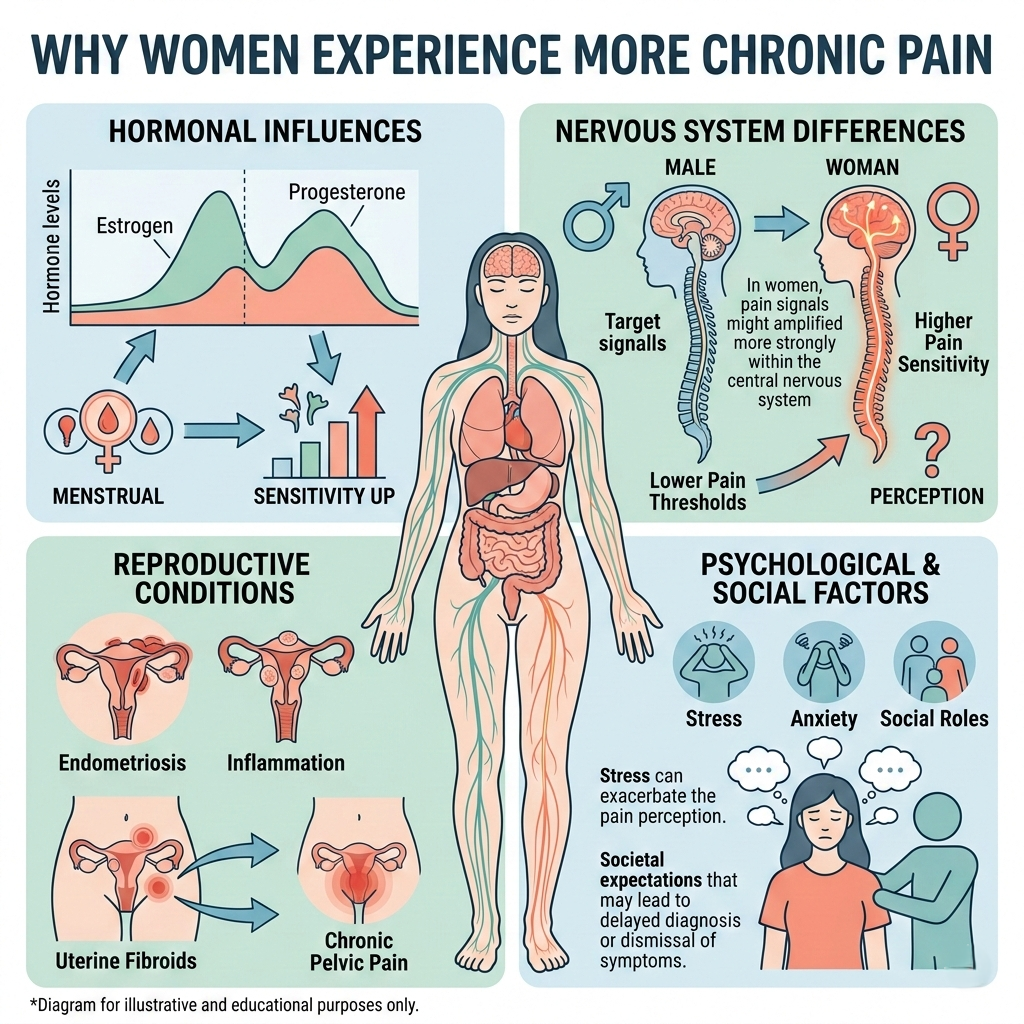
Pain begins when nerves send signals to the brain. However, the way those signals behave may differ between sexes.
Recent findings suggest that:
- Immune cells react differently in women
- Hormones influence nerve sensitivity
- Inflammation pathways vary
- Certain receptors amplify pain signals more strongly
Because of these factors, pain signals in women may last longer or become more intense.
Importantly, this is not about tolerance. It is about biology.
The Role of Hormones in Pain Persistence
Hormones such as estrogen play a major role in the nervous system.
Estrogen can:
- Increase sensitivity to pain signals
- Influence inflammation
- Affect how nerves repair themselves
As hormone levels fluctuate during menstrual cycles, pregnancy, or menopause, pain patterns can also change.
Therefore, chronic pain may feel unpredictable for many women.
How the Immune System May Be Involved
Researchers are also studying immune system cells called microglia.
In some studies, male and female bodies activate different immune pathways in response to injury.
That means two people with the same injury could experience different long-term pain outcomes.
This discovery opens the door to more personalized treatments.
Real-World Example: Fibromyalgia and Migraines
Conditions like fibromyalgia affect women at significantly higher rates.
Similarly, migraines occur more frequently in women, especially during hormonal shifts.
Doctors once struggled to explain these differences clearly.
Now, biological insights provide stronger scientific backing.
And that validation matters.
Why This Breakthrough Is Important
For decades, many pain studies primarily focused on male subjects.
As a result, treatment approaches often overlooked sex-based biological differences.
However, this new research highlights something crucial:
Pain medicine cannot take a one-size-fits-all approach.
Instead, therapies may need to consider:
- Hormonal cycles
- Immune response variations
- Sex-specific nerve signaling patterns
Consequently, future treatments could become far more effective.
What This Means for Pain Management
If researchers continue exploring these differences, healthcare may improve in several ways:
- More precise medications
- Better-targeted anti-inflammatory therapies
- Personalized hormone-based treatments
- Improved clinical trial design
Over time, this could reduce misdiagnosis and improve long-term relief for millions of women.
That is a significant step forward.
The Bigger Picture: Personalized Healthcare
This discovery fits into a larger movement toward personalized medicine.
Instead of treating symptoms broadly, doctors increasingly aim to understand biological uniqueness.
When it comes to chronic pain, sex-specific research adds an essential layer of clarity.
Because understanding the root cause always leads to better solutions.
FAQs
Why do women experience chronic pain more often than men?
Biological factors such as hormone fluctuations, immune responses, and nerve signaling differences may contribute to longer-lasting pain in women.
Does this mean women have lower pain tolerance?
No. Research suggests the difference is biological, not psychological or tolerance-based.
How do hormones affect chronic pain?
Hormones like estrogen can increase nerve sensitivity and influence inflammation, which may intensify or prolong pain.
Will this research change treatment options?
Yes. Understanding sex-specific mechanisms may lead to more personalized and effective pain therapies.
Are chronic pain conditions underdiagnosed in women?
Historically, some women’s pain conditions were misunderstood. However, modern research is improving recognition and validation.
Final Thoughts: A Step Toward Better Care
Chronic pain has long affected women at higher rates. Now, science is finally catching up with what many patients already knew.
By uncovering biological differences in pain processing, researchers are laying the foundation for smarter, more personalized treatments.
Although more research is still needed, this breakthrough brings hope. Because when medicine understands the cause, it can design better solutions.
