


Introduction
What if the device you use every day suddenly became outdated?
It sounds surprising. However, Elon Musk believes smartphones could disappear within the next five years.
That’s a bold claim. Yet, when you look at how fast technology is evolving, it doesn’t feel impossible anymore.
So, let’s break down what this really means and what could replace smartphones.
Why Smartphones Might Become Obsolete
For over a decade, smartphones have been central to our lives.
We use them for:
- Communication
- Work and productivity
- Entertainment
- Social interaction
However, technology never stays the same.
As new innovations emerge, older devices slowly lose relevance. That’s exactly what might happen to smartphones.
What Could Replace Smartphones
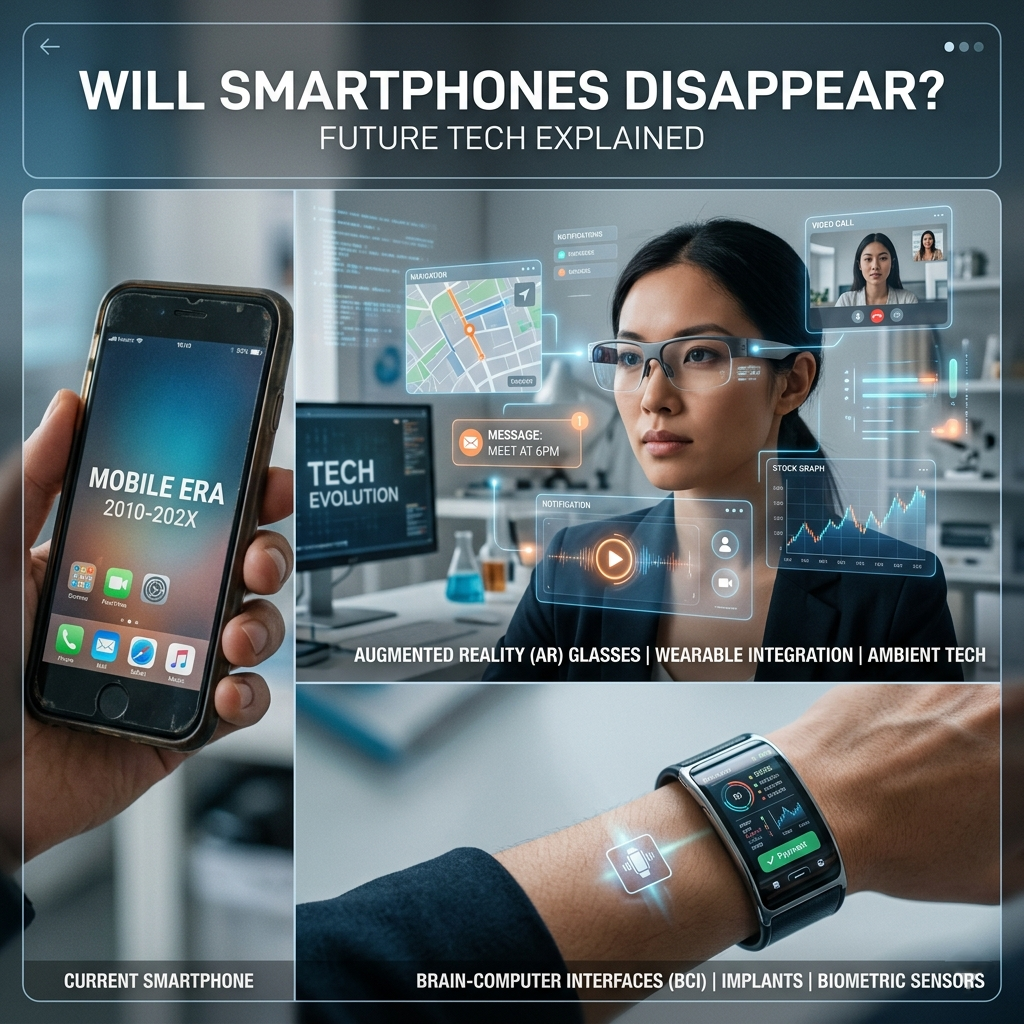
Instead of one device, the future may rely on multiple smarter systems.
1. Wearable Technology
Devices like smart glasses or advanced wearables could replace screens.
These tools would:
- Display information directly in your view
- Allow hands-free interaction
- Blend into daily life seamlessly
2. Brain-Computer Interfaces (BCIs)
This is where things get futuristic.
BCIs aim to connect the human brain directly to computers.
Companies like Neuralink are already working on this.
What this could mean:
- Sending messages with thoughts
- Accessing information instantly
- No need for physical devices
3. AI-Powered Assistants Everywhere
AI is becoming smarter and more integrated.
In the future, instead of opening apps, you may simply:
- Speak or think a command
- Get instant responses
- Automate daily tasks
As a result, the need for screens could disappear.
The Shift Toward “Invisible Technology”
One major idea behind this prediction is invisible tech.
Instead of staring at screens, technology will:
- Blend into your environment
- Work in the background
- Respond instantly
So, rather than holding a phone, you’ll interact naturally with your surroundings.
Real-World Example
Think about how smartphones replaced many devices:
- Cameras
- MP3 players
- GPS systems
Now imagine the next step: one system replacing the smartphone itself.
This shift may feel sudden, but history shows it happens faster than expected.
Challenges and Concerns
Even though the future sounds exciting, it raises important questions.
Key concerns:
- Privacy risks with always-connected systems
- Data security in brain-linked devices
- Over-dependence on AI
- High cost of new technology
So, while innovation moves forward, regulation must keep up.
Will This Happen in Just Five Years?
Musk’s timeline is ambitious.
Realistically:
- Early versions may appear soon
- Full replacement could take longer
- Adoption will vary by region and cost
However, the direction is clear: technology is moving beyond smartphones.
How This Could Change Daily Life
If smartphones disappear, daily life will look very different.
You might:
- Communicate without typing
- Access information instantly
- Spend less time looking at screens
As a result, life could feel more natural or more connected than ever.
FAQs
1. Will smartphones really disappear?
Not immediately, but they may slowly be replaced by newer technologies.
2. What will replace smartphones first?
Wearables and AI assistants are likely to come first.
3. Are brain-computer interfaces safe?
They are still being tested and developed, so safety is a key focus.
4. Should I stop using smartphones?
No, they will remain useful for years, even as new tech emerges.
Final Thoughts
The idea of a world without smartphones may feel strange today.
However, every major technology eventually gets replaced.
Whether it happens in five years or ten, one thing is certain: the way we interact with technology is about to change in a big way.
