

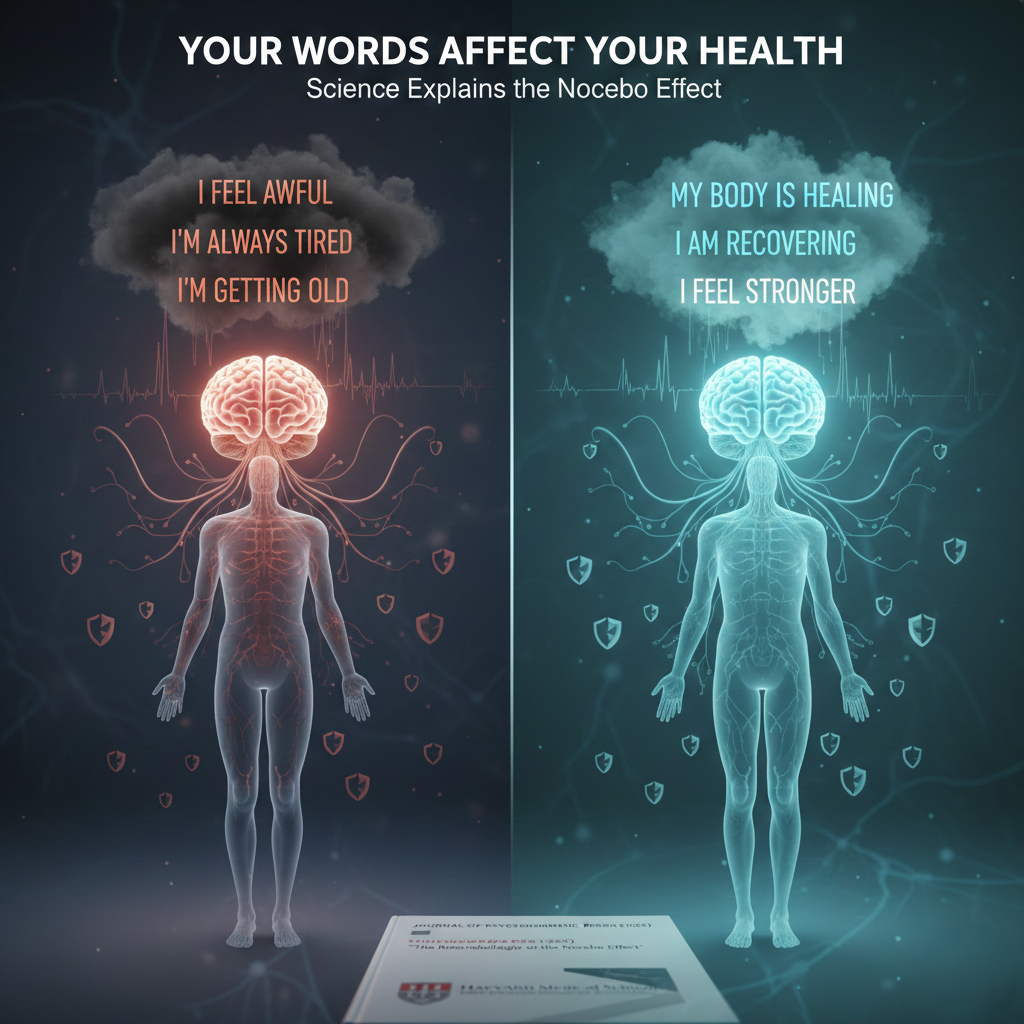
The way you talk about your body isn’t just emotional.
It can be physical too.
Scientists studying the nocebo effect have found that negative language can trigger real stress responses inside the body.
Simple phrases like “I feel terrible” or “I’m always tired” may seem harmless.
But your brain treats them like instructions.
What Is the Nocebo Effect?
The nocebo effect is the opposite of the placebo effect.
Instead of positive belief helping the body heal, negative expectations cause harm.
When the brain expects something bad, the body reacts as if danger is real.
How Negative Words Affect the Body
Negative self-talk activates the brain’s stress systems.
This leads to higher levels of hormones like:
- Cortisol
- Adrenaline
These hormones are useful short-term.
But when they stay high, problems begin.
The Impact on Immunity and Healing
Long-term stress changes how the immune system works.
Studies show it can:
- Reduce lymphocyte activity
- Lower T cell response
- Slow recovery from illness
- Increase vulnerability to infections
This means healing becomes harder, even with treatment.
Why Venting Can Backfire
Many people use negative language to release stress.
But the brain doesn’t know the difference between venting and belief.
When negative phrases are repeated often, the nervous system stays in survival mode.
That constant alert state blocks rest and repair.
The Brain Listens to Language
The brain responds strongly to words.
Repeated phrases shape how the body reacts.
This is why identity-based statements like “I’m sick” can be more harmful than people realize.
They turn a temporary condition into a fixed signal.
How Language Can Support Healing
The good news is the brain can change.
Thanks to neuroplasticity, new patterns can be learned.
Research linked to Harvard Medical School shows that constructive language helps calm the nervous system.
This supports:
- Better mood
- Balanced heart rate
- Lower inflammation
- Stronger physical resilience
Simple Language Shifts That Help
Small changes can make a real difference.
Try these habits:
- Notice automatic negative phrases
- Replace labels with process-based language
- Start mornings without complaints
- Be mindful of negative talk from others
For example:
- Instead of “I’m sick,” try “My body is healing.”
- Instead of “I’m exhausted,” try “I need rest right now.”
Why This Matters Long-Term
Words shape thought.
Thought shapes biology.
Over time, language can influence stress levels, immune strength, and recovery speed.
This doesn’t replace medical care.
But it supports it.
FAQs
Is negative self-talk really harmful to health?
Yes. Research shows it can raise stress hormones and weaken immune response.
What hormones are involved in the nocebo effect?
Mainly cortisol and adrenaline, which affect stress and inflammation.
Is this the same as positive thinking?
No. This is about realistic, supportive language—not forced positivity.
Can changing language really help healing?
Studies show it can support nervous system balance and resilience.
Does this replace medical treatment?
No. It works alongside proper medical care, not instead of it.
Final Thoughts
Your body is always listening.
Not just to medicine or food—but to words.
Negative language keeps the body on alert.
Supportive language helps it recover.
You don’t need perfect thoughts.
Just kinder, more accurate ones.
👉 Your brain listens to your words.
👉 And your body listens to your brain.
