


Introduction
mRNA technology is no longer limited to infectious diseases.
Researchers are now exploring its potential in cancer treatment.
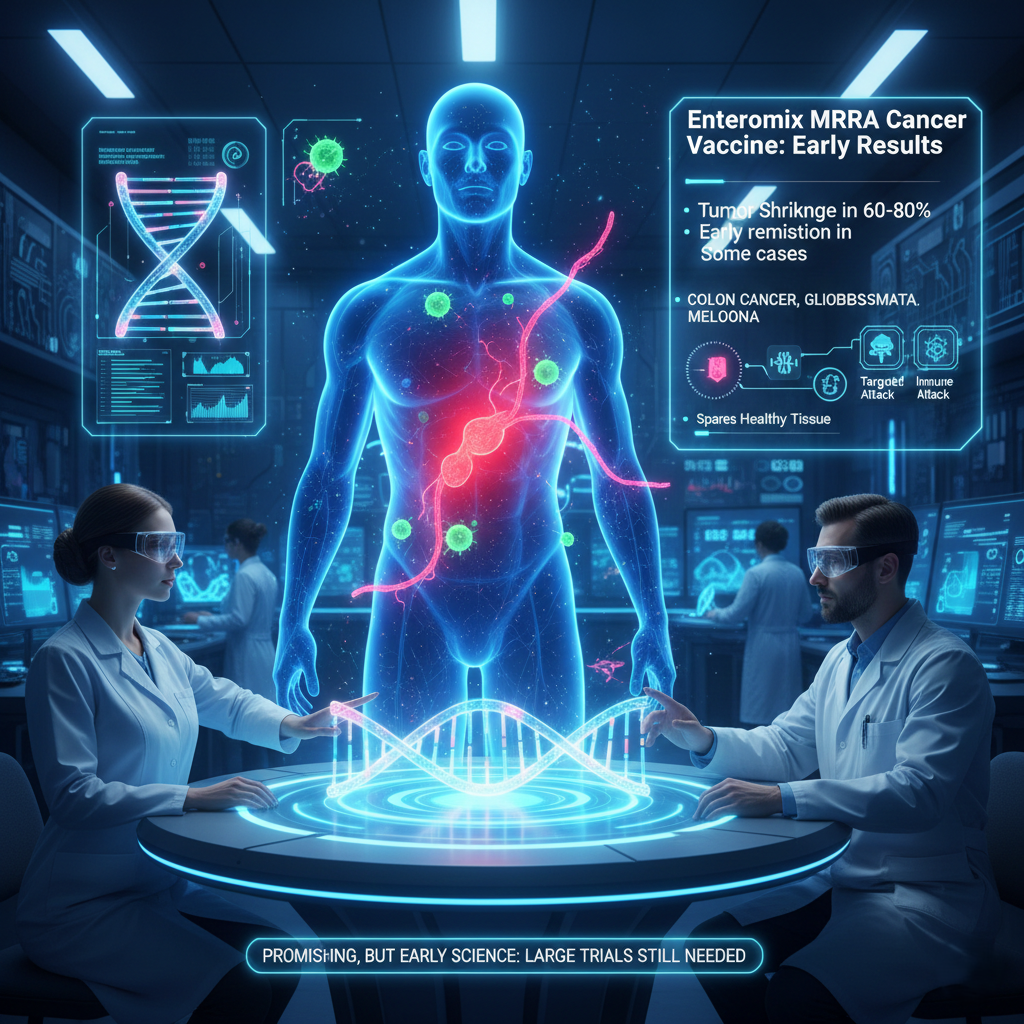
Russian scientists have announced early progress on an experimental mRNA-based cancer vaccine called Enteromix.
Initial results suggest meaningful tumor reduction in a significant number of participants.
What Is the Enteromix mRNA Cancer Vaccine?
Enteromix is an experimental cancer vaccine built using mRNA technology.
Instead of attacking cancer directly, it trains the immune system to do the job.
The vaccine delivers genetic instructions that help immune cells recognize cancer-specific markers.
Once identified, the immune system targets and attacks tumor cells.
Early Trial Results: What We Know So Far
According to preliminary reports:
- Tumor shrinkage was observed in about 60–80% of participants
- Some early-stage cases showed complete remission
- Results are based on small, early-phase trials
Scientists stress that these findings are early and not final.
Types of Cancer Being Studied
Colon Cancer
The vaccine is currently being developed for several cancers, including:
This is the main focus of current development.
Colon cancer often responds well to immune-based treatments.
Glioblastoma
Glioblastoma is an aggressive brain cancer with limited treatment options.
mRNA therapy could offer a new approach.
Melanoma
Melanoma has already shown responsiveness to immunotherapy.
This makes it a promising candidate for mRNA-based vaccines.
How mRNA Cancer Vaccines Work
Unlike traditional vaccines, cancer vaccines are personalized.
They are designed around the unique biology of each tumor.
mRNA vaccines work by:
- Identifying tumor-specific molecular signatures
- Training immune cells to recognize those markers
- Encouraging targeted immune attacks on cancer cells
This approach aims to spare healthy tissue.
Why Larger Trials Are Still Needed
Researchers emphasize caution.
Early success does not guarantee long-term effectiveness.
Before approval, the vaccine must undergo:
- Large, multi-phase clinical trials
- Long-term safety monitoring
- Independent regulatory review
- International scientific validation
These steps are critical for patient safety.
What This Could Mean for Cancer Treatment
If future trials confirm current results, the impact could be significant.
Potential benefits include:
- More personalized cancer treatments
- Reduced reliance on chemotherapy or radiation
- Fewer side effects compared to traditional therapies
This could mark a shift in how cancer is treated.
mRNA’s Expanding Role in Medicine
The success of mRNA vaccines during the pandemic accelerated research.
Now, scientists are applying the same technology to cancer, autoimmune diseases, and rare disorders.
Cancer vaccines represent one of the most promising frontiers.
FAQs About mRNA Cancer Vaccines
Is this vaccine available to patients now?
No. It is still in early clinical testing.
Does this mean cancer can be cured?
No single treatment cures all cancers. Results vary by cancer type and patient.
Are mRNA cancer vaccines safe?
Safety must be confirmed through larger trials before approval.
Is this different from chemotherapy?
Yes. mRNA vaccines stimulate the immune system rather than directly killing cells.
Conclusion: Promising, but Early Science
The Enteromix mRNA cancer vaccine highlights how fast cancer research is evolving.
Early results are encouraging, but much more testing is required.
If proven safe and effective, mRNA-based cancer vaccines could reshape oncology.
For now, this development represents hope grounded in careful science.
